Church History: Books of the Month
February 2026
Monthly Updates on Recent Books in the History of Christianity
To raise awareness of recent books in the history of Christianity, the editorial staff of Church History: Studies in Christianity and Culture highlights each month a list of 10-15 books in diverse periods and geographical regions that we hope will be of interest to our members. We include here below the February 2026 monthly list, chosen by our staff, with excerpts from the publishers’ blurbs.
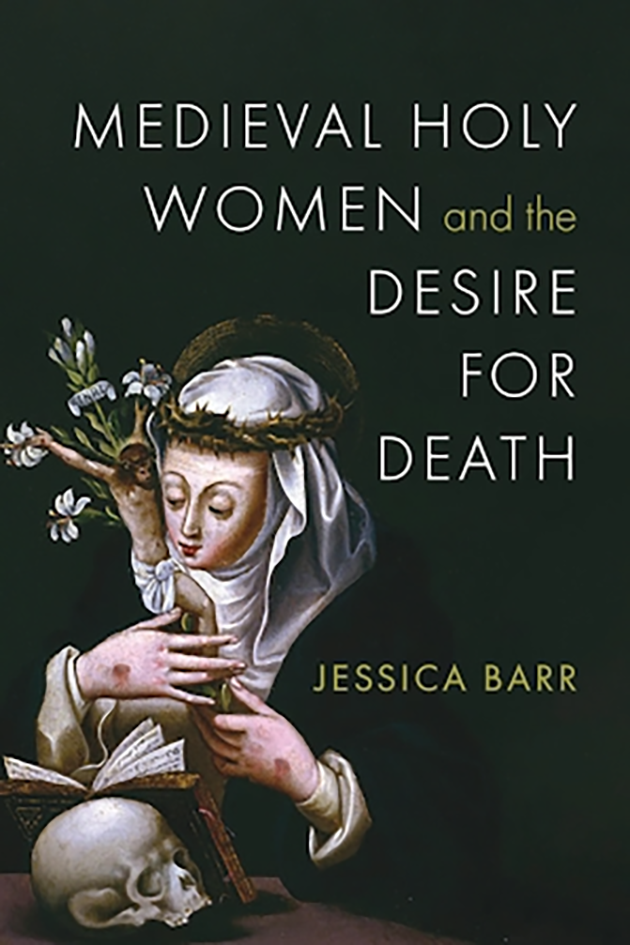
Jessica Barr, Medieval Holy Women and the Desire for Death, 2026
For medieval Christians, only death could offer complete union with God. For medieval women in particular, death was figured as a desirable end to their embodied lives; at least, this is the story told by the clergymen who typically wrote their biographies. Medieval Holy Women and the Desire for Death questions this assumption and studies visionary narratives, treatises, and spiritual reflections by and about medieval Christian women from the thirteenth through the fifteenth centuries to reveal how these women understood their own deaths and how their depictions conformed to or departed from the stories told about them.
Rather than focusing on externalities like rituals, revenants, or miracles, Jessica Barr instead tackles the desire for death from the inside, seeking to elucidate the ways in which medieval people anticipated or experienced biological death on a personal level. In narrating their spiritual lives within the framework of deeply held Christian beliefs, these medieval women mystics illustrate how theology and experience converge—and, not infrequently, diverge.
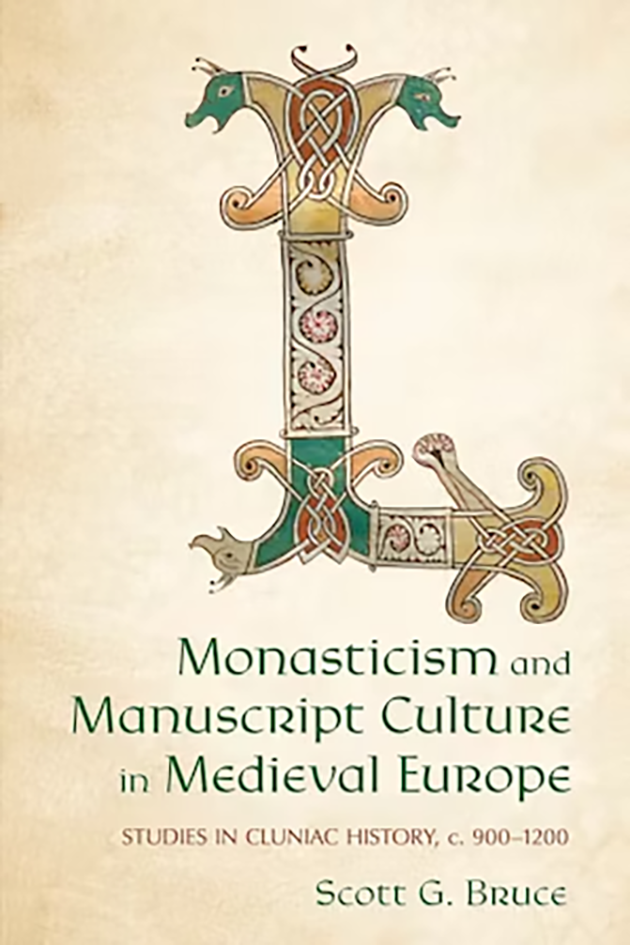
Scott G. Bruce, Monasticism and Manuscript Culture in Medieval Europe: Studies in Cluniac History, c. 900–1200, 2026
Monasticism and Manuscript Culture in Medieval Europe offers a new perspective on the abbey at Cluny, one of the medieval Christianity's most influential institutions. Most historical approaches to Cluny have embraced a predictable "rise and fall" narrative, determined largely by the extent of the abbey's legislative reach. In this volume, Scott G. Bruce instead focuses on Cluny's cultural history through close attention to manuscript evidence. Rather than emphasizing the great Burgundian abbey's exceptionalism, the essays in this book underscore the interconnectedness of Cluniac devotional practices and written culture with contemporary Benedictine houses, even those, like the Cistercians, commonly seen as being at odds with the brethren of Cluny.
As the essays in Monasticism and Manuscript Culture in Medieval Europe make clear, Cluny was a center of cultural production at once receptive and influential, embedded in a dynamic field of monastic institutions, some friendly, some competitive, but all participating in a vibrant cross-pollination of written texts studied by monks in the safety of their cloisters and carried by them throughout Europe, to the Mediterranean, and to the Holy Land.
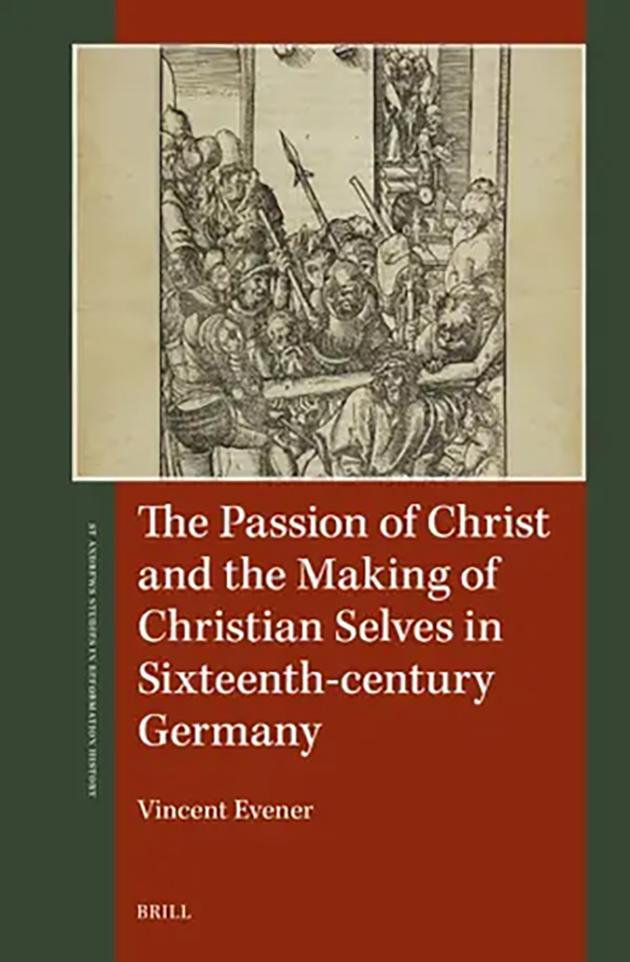
Vincent Evener, The Passion of Christ and the Making of Christian Selves in Sixteenth-century Germany, 2025
This book argues that Lutheran and Catholic religious leaders in sixteenth-century Germany used passion meditation to shape the faithful into Christian selves capable of navigating religious division and spiritual peril. Vincent Evener reveals how Lutherans transformed medieval motifs and practices of passion meditation, and how Lutheran concerns, motifs, and techniques continually evolved. For instance, first-generation Lutheran reformers trained the faithful to read the present suffering and weakness of their church through the lens of Christ’s passion, but the practice eventually became threatening to Lutheran authorities. Evener also illuminates Catholic efforts in late sixteenth-century Bavaria to renew passion meditation and devotion in distinctly Catholic forms that integrated inward and outward self, individual and community. This book is a fascinating study of how spiritualities and selfhoods were shaped by Reformation rivalries, anti-Jewish hostility, attitudes toward gender, devotional practices of imagination, mystical yearning, and more.
Maria E. Doerfler, Death and the Afterlife in Syriac Christianity: Creating Social Identity and Emotional Communities, 2025
In late antiquity as in the present age, death left its mark on the lives of families, communities, and societies. Syriac funerary hymns provide important insights into the social, emotional, funerary ritual histories of early Christian communities. Maria Doerfler here explores this body of largely ignored literature that has been attributed to Ephrem the Syrian. Different parts of the collection focus on individuals from a variety of social and ecclesiastical backgrounds: women and children, clergy and ascetics, as well as those who fell victim to natural disasters. The hymns provide insights not only into Syriac Christian ideas about death and the afterlife, but also into their existence, beliefs, and practices more broadly. Through engagement with different theoretical lenses, Doerfler uses instances of personal and communal crisis to elucidate historical and philosophical patterns among late antique Christians, addressing, inter alia, their responses to pandemics, understanding of wealth, and forging communal bonds that transcended death.
J. Matthew Pinson, The Free Will Baptists: A New History, 2026
In this scholarly treatment of a lesser-known denomination, J. Matthew Pinson offers a comprehensive history of the Free Will Baptist movement—a distinct theological tradition within the larger Baptist family.
Traversing four centuries of history in his analysis, Pinson divides his study into five parts, arranged in chronological and geographical order. He traces the beginnings of the Free Will Baptists in the Carolinas from the late 1600s; the denomination’s early expansion across the Southeast; the rise and decline of the Northern Freewill Baptists; and the identity and development of the Free Will Baptist movement into the twentieth and twenty-first centuries.
The scarcity of archival evidence for the history of Free Will Baptists in the American South makes the chronicling of their history challenging. To illustrate the development of ideas within the tradition over time, Pinson creatively engages a unique combination of primary source materials, including general conference and local church minutes, confessional documents, and worship materials such as hymnals. A scholarly history as accessible as it is comprehensive, The Free Will Baptists: A New History is a valuable resource for students of religious history as well as Baptist historians.
Krisztina Ilko, The Sons of St Augustine: Art and Memory in the Augustinian Churches of Central Italy, 1256–1370, 2026
The Order of the Hermits of St Augustine has long been sidelined as a pale imitator of the Franciscans. This book provides a fundamental cross-disciplinary re-evaluation of the lives, ideas, and impact of the Augustinian friars. By challenging the scholarly focus on the urban sphere in communal Italy, it explores the rapid emergence of Augustinian convents as lively religious and artistic centres on the margins of cities and in the Italian countryside. Moreover, it demonstrates for the first time the existence of common intellectual themes which linked together dispersed Augustinian communities. Fired by contemporary debates about the antiquity of the Order, the Augustinian friars forged a fictive past in which they linked their origins to St Augustine and late antique hermits. The book argues that saints, objects, and the natural environment all played a vital part in brokering the Augustinian ethos. This is underpinned by tracing the 'things' the Hermits commissioned, inherited, and accumulated to become the 'heirs of St Augustine'. Their forged antiquity was promoted not only through human agencies, such as the creation of eremitical saints' cults, but also through the strategic use of the liminal position of their convents, reinventing the Augustinian hermitages as places of power on the margins of the human sphere and the untamed natural environment. At stake here is the extent of religious patronage in the rural landscape and the re-evaluation of the long-standing tension between city and countryside in the medieval imaginary. Ultimately, this book not only challenges the prevailing understanding of the mendicant movement as a quintessentially urban phenomenon, but also sheds new light on broader processes of medieval societies in forging narratives of power, prestige, and antiquity through materiality and the natural environment.
Susanna Elm, The Importance of Being Gorgeous: Gender and Christian Imperial Rule in Late Antiquity, 2025
In this book, Susanna Elm radically changes our understanding of imperial rule in the later Roman Empire. As she shows, the so-called eastern decadence of the Emperor Theodosius and his successors was in fact a calculated revolution in masculinity and the representation of imperial power. Here, the emperor's hard yet soft, mature yet youthfully gorgeous beauty was central. Because the Theodosian emperors were divine—gods one could see—so was their beauty: their manliness was the face and body of God. The emperors' gorgeousness, their sparkling regalia, how they wished their bodies to be seen by their elite subjects—who authored the texts on which Elm's analysis is based—were as important as laws, taxes, and armies. Their vir-ness strategically deployed male same-sex erotic desire to enhance the unity of the realm in times of tension, incorporate the signifying potency of child emperors, and create a flexible yet stable model of Christian sovereignty.
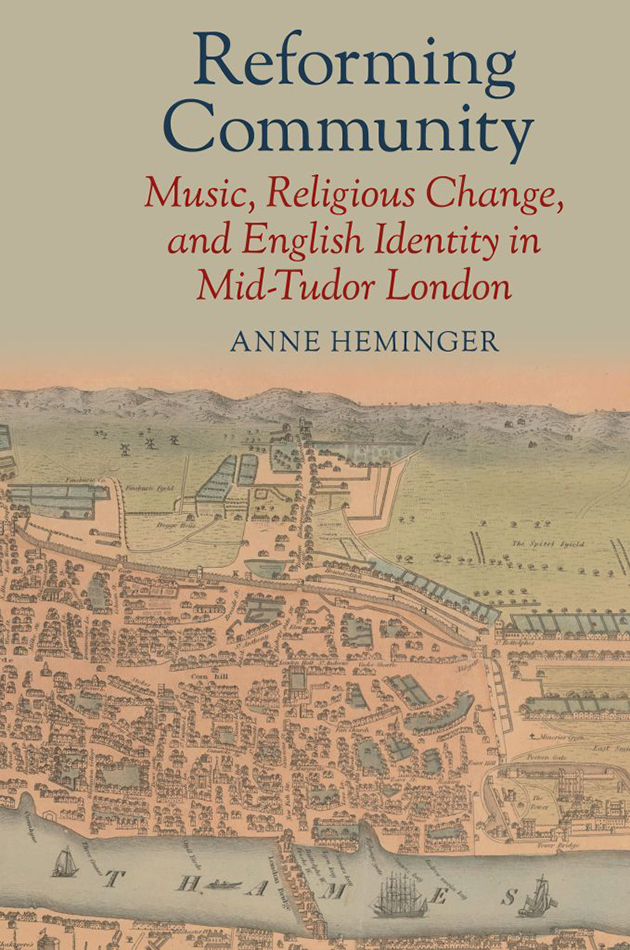
Anne Heminger, Reforming Community: Music, Religious Change, and English Identity in Mid-Tudor London, 2025
For centuries, the medieval Catholic church served as a unifying force in English society. Regardless of wealth, gender, social status, or geographic location, regular worship services and collective devotional acts bound English men and women together in a shared sense of religious community. From the liturgical performances of choirs to carols sung by the public, music was an important part of these experiences. After King Henry VIII broke with Rome in 1534, the English populace was forced to question relationships between religious doctrine and communal identity that had previously been taken for granted.
Reforming Community takes this rupture as its starting point, examining how religious music shaped the formation of English identity during the reigns of Edward VI (r. 1547–1553) and Mary I (r. 1553–1558). Using London as its primary point of reference, this book reveals that religious music played both explicit and implicit roles in this identity construction; while the former resulted from government and ecclesiastical music policies, printed musical repertoires aligned with authorized doctrine, and officially sanctioned public performances, the latter grew from the ways English men and women interpreted contemporary religious policy in their own parish churches. By investigating a variety of genres and performance contexts during two political regimes that are often elided or overlooked in longer studies of the English Reformation, this book thus considers music’s role in mediating and expressing religious—and national—identities in mid-Tudor England.
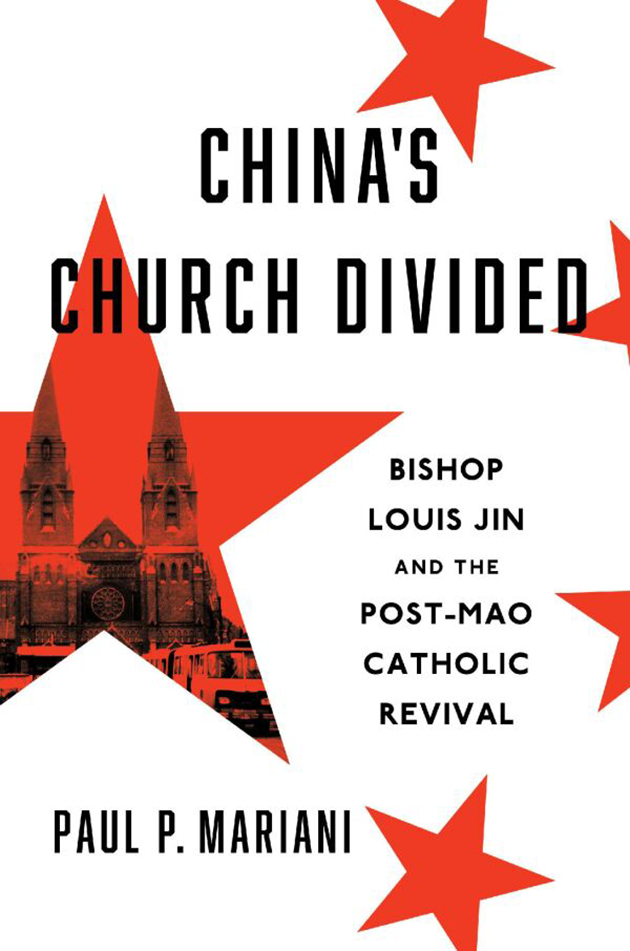
Paul P. Mariani, China's Church Divided: Bishop Louis Jin and the Post-Mao Catholic Revival, 2025
During the Cultural Revolution, the Chinese state sought to eradicate religious life throughout the country. But by 1978, two years after the death of Mao Zedong, the Communist Party under Deng Xiaoping cautiously embraced the revival of religion. At the same time, in Rome, the newly elected Pope John Paul II made a point of renewing outreach to China. Paul P. Mariani tracks the fate of Chinese Catholicism in the wake of these transformative leadership changes, focusing on the influential Catholic community in Shanghai.
Even as Chinese Catholicism came back to life in the 1980s, the way forward was hardly an easy one. Earlier policies of the 1950s had fractured the Catholic community into a state-approved “patriotic” church that answered to the government and an underground church loyal to Rome. Even after the Cultural Revolution, Mariani shows, this divide remained firmly intact. The resulting tensions were on vivid display in Shanghai, owing to the leadership of the Jesuit priest Louis Jin Luxian. Formerly a member of the underground church, Jin realigned with the state church during the revival and was consecrated bishop of Shanghai without papal approval in 1985. Bishop Jin used his position to revitalize the local Catholic community, but his cooperation with the party put him ever at odds with underground church leaders.
Sensitive to the ideals, compromises, and disappointments of Catholics on both sides of the rift,
China’s Church Divided reveals how the community navigated the irreconcilable differences between a worldwide Church centered in Rome and a regime wary of foreign spiritual authority.
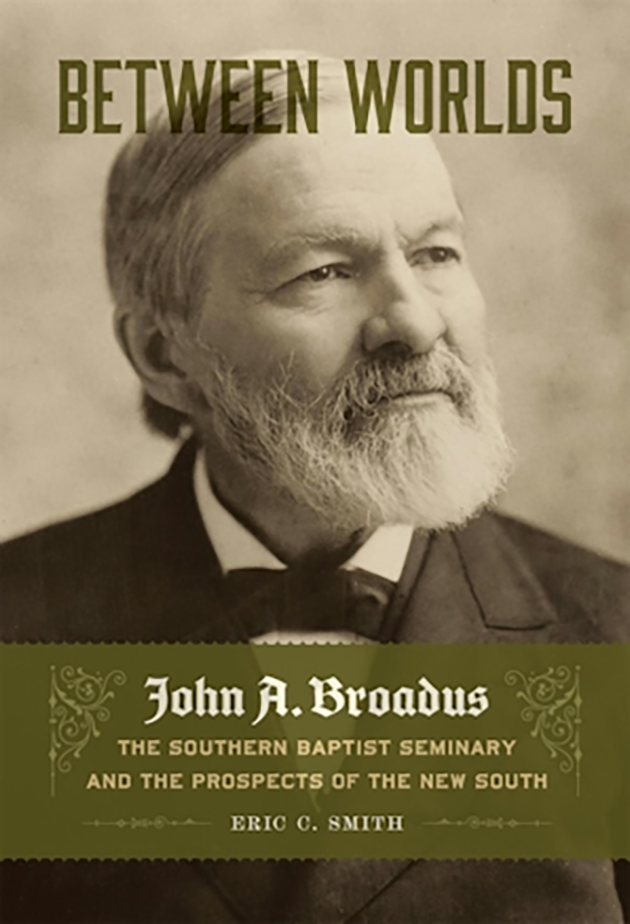
Eric C. Smith, Between Worlds: John A. Broadus, the Southern Baptist Seminary, and the Prospects of the New South, 2026
John A. Broadus (1827–95) was a highly influential Southern Baptist leader, preacher, scholar, and educator during the latter half of the nineteenth century. He cofounded the Southern Baptist Theological Seminary, which today is among the largest seminaries in the world. Broadus’s enduring impact on American preaching stems in part from his 1870 homiletics manual, a widely adopted textbook that ministers continue to use today. A prominent southerner before and after the Civil War, Broadus actively shaped his region during the shift from the Old South to the New. Eric C. Smith’s Between Worlds—the first scholarly biography of Broadus—joins recent historical scholarship in reevaluating Broadus’s legacy.
Finally, for staying up-to-date on the latest titles in all fields, we recommend regularly perusing New Books Network and its "New Books in Christian Studies” page. These pages are updated regularly.