
Church History: Books of the Month
March 2026
Monthly Updates on Recent Books in the History of Christianity
To raise awareness of recent books in the history of Christianity, the editorial staff of Church History: Studies in Christianity and Culture highlights each month a list of 10-15 books in diverse periods and geographical regions that we hope will be of interest to our members. We include here below the March 2026 monthly list, chosen by our staff, with excerpts from the publishers’ blurbs.
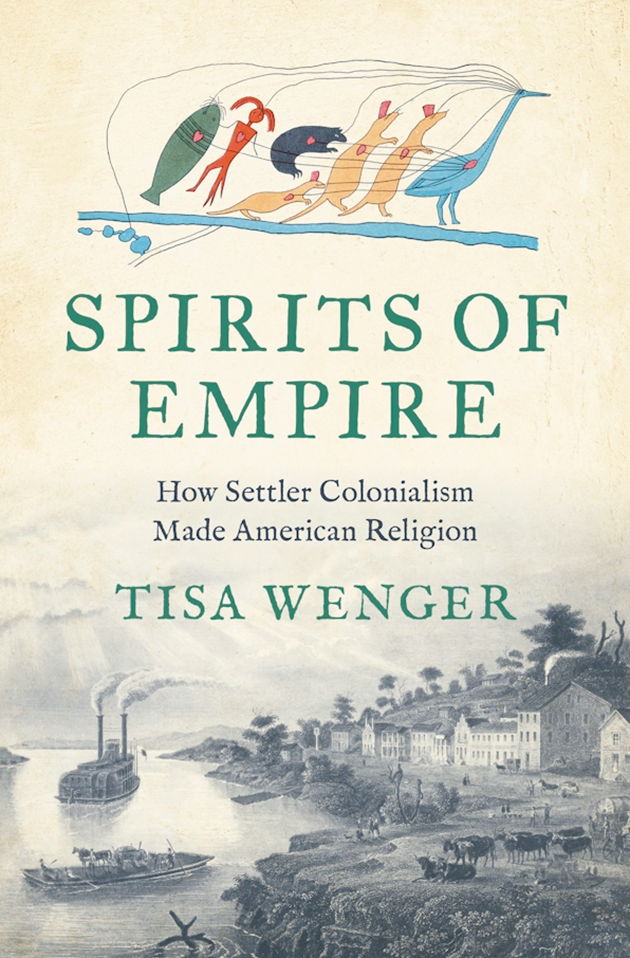
Tisa Wenger, Spirits of Empire: How Settler Colonialism Made American Religion, 2026
The Declaration of Independence depicted Native Americans as bloodthirsty savages, and from its founding the United States aimed to expand westward by seizing Indigenous lands. While white settlers saw these conquests as victories for “true religion,” native people invoked the spirits in their own defense. Some claimed the powers of Christianity, while others drew on the English-language concept of religion to redefine their own ancestral traditions. As all sorts of people struggled to make their way within this new empire, a broad variety of new religious movements emerged.
In this groundbreaking book, historian Tisa Wenger shows how the history of American religion unfolded on these settler colonial foundations. The imperatives of US empire, she argues, shaped the category and traditions of what we know as religion. Wenger also introduces the concept of “settler secularism” to explain how white settlers defined and managed religion in their own image, in order to facilitate their own rule. She shows how the concept of “religion”—whether as a special thing that requires protection or a mark of the primitive that must be transcended—has most often served the interests of those in power. Ultimately, settler colonialism organized American religion and created religious hierarchies that still influence the United States today.
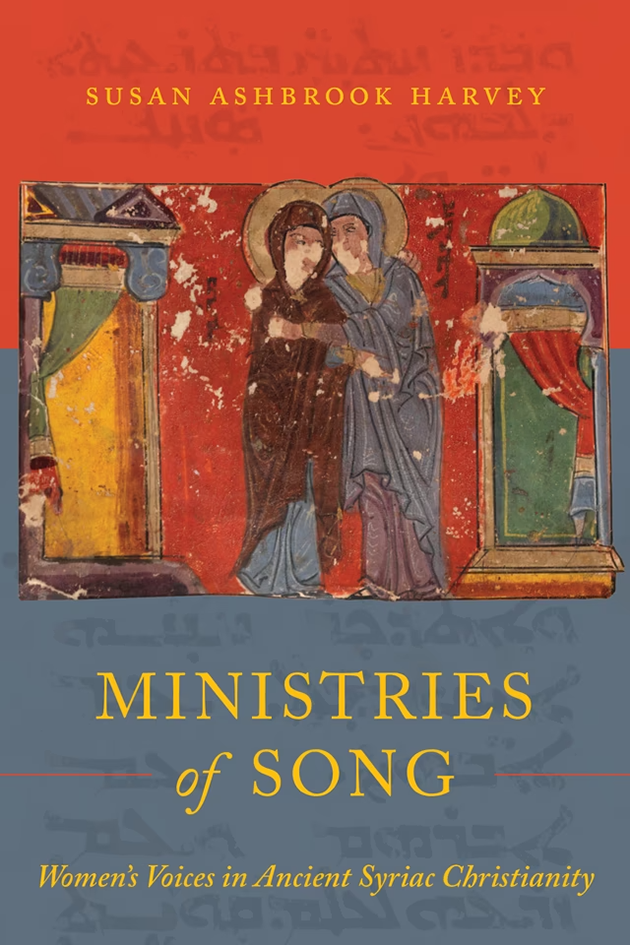
Susan Ashbrook Harvey, Ministries of Song: Women's Voices in Ancient Syriac Christianity, 2025
Ministries of Song is a tour-de-force study of the power of women's liturgical singing in late antique Syriac Christianity. Extending women's religious participation beyond the familiar roles of female saints and nobles, Syriac churches cultivated a flourishing but often-overlooked tradition of women's sacred song. Susan Ashbrook Harvey brings this music to life as she uncovers the ways these now-nameless women performed a boldly sung teaching ministry and invited congregations to respond aloud. By exploring their ritual agency, Harvey demonstrates how these choirs helped to shape the formative ethical and moral ideals of their congregations and communities. Women's voices, both real and imagined, enriched the ritual and devotional lives of Syriac Christians daily and weekly, on ecclesial and civic special occasions, in sorrow or joy, with authoritative theological significance and social and political resonance. Arguing for the importance of liturgy as social history, Harvey shows us how and why women's voices mattered for ancient Syriac Christianity and why they matter still.
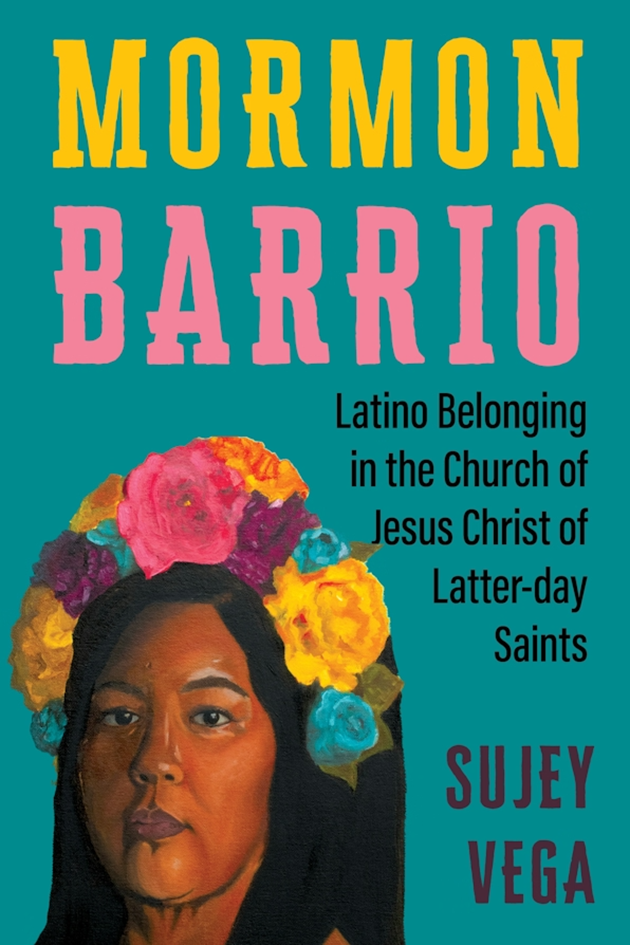
Sujey Vega, Mormon Barrio: Latino Belonging in the Church of Jesus Christ of Latter-day Saints, 2026
The Mormon community is usually thought of as a homogenous, white-dominant faith. However, Latinos make up the second largest demographic group in the Church, with about 3.3 million practicing members today. Despite their rich history and influence, little research has focused on Latinos within the LDS Church or the push-pull factors that have attracted Spanish-speaking members to Mormonism in record numbers.
Mormon Barrio charts the century-long history of Latino Latter-day Saints, examining their historic and present contributions to the Mormon faith as well as their unique positioning within the religion’s demographic makeup. Early in the Church’s history, founder Joseph Smith’s successor, Brigham Young, denied Black members full participation in the faith. Latino Saints existed somewhere between White and Black members in this system. Since the late 1970s the church has disavowed the belief that people with dark skin are inferior, but the Church is still an overwhelmingly white institution.
Centering the voices of Latino LDS members, the volume explores how Latino Mormons have navigated and established a sense of belonging for themselves within the faith, countering its Whiteness and coming to terms with its racist history. It shows how Latino Mormons have developed ethnoreligious barrios (communities) to function as sacred ethnic collectives where their religious beliefs and cultural practices can intersect. And it pays particular attention to gender, and to the ways in which Latina Mormons engage their faith and feminism to navigate their gendered positions within Mormonism. Mormon Barrio demystifies the lived ethno-religious experiences of Latino Mormons and accentuates their efforts to build a sense of communal belonging within their faith.
Lydia Willsky-Ciollo, Wildness: Henry David Thoreau and the Making of an American Theology, 2026
In Wildness: Henry David Thoreau and the Making of an American Theology, Lydia Willsky-Ciollo articulates how Thoreau was enmeshed in a decades-spanning project of crafting a theology of wildness. During Thoreau’s post-college years and his time at Walden Pond, he evolved from hopeful writer to observant theologian, whose primary work as a surveyor enabled his theological vocation.
Willsky-Ciollo skillfully guides readers through Thoreau’s writings and life as his theology emerges and evolves. The focus of Thoreau’s theology—wildness itself—centers on the divinity extant in every person and in every molecule of creation. Definitively American in its ethos, Thoreau’s theology reflects a distinctly American set of tensions: progress and tradition, wilderness and civilization, the destructive and the generative nature of work, the individual and the society, the local and the universal, and the Christian and the pluralist. While remaining critical of dogmatism and institutional rigidity, he formed his theological vision in conversation with the Christianity of his own time and place.
Ultimately, theology is an active process, and interpreting the wild experience of divine revelation is the purview of all. Thoreau left the door open to his readers, who he hoped would pick up the pen where he left off and write their own theologies of wildness.
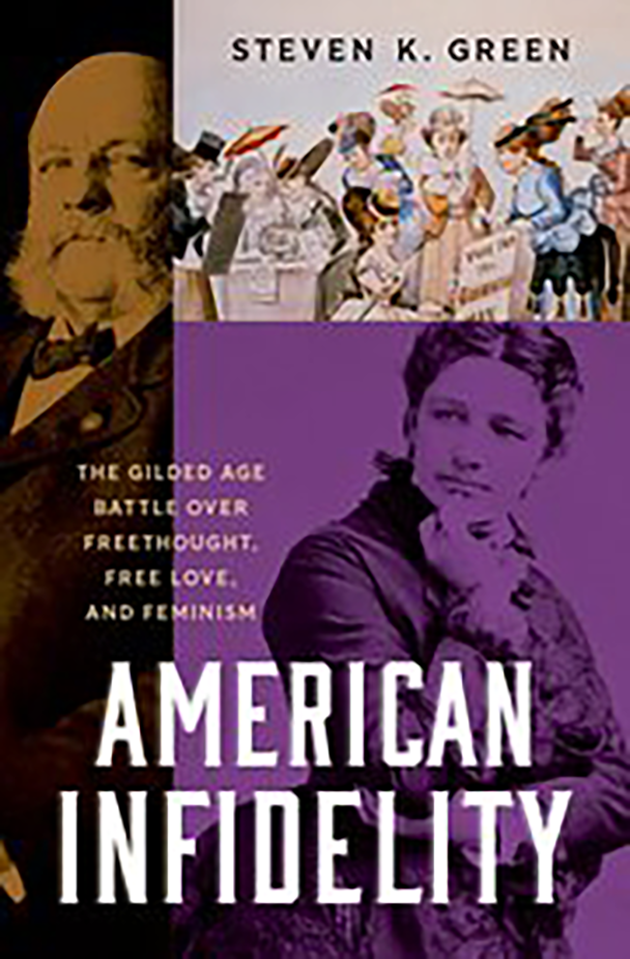
Steven K. Green, American Infidelity: The Gilded Age Battle Over Freethought, Free Love, and Feminism, 2026
In the final decades of the 19th century, America stood at a cultural crossroads. Evangelical Protestantism reigned supreme, shaping laws, morals, and public life. But beneath the surface, a bold countercurrent surged--freethinkers, feminists, and sexual radicals who dared to imagine a freer, more equal society.
In American Infidelity, historian Steven K. Green tells the riveting story of this ideological showdown. At its center were two powerful forces: a rising movement of skeptics and reformers who challenged religious orthodoxy and social convention, and the reactionary crusaders--led by the infamous Anthony Comstock--who fought to silence them. These "infidels," as Comstock branded them, weren't just questioning God--they were demanding access to birth control, advocating for divorce reform, and championing women's autonomy over their minds and bodies.
Figures like Elizabeth Cady Stanton pushed feminism beyond the vote, calling for sexual and economic liberation. Freethought leaders rejected the idea that America was a Christian nation, insisting instead on reason, inquiry, and personal freedom. But their vision of a more open society collided head-on with a moral panic that sought to preserve traditional values at all costs.
Green's gripping narrative reveals how this battle over belief, sex, and power shaped the cultural DNA of the United States. Drawing on vivid historical sources, he shows how the freethought and feminist movements were ultimately suppressed--but not extinguished. Their legacy lives on in today's ongoing struggles over reproductive rights, censorship, and the role of religion in public life.
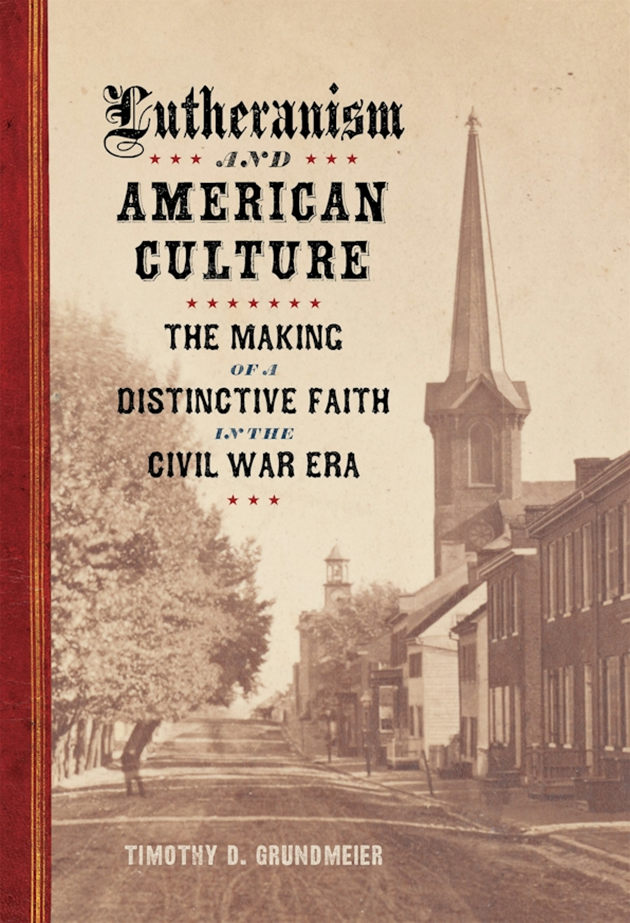
Timothy D. Grundmeier, Lutheranism and American Culture: The Making of a Distinctive Faith in the Civil War Era, 2026
Timothy D. Grundmeier’s Lutheranism and American Culture examines the transformation of the nation’s third-largest Protestant denomination over the course of the nineteenth century. In the antebellum era, leading voices within the church believed that the best way to become American was by modifying certain historic doctrines deemed too Catholic and cooperating with Anglo-evangelicals in revivalism and social reform. However, by the mid-1870s, most Lutherans had rejected this view. Though they remained proudly American, most embraced a religious identity characterized by a commitment to their church’s confessions, isolation from other Christians, and a conservative outlook on political and social issues.
Grundmeier shows that this transformation did not happen in a vacuum. Throughout the Civil War and early years of Reconstruction, disputes over slavery and politics led to quarrels about theology and church affairs. During the war and immediately after, the Lutheran church in the United States experienced two major schisms, both driven by clashing views on the national conflict. In the postbellum years, Lutherans adopted increasingly conservative positions in theology and politics, mainly in reaction to the perceived “radicalism” of the era. By the final decades of the nineteenth century, Lutherans had established a rigorously conservative and definitively American form of the faith, distinct from their coreligionists in Europe and other Protestants in the United States.
Although Grundmeier focuses on a single religious tradition, his study has implications for several areas of Civil War scholarship. First, it demonstrates how the Lutheran experience diverged from that of other Protestant groups, thereby expanding our understanding of how American Christians responded to the era’s crises, including slavery, sectionalism, and national identity. In addition, his work reinforces and extends many of the findings in other historical fields: the political culture of the Mid-Atlantic and Midwest, the views of German and Scandinavian immigrants, and the various forms of conservatism among white northerners. Grundmeier’s most significant contribution, however, is examining a previously unexplored subject. In the vast corpus of works on the Civil War era and American religious history, scholars have almost entirely overlooked the views and experiences of Lutherans. Lutheranism and American Culture seeks to remedy that neglect and serve as the starting point for understanding the formative decades of this distinctive faith.
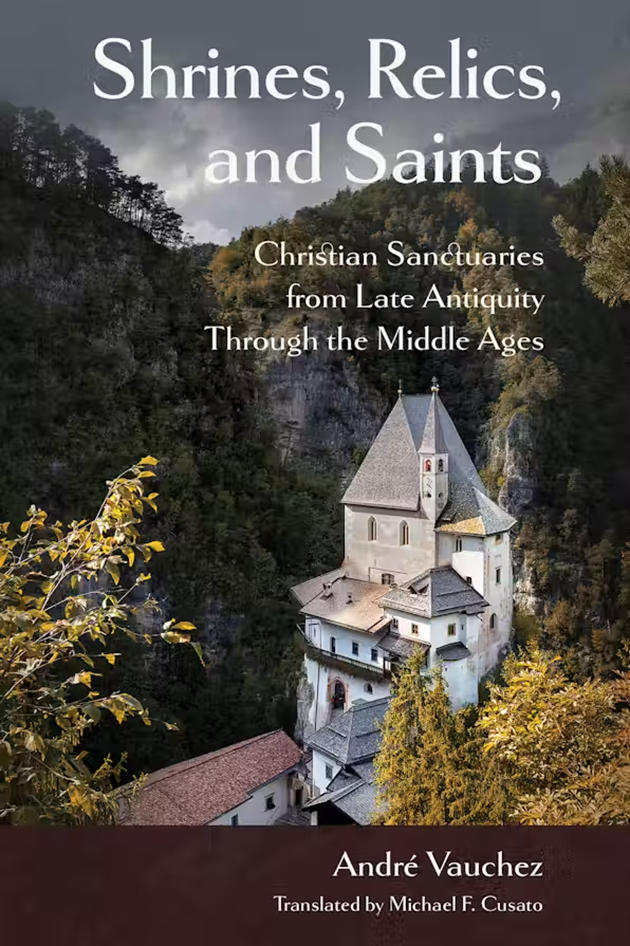
André Vauchez, Trans. Michael F. Cusato, Shrines, Relics, and Saints: Christian Sanctuaries from Late Antiquity Through the Middle Ages, 2026
In Shrines, Relics, and Saints,the eminent medievalist André Vauchez explores the evolution of spaces in Christianity—chapels, monasteries, holy wells, grottos, and other holy places—that are considered sacred because they house the relics of a saint or because they preserve the memory of an appearance by a saint, angel, or the Virgin Mary.
From famous sanctuaries that still attract multitudes of pilgrims—in Jerusalem, Rome, Tours, Assisi, and Compostela—to local shrines in villages, towns, and wild places across the continent, these sanctuaries were frequented by pilgrims in search of miraculous healings of body and soul. Together, they formed a network comprising new forms of sacredness and spiritual practice. A masterwork in the history of Christianity, Shrines, Relics, and Saints traces pilgrimage routes to major sanctuaries, follows saints' relics as they were transferred from East to West, and examines the Church's ambiguous and sometimes antagonistic relationship to sites of popular worship.
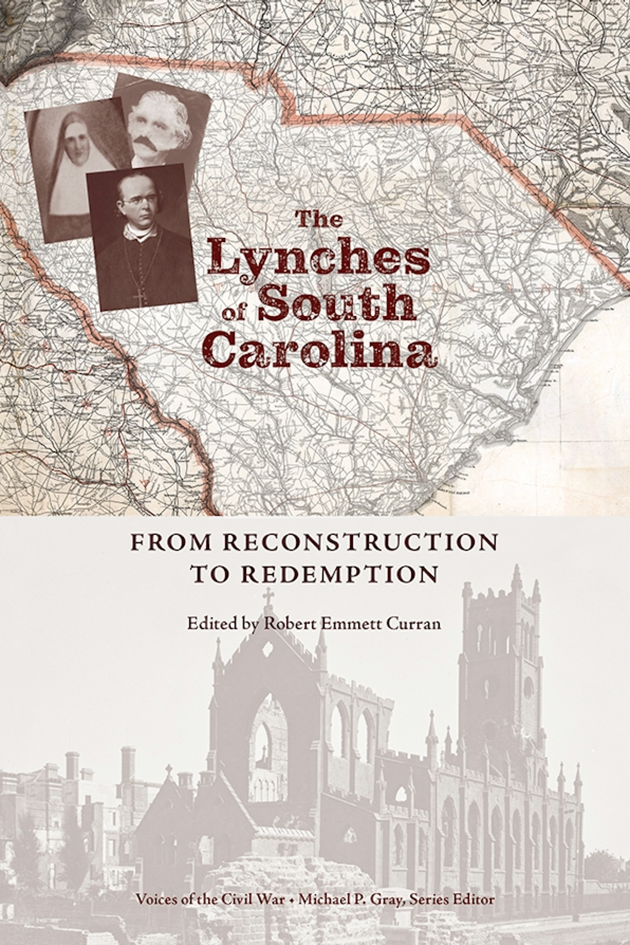
Robert Emmett Curran, ed. The Lynches of South Carolina: From Reconstruction to Redemption, 2026
In this follow-up volume to For Church and Confederacy: The Lynches of South Carolina, Robert Emmett Curran extends his corpus of work on the history of Catholicism in the South through the eyes of the Lynch family of South Carolina. An Irish American family who sympathized with the Confederacy, the Lynches rose to prominence economically and in religious leadership during the late 1800s. Curran's latest volume features a collection of personal correspondence from Lynch family members, telling the story of a family struggling to recover from the physical, financial, and emotional wreckage that the Civil War had left, while coping with the new order Reconstruction imposed upon the South.
With thirty-one chronological chapters spanning 1866 to 1882, this book of firsthand accounts fills a void in literature that treats the challenges and realities facing Irish Americans in the post–Civil War South. Each chapter begins with an orienting and engaging introduction, and a helpful family genealogy provides valuable context for readers. Offering a unique perspective on the Reconstruction, Redemption, and Gilded Age eras, The Lynch Family of South Carolina is an insightful and engaging resource for scholars of the post–Civil War era as well as those with an interest in Southern and religious history.
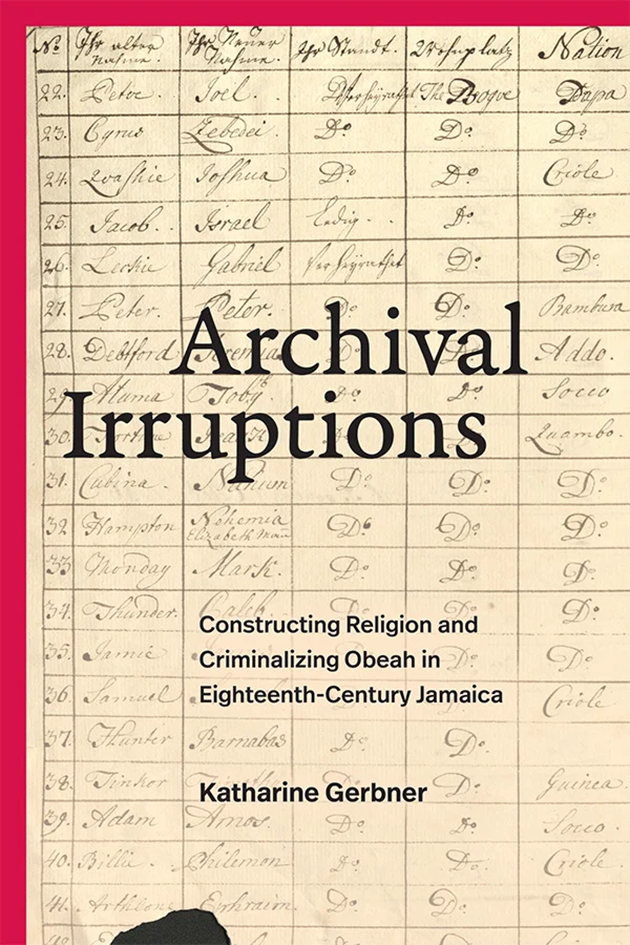
Katharine Gerbner, Archival Irruptions: Constructing Religion and Criminalizing Obeah in Eighteenth-Century Jamaica, 2025
In 1760, following the largest slave revolt in the eighteenth-century British Empire, the Afro-Caribbean word Obeah first appeared in British colonial law. In Archival Irruptions, Katharine Gerbner traces how British authorities in Jamaica came to criminalize Obeah, a practice that was variously seen as a healing method, an Africana religion, a science, and a form of witchcraft. Gerbner shows that in the years directly preceding its criminalization, for enslaved Africans and Maroons, Obeah was a prophetic practice tied to healing and death rites. Drawing on Moravian missionary archives, Gerbner theorizes these descriptions of African religious beliefs, rituals, and concepts as “irruptions”: moments when Africana epistemologies break the narrative of a European-authored archival document. In these irruptions, we see European assertions of authority through the lens of Obeah. Moreover, we find that the modern category of religion is rooted in the histories of slavery, rebellion, and the criminalization of Black religious practices. Gerbner’s search for archival irruptions not only creates an opportunity to write an alternative narration about Obeah; it provides a new methodology for all those conducting archival research.
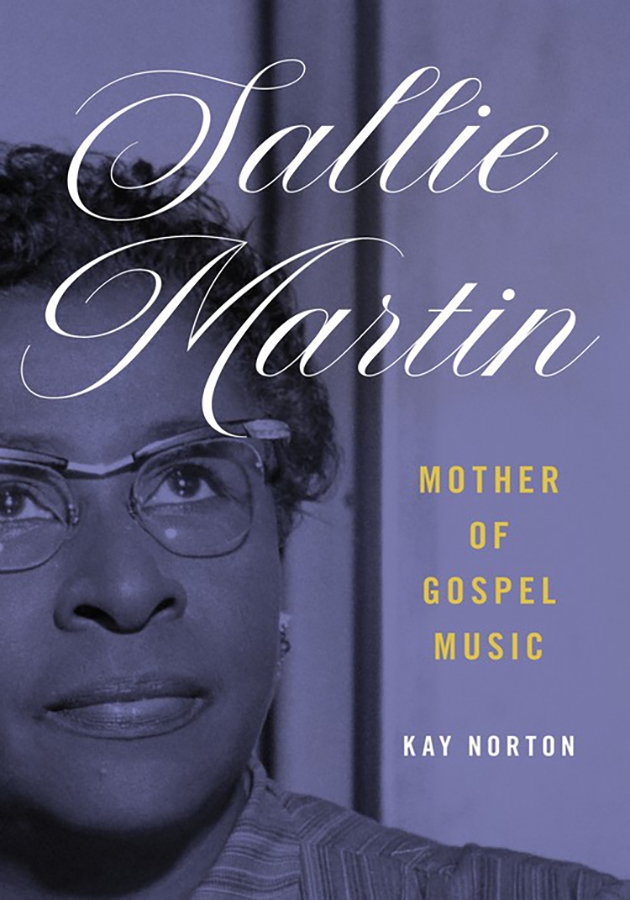
Kay Norton, Sallie Martin, Mother of Gospel Music, 2026
Sallie Martin combined fame as a performer with a far-sighted business acumen that brought Black gospel music to a national audience and laid the foundation for the industry that followed. Kay Norton’s biography follows Martin’s parallel careers from her early plans to grow the genre through her celebrity in the 1960s–1970s and eventful retirement.
“Same old Sallie Martin, same old Jesus,” she once told audiences, a reflection of both her musical style and unapologetic approach to life. Cofounder of the National Convention of Gospel Choirs and Choruses, Martin also co-established the pioneering Black music publisher Martin and Morris Music Studio. Her group the Sallie Martin Singers took Chicago gospel to all points of the compass and Martin mentored and employed dozens of aspiring vocalists and instrumentalists. Norton looks at Martin’s important relationships and the challenges she faced, while placing her accomplishments and legacy on the arc of gospel music history.
In-depth and powerful, Sallie Martin, Mother of Gospel Music tells the story of one woman’s role in shaping the music and business of Black gospel.
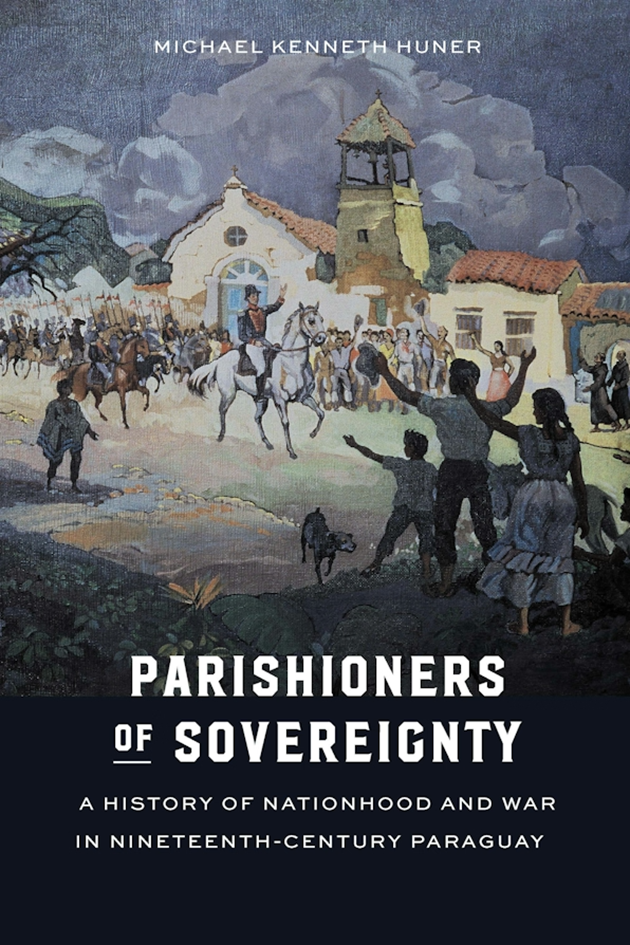
Michael Kenneth Huner, Parishioners of Sovereignty: A History of Nationhood and War in Nineteenth-Century Paraguay, 2025
The story of nineteenth-century Paraguay is the story of the dawn of modern nationhood in the world—and a devastating war is the culmination of this tale. The War of the Triple Alliance (1864–70), considered the bloodiest interstate conflict in the history of the Americas, pitted Paraguay against the combined forces of imperial Brazil and the republics of Argentina and Uruguay. By the end of the war, Paraguay was defeated and occupied, losing more than half its total population. Why, then, did everyday people in nineteenth-century Paraguay join and endure the violence and trauma associated with postcolonial sovereignty?
In Parishioners of Sovereignty Michael Kenneth Huner answers this question. He explores how modern nationhood became a living, breathing reality among everyday people in Paraguay even as such bonds of sovereignty remained fluid and contingent in the years leading up to and during the war. Although conventional history still portrays Paraguay’s experience in the conflict as the result of a precocious cultural and ethnolinguistic-based nationalism, Huner argues in contrast that religion and republicanism rendered modern nationhood a moral imperative for which everyday Paraguayans worked, died, killed, and subverted. By tracing the complex interplay of religion, republicanism, and local social history that created the Paraguayan nation and state, and utilizing unique sources in the Guaraní language, Parishioners of Sovereignty casts crucial new light on the social history of early nation-building throughout the Americas.
Finally, for staying up-to-date on the latest titles in all fields, we recommend regularly perusing New Books Network and its "New Books in Christian Studies” page. These pages are updated regularly.