Church History: Books of the Month
January 2026
Monthly Updates on Recent Books in the History of Christianity
To raise awareness of recent books in the history of Christianity, the editorial staff of Church History: Studies in Christianity and Culture highlights each month a list of 10-15 books in diverse periods and geographical regions that we hope will be of interest to our members. We include here below the January 2026 monthly list, chosen by our staff, with excerpts from the publishers’ blurbs.
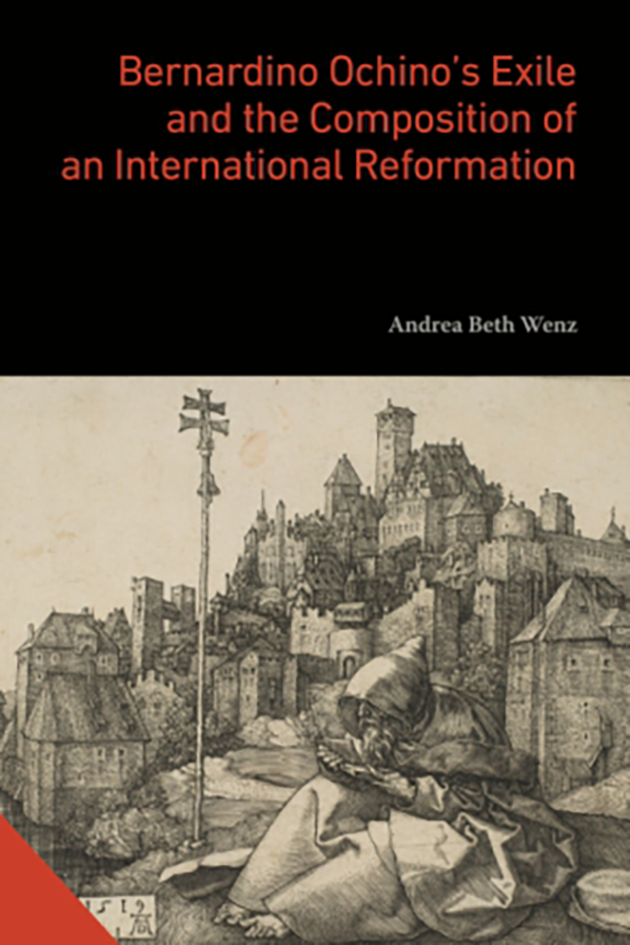
Andrea Beth Wenz, Bernardino Ochino’s Exile and the Composition of an International Reformation, 2025
Bernardino Ochino was one of the most celebrated Italian Catholic preachers of the sixteenth century—until the Roman Inquisition forced him into exile. But rather than silencing him, displacement granted Ochino an unprecedented platform: unimpeded access to the printing press and the ability to spread his ideas across Europe.
In this groundbreaking study, Andrea Beth Wenz reexamines Ochino’s vast body of vernacular writings, challenging conventional portrayals of him as a wandering heretic. Instead, she reveals how his mobility allowed him to become a central figure in the international Protestant Reformation. By moving Ochino from the margins of Reformation history to its core, Wenz complicates traditional distinctions between magisterial and radical reformers. She explores how his works—printed in nine languages—reached a diverse audience and how his pastoral vision resonated across linguistic and geographical boundaries. Situating Ochino’s life within broader discussions of religious exile, migration, and the power of print, this book offers fresh insight into the dynamics of sixteenth-century religious change.
Bringing to the fore Ochino’s significance and that of Italian reform more widely,
Bernardino Ochino’s Exile and the Composition of an International Reformation will appeal to scholars of the Reformation, exile studies, and the history of the book.
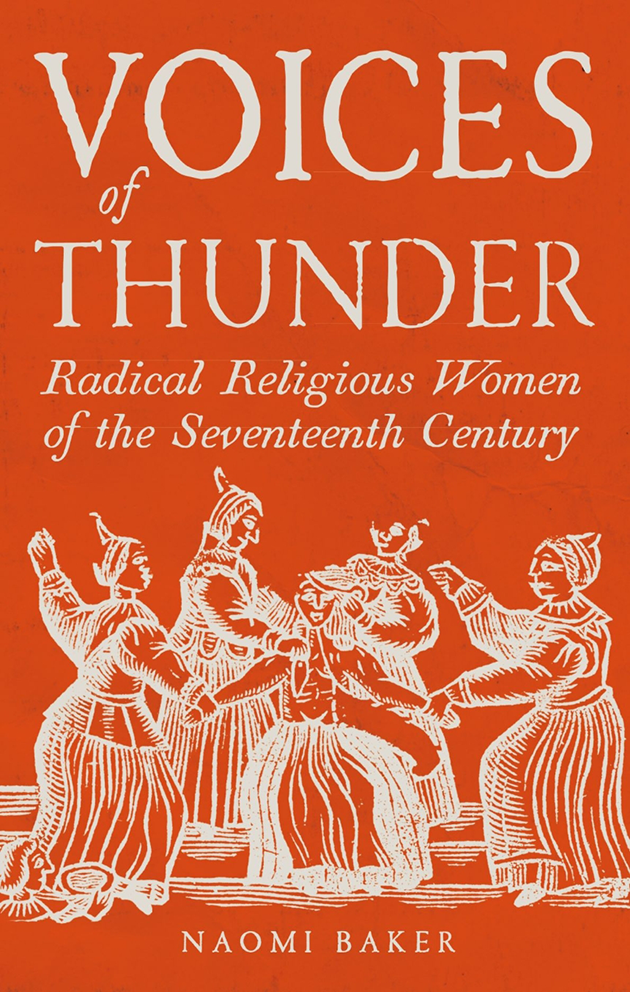
Naomi Baker, Voices of Thunder: Radical Religious Women of the Seventeenth Century, 2025
Voices of Thunder illuminates the stories and beliefs of a dozen seventeenth-century radical Protestant women, including a Colchester woman who feared that her four children would starve to death and a former maidservant from Yorkshire who was granted an audience with the sultan of the Ottoman Empire. Their belief in spiritual equality empowered them to resist the status quo, questioning the authority of those who sought to lord it over them. From mostly humble backgrounds, they found ways to make their voices heard, creating some of the earliest autobiographical accounts in English and allowing us a rare and precious glimpse of the lives and experiences of women in the early modern era.
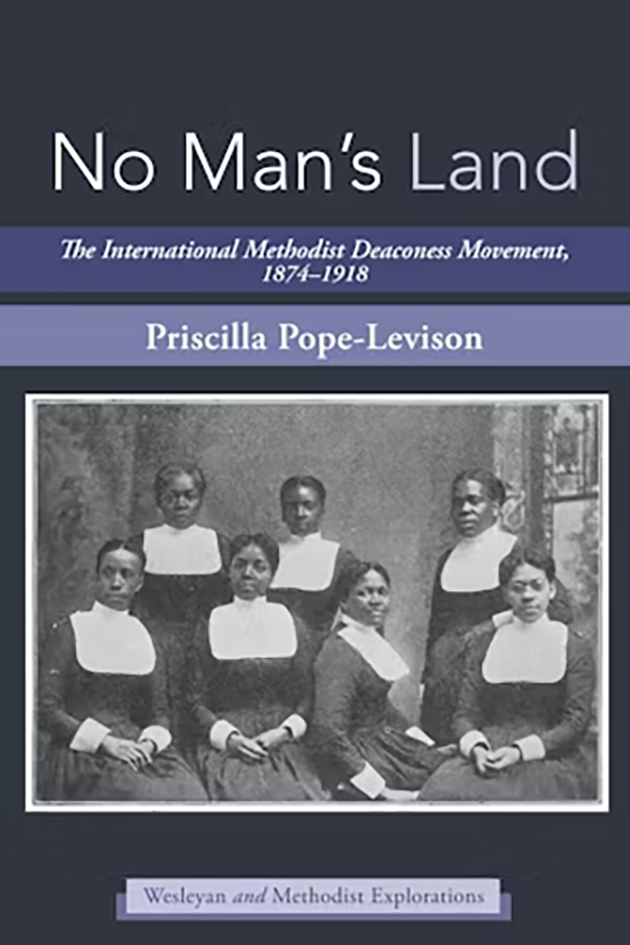
Priscilla Pope-Levison, No Man’s Land: The International Methodist Deaconess Movement, 1874–1918, 2025
No Man's Land, by Priscilla Pope-Levison, award-winning author and former president of the Historical Society of the United Methodist Church and the Wesleyan Theological Society, is a groundbreaking study of the international characteristics of a remarkable but largely forgotten women's movement of Methodist deaconesses. Pope-Levison has carefully curated archival resources--vivid vignettes, striking photos, and intimate personal diaries--to offer us, not just a historical overview, but an encounter with the women who left their homes in Australia, Great Britain, Canada, continental Europe, New Zealand, the Philippines, and the United States, to don the black dresses, distinctive bonnets, and sturdy shoes of a burgeoning movement dedicated to serving those ground down by suffering, sickness, poverty, and addiction. This is not just any book. It is an experience that captures the lost lives of women who visited in tenements, waited on train platforms to welcome young boys and girls arriving alone, who nursed and preached and taught and fed. Deaconesses carved out a precarious existence in no man's land--neither fully clergy nor fully laity--that nonetheless galvanized an international network of Methodist women.
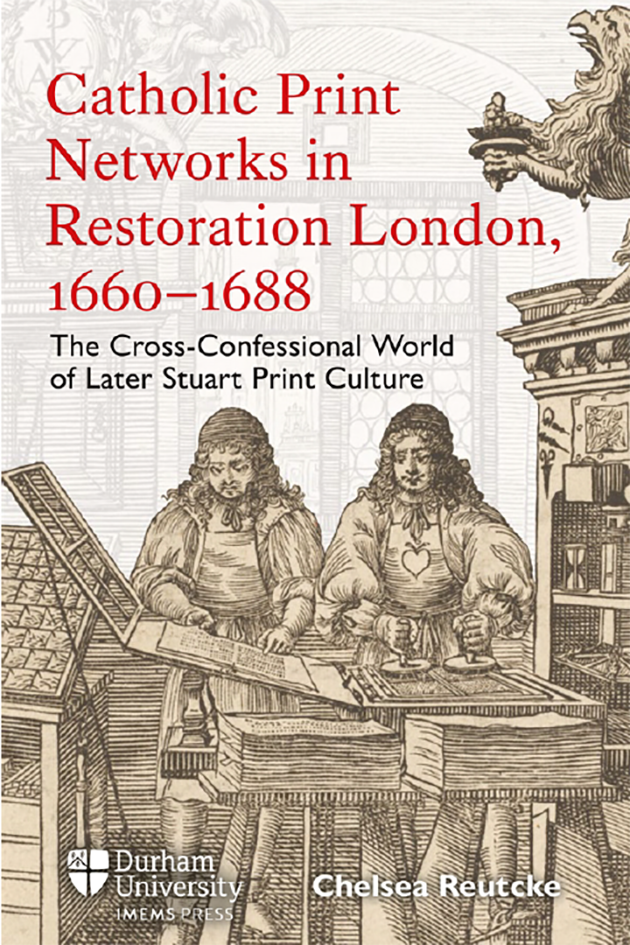
Chelsea Reutcke, Catholic Print Networks in Restoration London, 1660-1688: The Cross-Confessional World of Later Stuart Print Culture, 2025
In the politically volatile decades following the Restoration, the Catholic book trade in London remained a vibrant and adaptive force. This study reconstructs the networks-commercial, familial, and religious-that sustained the production and circulation of Catholic texts between 1660 and 1688. These networks operated within and across confessional boundaries, drawing in Protestants and Catholics alike, and were shaped by shifting legal frameworks, urban patronage, and the ambiguities of what constituted a ‘popish’ text.
Focusing on the lived experience of printers, booksellers, and readers, the book challenges the notion of Catholic isolation in Protestant England. It reveals how Catholic print culture was embedded in the broader English print economy and public sphere, often sharing tools, spaces, and strategies with dissenting and loyalist traditions. From Somerset House to the streets of London, Catholic actors navigated censorship and suspicion with ingenuity, contributing to a paradoxical print culture that was both illicit and integrated.
Engaging with the fields of Catholic history, book history, and Restoration studies, this monograph offers a new framework for understanding religious identity, toleration, and the mechanics of clandestine publishing. It brings to light the agency of overlooked figures and repositions Catholic print as a central, rather than marginal, feature of early modern English society.
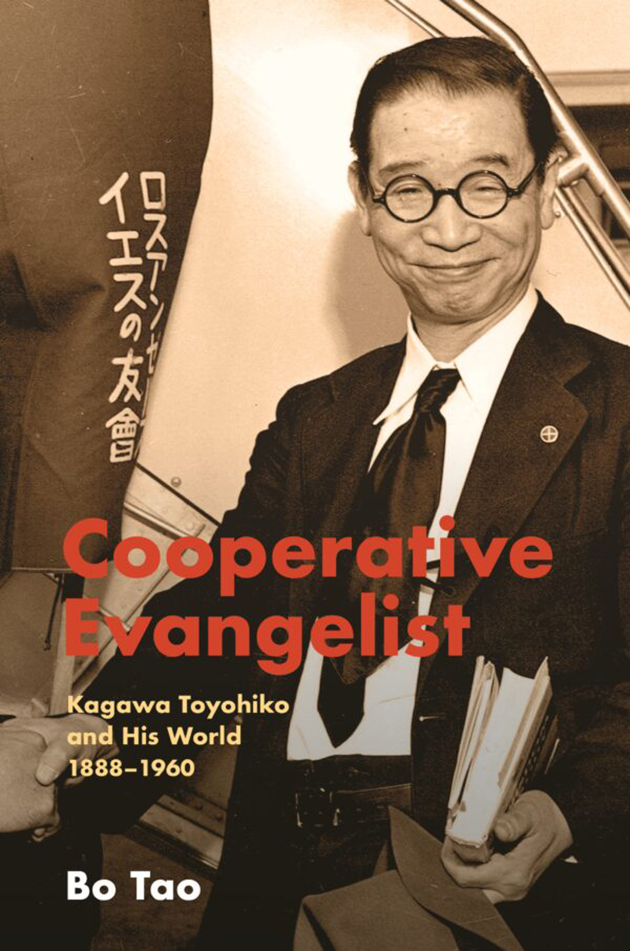
Bo Tao, Cooperative Evangelist: Kagawa Toyohiko and His World, 1888–1960, 2025
Cooperative Evangelist uncovers the extraordinary world of a Japanese man who was once described as the “Saint Francis” or the “Gandhi” of Japan. A renowned religious figure on the world stage, Kagawa Toyohiko (1888–1960) received wide acclaim for his work as a street preacher in the slums of Kobe as well as his espousal of nonviolent methods of social reform. His reputation as a pacifist figure, however, rested uneasily with his wartime actions, which became increasingly supportive of the Japanese government and its expansionist policies. Reluctant to speak up against Japan’s increasing aggression in the late 1930s, he emerged as a full-blown apologist during the Pacific War, appearing on several Radio Tokyo broadcasts as a propagandist defending the interests of state.
Adopting a transnational approach that accounts for the rapid flow of information between Japan and the United States, Bo Tao examines the career of Kagawa as it unfolded within the context of the war, imperialism, and economic depression of the early to mid-twentieth century. Using official documents and personal correspondence that have received scant attention in previous works, Tao reveals, for the first time at this level of detail, the extent of Kagawa’s cooperative relationship with the Japanese government, as well as the ways in which his idealized image was carefully constructed by his ardent missionary supporters.
This book provides a window into the global dimensions of broader cultural shifts during the interwar period, such as the rise of Christian internationalism and the Depression-era popularity of cooperative economics. Offering a holistic and nuanced exploration of the tensions resulting from Kagawa’s hybrid identity as a Japanese Christian,
Cooperative Evangelist adds a new layer to our understanding of religion, empire, and politics in the shaping of social and international relations.
Scott M. Kenworthy, The People's Patriarch: Tikhon Bellavin and the Orthodox Church in North America and Revolutionary Russia, 2025
On October 28, 1917, just days after the Bolsheviks seized power, the great Council of the Russian Orthodox Church voted to restore the patriarchate, which had been abolished by Peter the Great two centuries earlier. The Council chose Tikhon (Bellavin), the son of a humble village parish priest, to be head of Russia's largest religious confession.
At the time, the majority of Orthodox Christians were devoutly religious. Tikhon's vision of the Church, which he began putting into practice during his years as the Orthodox bishop of North America (1898-1907), was that of an organic body which welcomed the participation of all believers. The Bolsheviks had other ideas. They aimed to create a revolution that would be carried out by the state on behalf of the people. And they sought to eradicate religion as “superstition” and not only to disestablish the Church, but to destroy it altogether. Although the alternate Russia which Tikhon represented would be crushed by the superior force of the Bolsheviks, he helped navigate the Church through immense challenges so that, in the end, the Orthodox Church outlived the Soviet experiment.
The People's Patriarch
tells the story of the clash of visions for the new Russia in 1917 through the lens of the humble man chosen to lead the Church, whose life exemplifies the transformations within the Orthodox Church in late Imperial Russia and its fate during the Revolution.
The People's Patriarch is the first critical biography of one of the twentieth century's most important Orthodox Christian leaders, based on an exhaustive use of previously untapped primary sources, including Tikhon's letters and encyclicals, previously classified documents from the top Bolshevik leadership and Soviet secret police, and materials from a dozen archives in five countries.
Martha Rampton, Trafficking with Demons: Magic, Ritual, and Gender from Late Antiquity to 1000, 2026
Trafficking with Demons explores how magic was perceived, practiced, and prohibited in western Europe during the first millennium CE. Through the overlapping frameworks of religion, ritual, and gender, Martha Rampton connects early Christian reckonings with pagan magic to later doctrines and dogmas. Challenging established views on the role of women in ritual magic during this period, Rampton provides a new narrative of the ways in which magic was embedded within the foundational assumptions of western European society, informing how people understood the cosmos, divinity, and their own Christian faith.
As Rampton shows, throughout the first Christian millennium, magic was thought to play a natural role within the functioning of the universe and existed within a rational cosmos hierarchically arranged according to a "great chain of being." Trafficking with the "demons of the lower air" was the essense of magic. Interactions with those demons occurred both in highly formalistic, ritual settings and on a routine and casual basis. Rampton tracks the competition between pagan magic and Christian belief from the first century CE, when it was fiercest, through the early Middle Ages, as atavistic forms of magic mutated and found sanctuary in the daily habits of the converted peoples and new paganisms entered Europe with their own forms of magic. By the year 1000, she concludes, many forms of magic had been tamed and were, by the reckoning of the elite, essentially ineffective, as were the women who practiced it and the rituals that attended it.
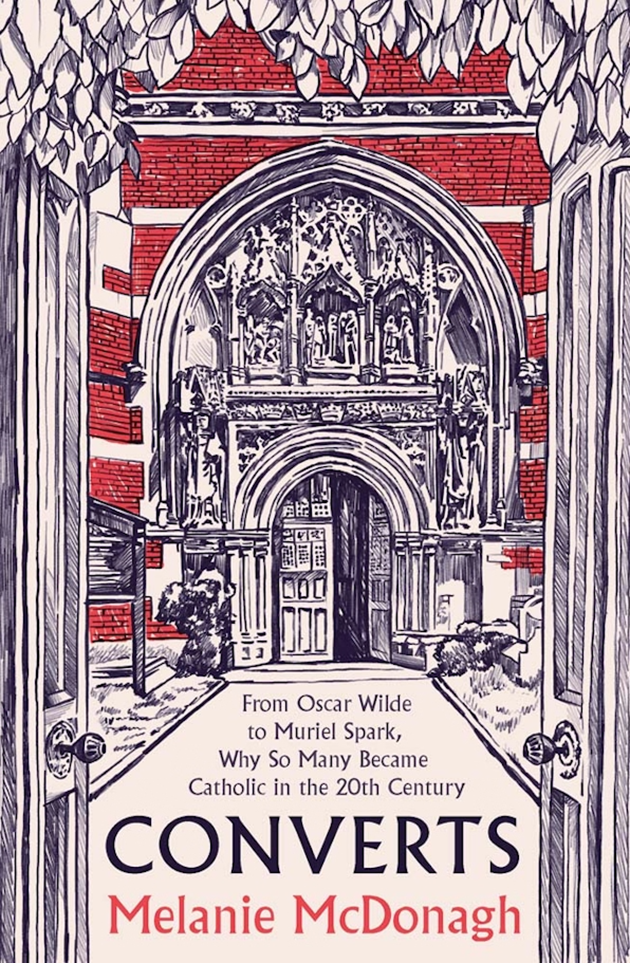
Melanie McDonagh, Converts: From Oscar Wilde to Muriel Spark, Why So Many Became Catholic in the 20th Century, 2026
The twentieth century is understood as an era of growing, inexorable secularism, yet in Britain between the 1890s and the 1960s there was a marked turn to Rome. In the first half of the century, Catholicism became an intellectual and spiritual fashion attracting more than half a million converts, including fascinating artists, writers, and thinkers. What drew these men and women to join the church, and what difference did conversion make to them?
Melanie McDonagh examines the lives of these notable converts from the perspective of their faith. For the Decadent circle of Aubrey Beardsley and Oscar Wilde—who converted on his deathbed—artists such as Gwen John and David Jones, the philosopher Elizabeth Anscombe, and novelists including G. K. Chesterton, Graham Greene, Evelyn Waugh, and Muriel Spark, Catholicism offered stability in increasingly febrile times. McDonagh explores their lives and influences, the reaction to their conversions, and the priests who initiated them into their faith.
David F. Evans, Damned Whiteness: How White Christian Allies Failed the Black Freedom Movement, 2025
The memory of the long civil rights movement often celebrates white men and women who drew on their religious faith to support Black demands for racial justice. However, the visions and actions of these leaders and their organizations often conflicted with those of Black leadership. While Black activists fought for a broad vision of freedom, white allies focused more narrowly on cultivating interracial friendship, marching in parallel to Black movement leaders rather than alongside them.
Damned Whiteness offers an unflinching history of white-led efforts at interracial organizing gone astray. Considering the examples of Dorothy Day, cofounder of the Catholic Worker Movement; Clarence Jordan, spiritual father of Habitat for Humanity; and Ralph Templin, a Christian missionary who studied nonviolence in Gandhi’s India, David F. Evans reveals how religious white progressives inherited strategies that remained disconnected from the ideas and actions of Black communities. These disconnects have often been cloaked as disagreements over religious doctrine and practice, but Evans reveals how they stem from refusals to acknowledge Black leaders' philosophies and freedom dreams. Though these patterns persist, Evans offers a way out of this legacy of white allyship and into a future where freedom is possible.
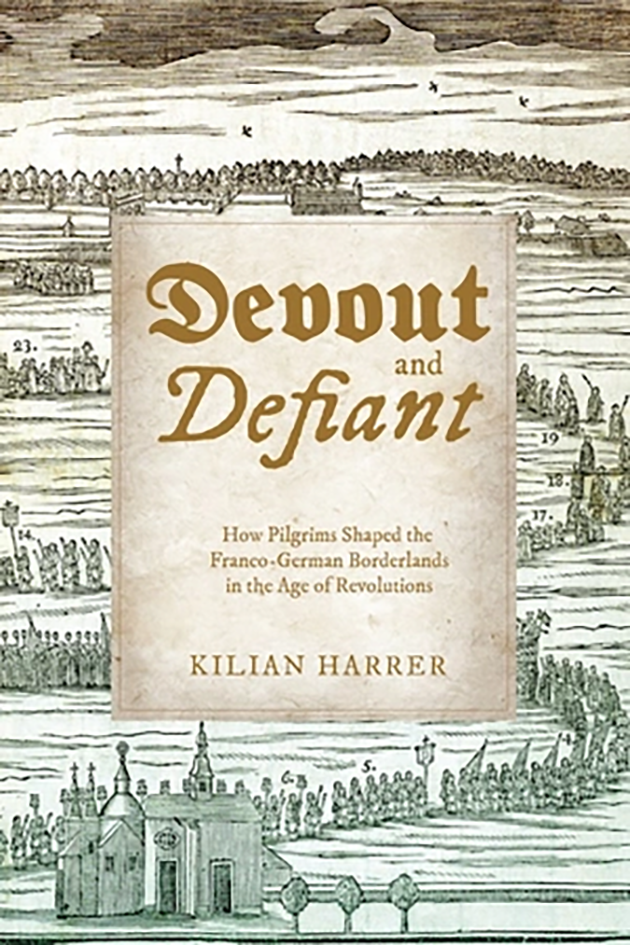
Kilian Harrer, Devout and Defiant: How Pilgrims Shaped the Franco-German Borderlands in the Age of Revolutions, 2025
In the days of the French Revolution, as zealous government officials sought to sweep away the vestiges of a less enlightened age, they made a concerted effort to clamp down on religious “superstition” and to fix modern territorial boundaries. Catholic pilgrims on the western edge of German-speaking Europe, however, refused to let worldly barriers stand in the way of their devotional practices. As Kilian Harrer reveals in this groundbreaking book, pilgrimage became a form of transgressive devotion that spurred religious renewal.
By the hundreds of thousands, pilgrims exposed the limits of state authority as they traveled to shrines and holy sites across the borderlands that stretched from Luxembourg in the north to Alsace and Switzerland in the south. These Catholics evaded passport controls, crossed provocatively into Protestant territories, and went abroad to visit shrines beyond the reach of anticlerical officials. Pilgrims and pilgrimage organizers reshaped the politics of religion by grappling with shifting borders, dramatic regime change, and police repression. In the end, they reoriented Catholicism itself as they boldly confronted the state-led policing of borders and worship.
Finally, for staying up-to-date on the latest titles in all fields, we recommend regularly perusing New Books Network and its "New Books in Christian Studies” page. These pages are updated regularly.