
Church History: Books of the Month
May 2026
Monthly Updates on Recent Books in the History of Christianity
To raise awareness of recent books in the history of Christianity, the editorial staff of Church History: Studies in Christianity and Culture highlights each month a list of 10-15 books in diverse periods and geographical regions that we hope will be of interest to our members. We include here below the May 2026 monthly list, chosen by our staff, with excerpts from the publishers’ blurbs.
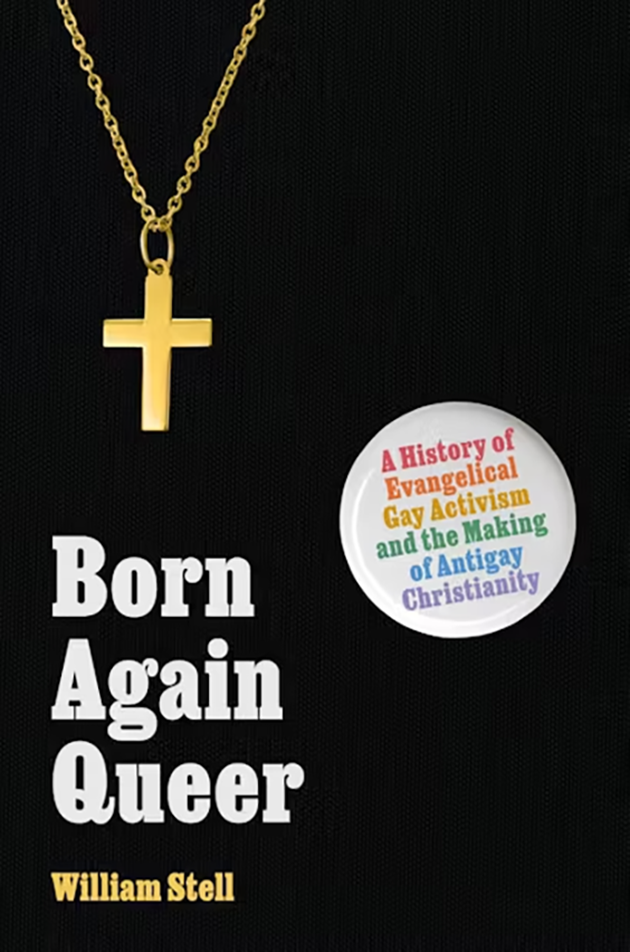
William Stell, Born Again Queer: A History of Evangelical Gay Activism and the Making of Antigay Christianity, Princeton University Press, 2026
Evangelicals claim that their opposition to homosexuality is an inherent feature of their faith, rooted in their unchanging beliefs about the Bible. Most scholars, journalists, and observers have accepted this account; in
Born Again Queer, William Stell upends it. Arguing that the antigay majority in evangelicalism has been less dominant and more vulnerable than previously thought, Stell describes a network of authors, ministers, and professors—all veterans of major evangelical institutions—who worked in the 1970s and 1980s to persuade Christians that their churches should affirm the relationships and ministries of gay and lesbian members. By the late 1970s, some even thought that these activists might shape the future of evangelicalism.
Of course, that speculation proved mistaken, and the antigay evangelical majority eventually overpowered the gay-affirming minority. Stell’s history of the rise and fall of evangelical gay activism shines a light on this largely forgotten chapter in American evangelicalism. Drawing on extensive archival research and interviews, Stell documents the work of four prominent activists: the founder of a predominantly LGBTQ+ denomination called the Metropolitan Community Churches, the leader of a gay advocacy organization called Evangelicals Concerned, and the evangelical feminist coauthors of the influential book
Is the Homosexual My Neighbor? By recovering the successes of evangelical gay activists and the struggles of their opponents, Stell’s account transforms how we think about evangelicalism, how we talk about the culture wars, and how we approach both religion in queer movements and queer activism in religious movements.
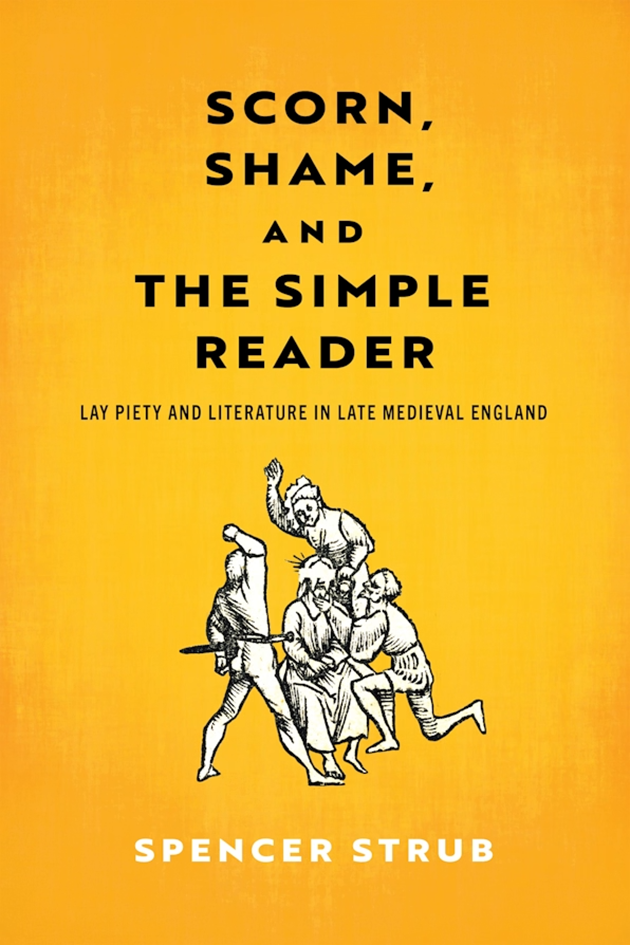
Spencer Strub, Scorn, Shame, and the Simple Reader: Lay Piety and Literature in Late Medieval England, University of Pennsylvania Press, 2026
Scorn, Shame, and the Simple Reader reveals how a cluster of rarely studied guides to the religious life helped forge a new identity in late medieval England. Lifting passages wholesale from texts originally intended only for holy virgins walled up in cells, these treatises turned Christlike shame and scorn for the world into an emotional language of collective belonging. Their simple readers—people of all genders and from all walks of life, all addressed as a “dear sister” while they read—exemplified a new mode of public spirituality, formed through acts of reading and imagination.
As Spencer Strub demonstrates, these acts of reshaping a life proved fertile ground for experiments in literary invention.
Piers Plowman, The Book of Margery Kempe, and the N-Town cycle plays share the same vocabulary, make the same metaphors, and abhor the same sins. They share the simple reader’s scorn and shame, in other words, but they put it to different ends. Dwelling in the impossible space between holiness and the world, these literary works found new ways to narrate the particularities of life as it was actually lived. In rewriting our understanding of gender, emotion, and piety in a period of religious upheaval, Strub provides a new perspective on the efflorescence of vernacular English fiction at the turn of the fifteenth century.
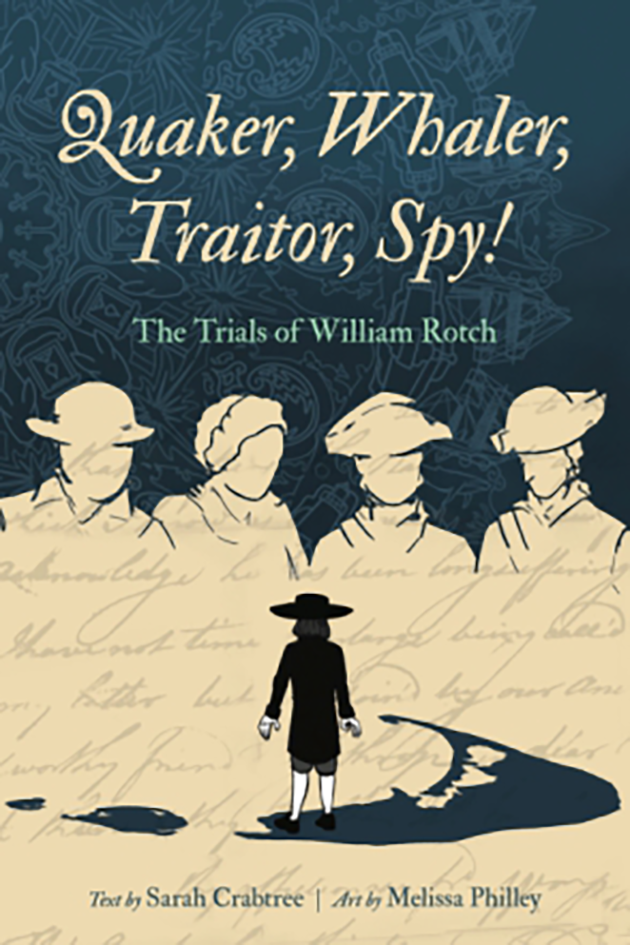
Sarah Crabtree, Art by Melissa Philley, Quaker, Whaler, Traitor, Spy!: The Trials of William Rotch, Penn State University Press, 2026
Accused of treason four times by three governments, William Rotch led a harrowing life. A Quaker merchant in the Age of Revolution, he refused to fight for either independence or empire. To governments and neighbors, his pacifism looked like treachery. As he fled from Nantucket to France to Britain and back again, Rotch suffered looting, inquisitions, and the threat of imprisonment and execution for his principled refusal to fight.
Yet Rotch was also a beneficiary of these turbulent years. Drawing on fresh archival research, Sarah Crabtree reveals how Rotch turned revolutionary upheaval to his advantage. He used his whaling ships to dodge national borders, claim multiple residences, and play rival governments against one another, building a vast fortune even as he faced trials for his supposed disloyalties. Beginning with the Boston Tea Party—when his family’s ships carried the infamous cargo—Rotch’s story illuminates the contested ideals of freedom, capitalism, and conscience in the Revolutionary Atlantic world.
Quaker, Whaler, Traitor, Spy! uses the comic form to tell this remarkable story from all angles, showing how different sources paint Rotch’s character in different lights. Through striking visuals and careful storytelling, this graphic history invites readers to question how history gets made and how we ought to reconcile seemingly contradictory accounts. Both engaging narrative and scholarly case study, this book is not only ideal for methods courses and classes in US history but also an accessible and compelling read for general audiences.
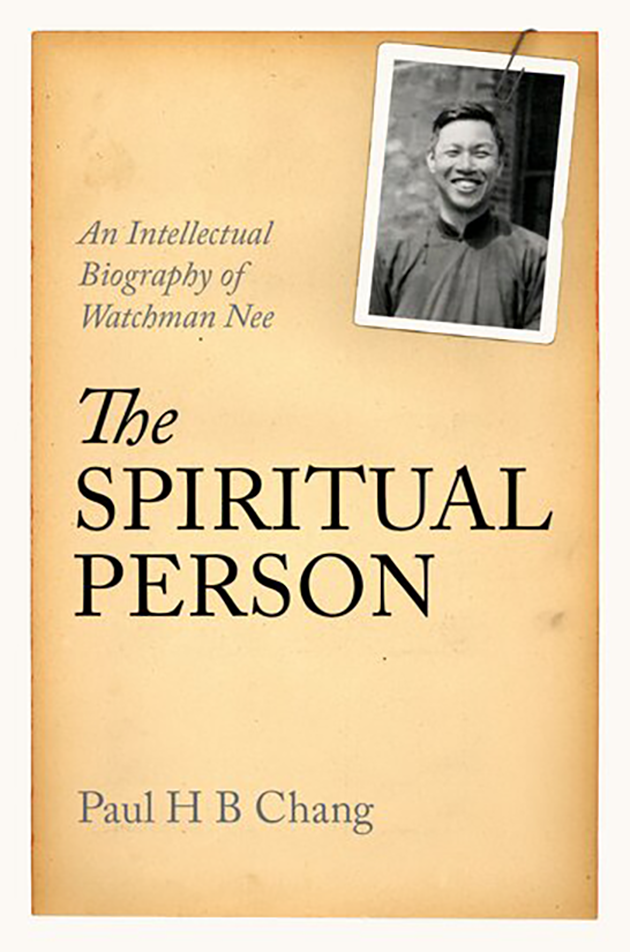
Paul H B Chang, The Spiritual Person: An Intellectual Biography of Watchman Nee, Oxford University Press, 2026
Watchman Nee (1903-1972) was a Chinese minister who promoted a unique set of Christian teachings. They included the idea that people were created with a human spirit, distinct from the human soul, and that in this spirit, people could enjoy a dynamic, transcendent oneness with God. Nee also taught that such divine-human unity was best practiced in local congregations, where believers' testimony would bring an end to history, fulfilling God's ultimate purpose in creation. These teachings have captivated millions, attracting followers in dozens of languages across the globe.
This book traces the unique lineage of Christian thought and the tumultuous context of 20th-century China from which Nee drew. Paul Chang shows how a young man with no formal theological training developed a set of beliefs that has persisted for over a century. The Spiritual Person grounds Nee's teachings in his biography, from his background as a third-generation Christian, to his first encounters with the evangelical tradition, to his leadership of an international fellowship of churches, to his dramatic imprisonment and death. This book will elucidate Nee's core set of concepts and practices that has drawn adherents from rock stars to politicians, showing why Nee remains both popular and controversial today.
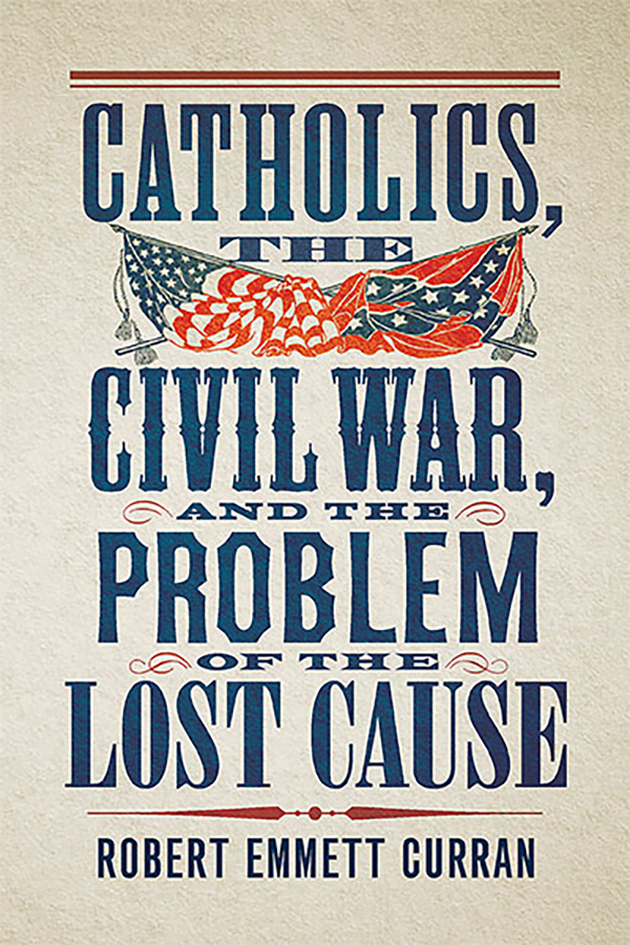
Robert Emmett Curran, Catholics, the Civil War, and the Problem of the Lost Cause, Georgetown University Press, 2026
Catholics fought on both sides of the American Civil War, but few supported the war's evolving aim of emancipating the enslaved. After the war, white Catholics played decisive roles in creating and promoting the ideology of the Lost Cause, a romantic distortion that the war had been a noble Southern fight for freedom, not caused by secession to preserve slavery.
Catholics, the Civil War, and the Problem of the Lost Cause sheds light on the surprising legacy of white American Catholics during and after the war years. Curran also explores other topics, such as church-state relations, anti-Catholic nativism, chaplains and nun nurses in wartime, the impact of the Civil War and Reconstruction on Catholic colleges, and Catholic prisoners of war.
General readers, scholars, and students interested in the Civil War era and the history of American Catholicism will benefit from a deeper understanding of this history and how it predisposed conservative Catholics to respond positively to today's populist movement, which brought about the election of Donald Trump.
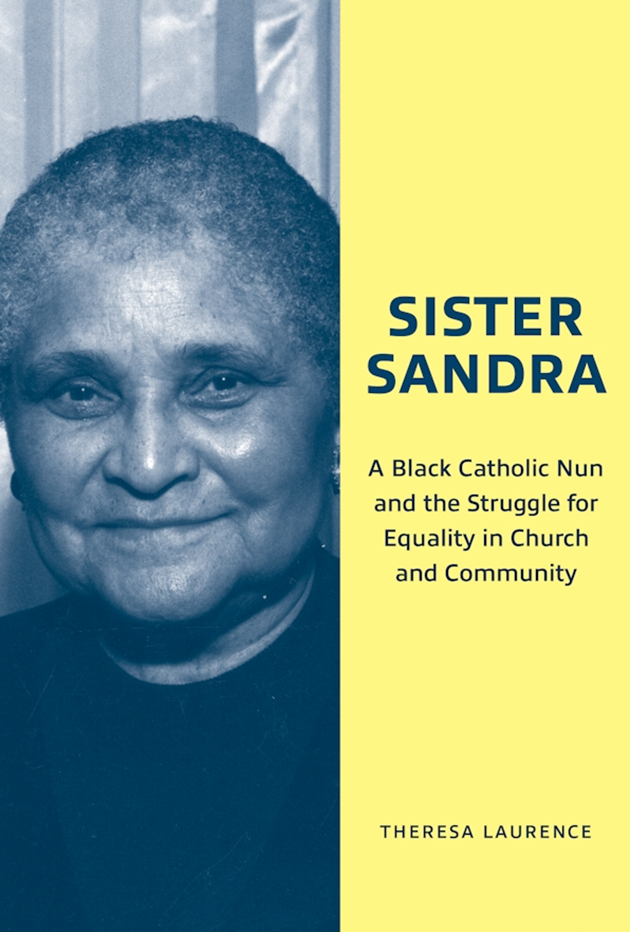
Theresa Laurence, Sister Sandra: A Black Catholic Nun and the Struggle for Equality in Church and Community, University of Tennessee Press, 2026
Sister Sandra Smithson, a Black Franciscan nun from Tennessee, lived her extraordinary life on the forefront of change. A passionate educator, she was committed to working directly with disadvantaged students and strived to reform local and national education policy to better serve these children until her death in 2022 at age ninety-six. Smithson first joined the School Sisters of St. Francis in 1954, one of the only orders of nuns who accepted African American women at the time, and made it her mission to challenge the status quo in her community and her church, even when it put her at great personal risk. In Sister Sandra by Theresa Laurence, readers are treated to an account of Smithson’s expansive life and legacy, from her educational ministry in Central America, to cofounding a nonprofit in Middle Tennessee that served children and advocated for policy change in public education.
Thoughtful, opinionated, and beholden only to God’s will and her own conscience, Smithson often trod on the margins of society and the church, working throughout her long life to “bring good news to the poor” and raise her voice for the voiceless. She was an unforgettable real-life hero who followed God’s call regardless of the power structures stacked against her as a Black woman. At its core, Sister Sandra provides a unique look at the life and work of an African American nun during times of tumultuous change in both the American and the global South. It weaves together an intimate personal narrative of Smithson’s life while also documenting the Black Catholic history of Nashville, making this text a singular and essential resource on Catholic Church history in Tennessee, the South, and the US as a whole.
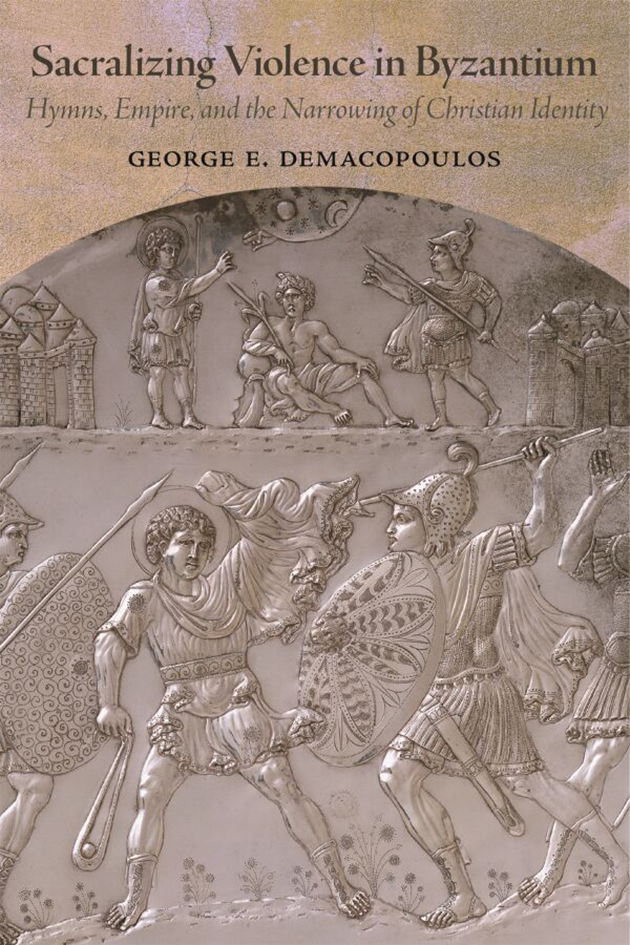
George E. Demacopoulos, Sacralizing Violence in Byzantium: Hymns, Empire, and the Narrowing of Christian Identity, Harvard University Press, 2025
Christians had always been concerned, since the faith’s inception, about the relationship between violence and belief. In Byzantium, this tension was explored not only in abstract theological texts but in the songs people sang: hymns, a multivalent, fluid form of devotion that served as the meeting place between theological conviction and lived religious experience.
Sacralizing Violence in Byzantium is the first book to examine the complex and shifting perceptions of premodern Christians toward violence and war through the lens of hymnography. This book argues that the liturgical reflection on violence in Byzantium underwent a profound transformation—a sacralization of violence—at approximately the same time that Persian and then Arab armies conquered Jerusalem in the early seventh century, a turn that persisted into the tenth century.
By focusing on hymnography, George E. Demacopoulos provides both correction and nuance to historical assessments of Eastern Christian attitudes toward war and violence and reveals how Byzantine culture dramatized, authorized, and even celebrated violence.
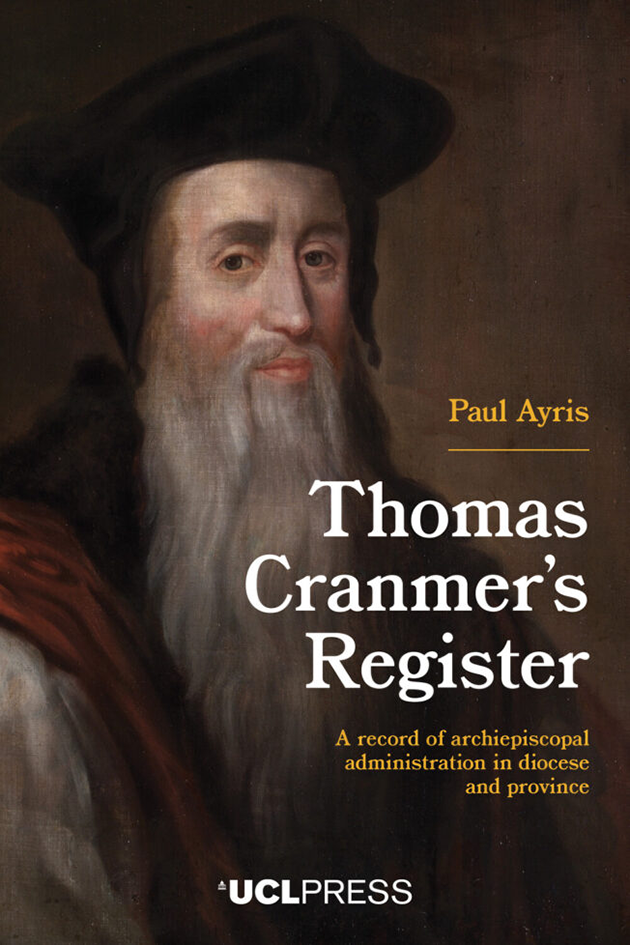
Paul Ayris ed., Thomas Cranmer’s Register: A record of archiepiscopal administration in diocese and province, UCL Press, 2026
Thomas Cranmer’s Register records turbulent change in England and Wales between 1533 and 1553. The crown abolished Roman jurisdiction, and the first steps towards the creation of a Protestant state were made. As archbishop of Canterbury, Thomas Cranmer was a seminal figure in these developments, and his register is a key Reformation document.
The physical register at Lambeth Palace has been out of reach for many scholars. Paul Ayris’s extraordinary edition makes more of the text available to readers than ever before, with transcriptions and editorial introductions that illuminate the sometimes cryptic sixteenth-century text. Here, the appointment of Cranmer to Canterbury (at the hands of the papacy) in 1533 is recorded. Commissions and letters reveal how the crown assumed authority over the church and, through Thomas Cromwell as vicegerent in spirituals, supplanted the role of the archbishop as the principal minister of the king’s spiritual jurisdiction. The work suggests a new explanation for the inclusion/exclusion of the stipulation in the 1536 royal Injunctions concerning the Bible in English. Moreover, unpublished records for the diocese of Norwich in 1550 reveal that the order for removing altars in English churches emanated from Thomas Cranmer not, as is usually thought, from the bishop of London, Nicholas Ridley. This edition will be a touchstone reference for global scholars of the Tudor period.
Brian Conway, Sacred Callings: An Eventful Analysis of the Global Catholic Priesthood, Helsinki University Press, 2025
Sacred Callings is an innovative sociological study of cross-national trends in the global Catholic priesthood. Based on a comparative-historical analysis of priesthood trends in Argentina, Malta, Nigeria, and the Philippines during 1950–2010, the monograph investigates how significant developments within the Catholic Church have shaped the evolution of vocations over time.
The book introduces and tests a new critical events theory, proposing a four-part framework—ecumenical councils, prophetic stances, sexual scandals, and papal visits—to help explain variation in priesthood trends. It demonstrates how these events operate as cues for religious callings, as well as how they interact with another.
Amid a global demographic shift in the Catholic priesthood —marked by declining vocations in Western regions and growing numbers in countries such as Nigeria—Sacred Callings provides a timely analysis of an important dynamic in the contemporary Church. In doing so, it offers fresh theoretical and empirical insights into the role of short-term events in shaping religious change in modern societies.
Éric Rebillard, The Triumph of Christianity Redescribed, Cornell University Press, 2026
In The Triumph of Christianity Redescribed, Éric Rebillard argues that the appearance of Christian signs and practices in the Roman Empire has long been misunderstood. Rather than marking a rapid wave of conversions or the triumph of belief, the spread of Christian signs reflected a more complex and fluid religious landscape.
Rebillard offers a striking new account of how Christianity took hold, not through adherence to doctrine or formal membership in a church, but through a gradual diffusion of signs and practices. Drawing on cognitive science, anthropology, and theories of religious mobility, he shows how individuals across the ancient Mediterranean experimented with religious symbols: adopting some, abandoning others, and often blending them without concern for consistency. Rebillard maps out a world where religious affiliation was provisional, situational, and rarely exclusive.
The Triumph of Christianity Redescribed challenges the idea that Christianity's rise was a straightforward story of growth, mission, or hegemony. By replacing a triumphalist narrative with one attuned to ambiguity, resilience, and the everyday realities of religious life in late antiquity, Rebillard offers scholars and general readers alike a richer, more accurate account of how Christianity spread—and what that spread actually meant.
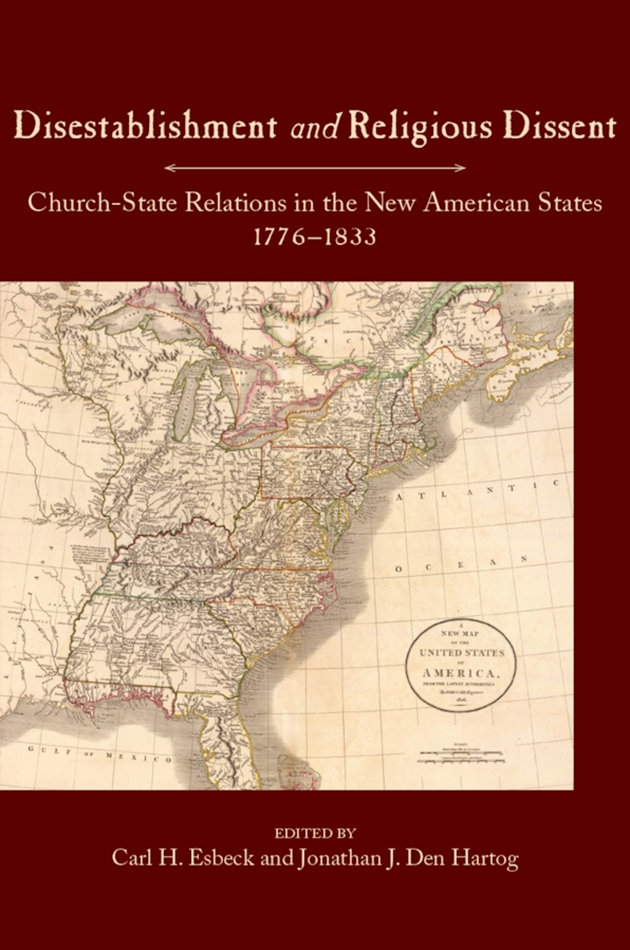
Carl H. Esbeck and Jonathan J. Den Hartog eds., Disestablishment and Religious Dissent: Church-State Relations in the New American States, 1776-1833, University of Missouri Press, 2026
On May 10, 1776, the Second Continental Congress sitting in Philadelphia adopted a Resolution which set in motion a round of constitution making in the colonies, several of which soon declared themselves sovereign states and severed all remaining ties to the British Crown. In forming these written constitutions, the delegates to the state conventions were forced to address the issue of church-state relations. Each colony had unique and differing
traditions of church-state relations rooted in the colony’s peoples, their country of origin, and religion.
This definitive volume, comprising twenty-one original essays by eminent historians and political scientists, is a comprehensive state-by-state account of disestablishment in the original thirteen states, as well as a look at similar events in the soon-to-be-admitted states of Vermont, Tennessee, and Kentucky. Also considered are disestablishment in Ohio (the first state admitted from the Northwest Territory), Louisiana and Missouri (the first states admitted from the Louisiana Purchase), and Florida (wrestled from Spain under U.S. pressure). The volume makes a unique scholarly contribution by recounting in detail the process of disestablishment in each of the colonies, as well as religion’s constitutional and legal place in the new states of the federal republic.
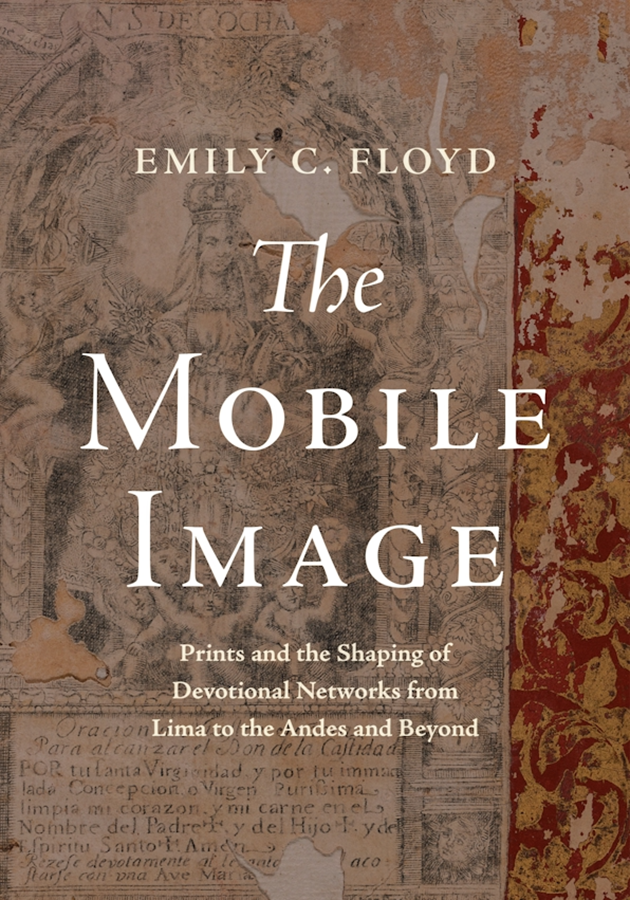
Emily C. Floyd, The Mobile Image: Prints and the Shaping of Devotional Networks from Lima to the Andes and Beyond, University of Texas Press, 2025
Printed images have had a central place in art-historical studies of colonial Spanish America, but scholars have typically focused on imported prints, designed and produced in Europe. The Mobile Image focuses instead on works printed in colonial Lima, generating there a distinctive print culture that served local and regional needs, while also appealing to European print consumers.
Inexpensive, easily transportable, and numerous, Lima’s prints traversed the varied geographies of the Viceroyalty of Peru both as loose sheets and within the protective covers of printed books. In the process, limeño devotional prints encouraged the development of shared regional imaginaries about the sacred Andean landscape, a space marked by miracle-working Virgins, potential saints, and powerful images of Christ. These same prints traveled abroad, where they promoted iconographies developed in Lima and influenced European conceptions of the Andes. Simultaneously, the visual language of limeño prints often challenges conventional approaches to interpreting colonial depictions of race. In analyzing limeño prints, and the identities of their makers, patrons, and consumers, The Mobile Image demonstrates that race is harder to recognize in colonial images than we might think. Unearthing hundreds of forgotten prints, Emily C. Floyd provides a fresh resource for interpreting colonial artworks, troubling established understandings of their aesthetics, and compelling us to reexamine colonial South American material cultures.