Church History: Books of the Month
June 2026
Monthly Updates on Recent Books in the History of Christianity
To raise awareness of recent books in the history of Christianity, the editorial staff of Church History: Studies in Christianity and Culture highlights each month a list of 10-15 books in diverse periods and geographical regions that we hope will be of interest to our members. We include here below the June 2026 monthly list, chosen by our staff, with excerpts from the publishers’ blurbs.
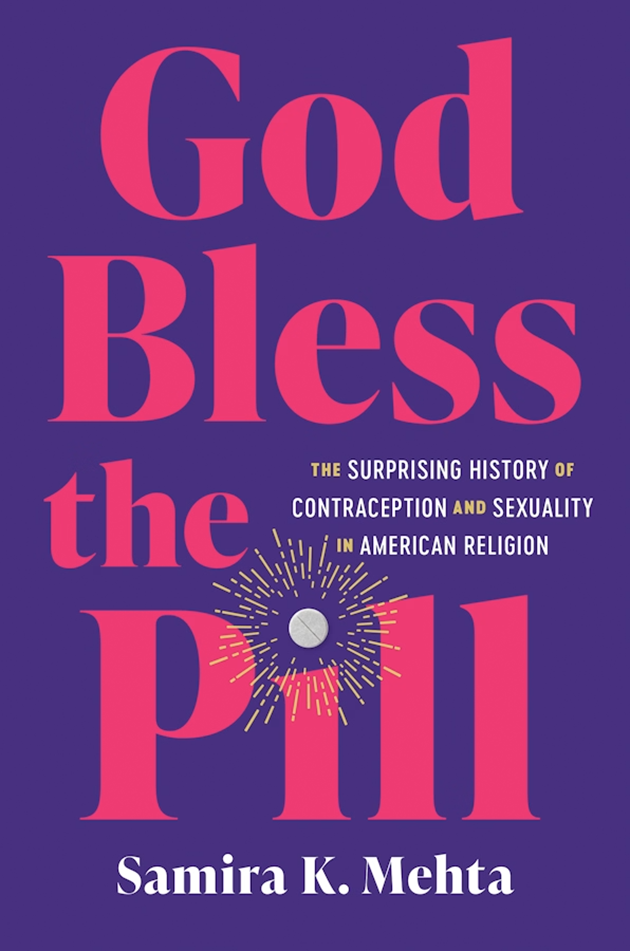
Samira K. Mehta, God Bless the Pill: The Surprising History of Contraception and Sexuality in American Religion, University of North Carolina Press, 2026
Most people today understand contraception as central to women’s liberation, and when the birth control pill arrived in 1960, the media thought it would usher in a sexual revolution. But a surprising number of religious Americans in the mid-twentieth century also saw contraception as part of God’s plan—a tool to create happy, prosperous American families in the post–World War II era.
In
God Bless the Pill, Samira K. Mehta traces the remarkable story of how mid-twentieth-century Catholic, Protestant, and Jewish voices promoted the use of birth control and made it more accessible for many Americans. They hoped birth control methods would curb divorce rates by encouraging sexually dynamic marriages and families unstrained by “too many” children—thereby creating a postwar upwardly mobile middle class. Religious leaders also promoted this understanding of the family as tied to Cold War capitalism and encouraged neither racial nor gender equity.
But then came the backlash, both from the Right—which failed to anticipate the feminist potential of contraception—and from the Left, where women, particularly women of color, sought to ensure that birth control was a tool of liberation rather than one rooted in patriarchal and racial oppression. Ultimately, Mehta offers compelling new insights into the way religion accommodates itself to social, technological, and medical change.
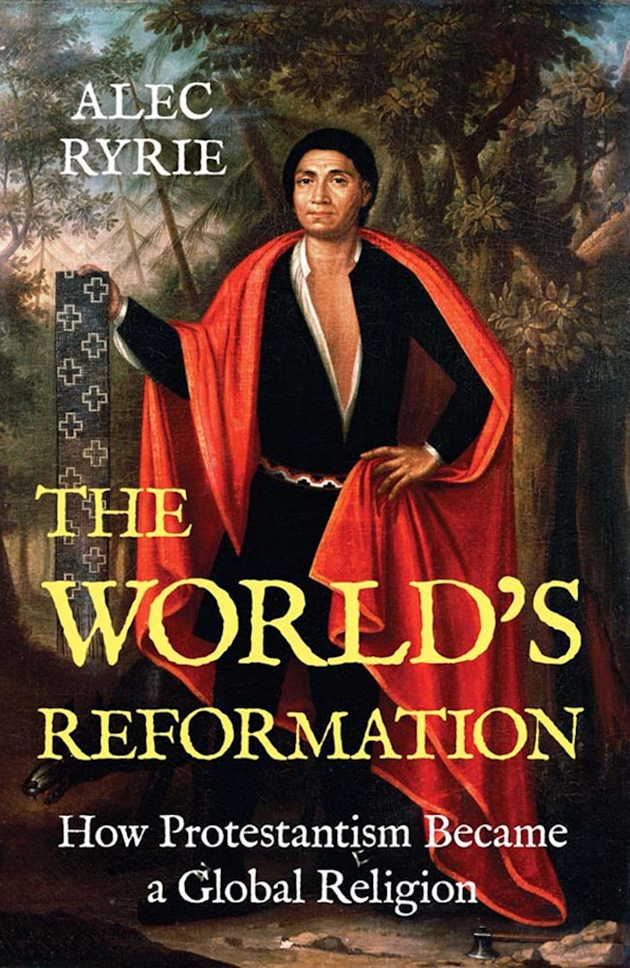
Alec Ryrie, The World's Reformation: How Protestantism Became a Global Religion, Yale University Press, 2026
Protestantism revolutionised early modern Europe. Radical theologians transformed the lives of thousands across the continent, irrevocably changing politics and society. But what about beyond Europe’s borders? Was global Christianity just a Catholic endeavour?
Alec Ryrie explores the untold history of how Protestants tried to spread their religion abroad, from Lapland to Chile and Barbados to Taiwan. At the story’s heart are the non-Christian people whom Protestants met more often than any others during this period: those they had enslaved in the Americas, Africa, and eastern Asia. We see how Protestants dealt with, or evaded, the moral failure of the slave trade, and how their missionary efforts were disappointments at best, utter fiascos at worst.
Their world Reformation, its failures, and its consequences for both good and ill, has largely been forgotten. This fascinating history makes the case for why it is worth remembering.
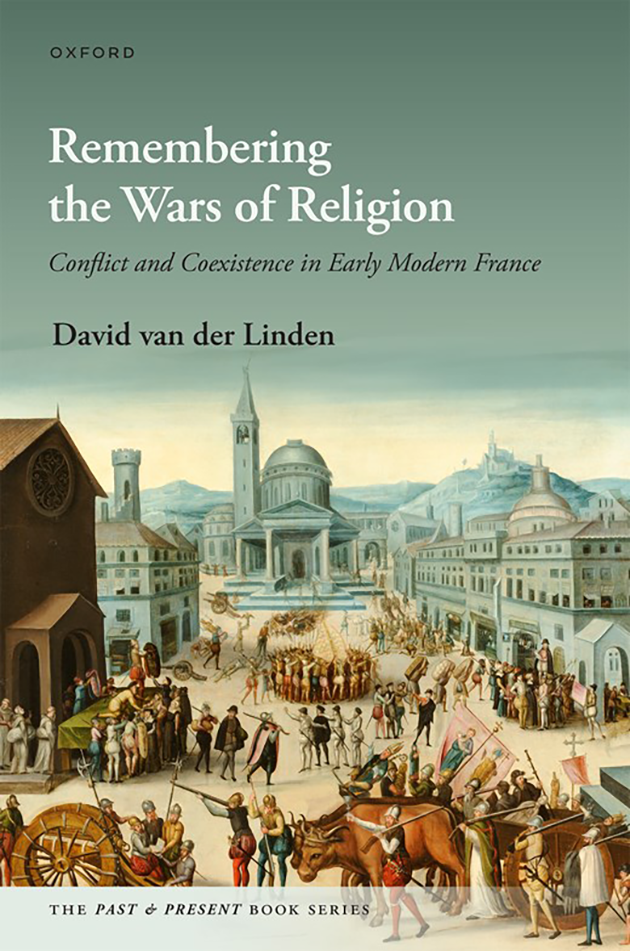
David van der Linden, Remembering the Wars of Religion: Conflict and Coexistence in Early Modern France, Oxford University Press, 2026
Remembering the Wars of Religion examines the painful legacy of civil war, focusing on memories of violence and victimhood after the French Wars of Religion. Officially, these wars ended in 1598, when the Edict of Nantes proclaimed peaceful coexistence between Catholics and Protestants, and ordered them to forget the troubles that had begun in 1562. The reality in biconfessional cities scarred by the wars such as Lyon, La Rochelle, and Montpellier was more complicated. Catholics and Protestants who had lived through the conflict found it impossible to forget or forgive the violence they had witnessed and the losses they had suffered. Whether in personal chronicles and elegant portrait galleries, or public spaces such as churches, courtrooms, and the street, the conflict between the two groups dragged on for another century. Memories were repeatedly used to antagonize, fuelling local tensions and undermining the official policy of toleration established by the Edict of Nantes. Remembering the Wars of Religion thus offers a compelling new perspective on the challenges of religious coexistence and peacebuilding. It shows that besides state policies of intolerance and doctrinal differences rooted in the Reformation, it was the manipulation of wartime memories by subsequent generations that fuelled long-term animosity and ultimately laid the basis for the revocation of the Edict of Nantes in 1685.
Todd E. Robinson, Faith in the Fire: Race, Resistance, and the Making of Black Springfield, University of Massachusetts Press, 2026
On the eve of Barack Obama’s historic election in 2008, the Macedonia Church of God in Christ in Springfield, Massachusetts—a church built by historian Todd E. Robinson’s family—was set ablaze in an act of racial terror. This devastating event echoes a long history of attacks on Black churches, institutions that have served as vital centers of faith, civic life, and community organization.
In Faith in the Fire, Robinson charts the evolution of Springfield’s Black community from its seventeenth-century beginnings through the Great Migration and into the twenty-first century. Centering the Black church, he demonstrates how African Americans shaped the city’s industrial, cultural, and civic landscape, building social networks and organizations that became enduring anchors of community life. From the League of Gileadites, an all-Black armed anti-slavery militia, to twentieth-century initiatives like the Springfield Plan—a pioneering but short-lived experiment in interracial education—Robinson uncovers the city’s deep history of Black resistance to white supremacy. In doing so, he exposes the limits of New England’s mythic racial tolerance. Racial violence, police brutality, economic inequality, educational disparities, and housing segregation, Robinson argues, are not aberrations of the South but also enduring features of Northern life and culture.
Drawing on extensive archival research and his own family’s experience, Robinson offers a powerful and deeply personal narrative that links past and present. Through the intertwined story of Springfield’s Black community and the destruction of one of its most cherished institutions, he illuminates how the long struggle for freedom, justice, and belonging continues to shape the life of Black Americans and the nation as a whole.
S. A. Smith, Supernatural Politics: Mao Zedong and the Drive to Eliminate Religion in China, 1949–79, Cambridge University Press, 2026
In this landmark contribution to the study of modern China, Steve Smith examines the paradox of 'supernatural politics'. He shows that we cannot understand the meaning of the Communist revolution to the Han Chinese without exploring their belief in gods, ghosts and ancestors. China was a religious society when the Communist Party took power in 1949, and it sought to erode the influence of the minority religions of Buddhism, Daoism, Catholicism and Protestantism. However, it was the folk religion of the great majority that seemed to symbolize China's backwardness. Smith explores the Party's efforts to eliminate belief in supernatural entities and cosmic forces through propaganda campaigns and popularizing science. Yet he also shows how the Party engaged in 'supernatural politics' to expand its support, utilizing imagery, metaphors and values that resonated with folk religion and Confucianism. Folk religion is thus essential to understanding the transformative experience of revolution.
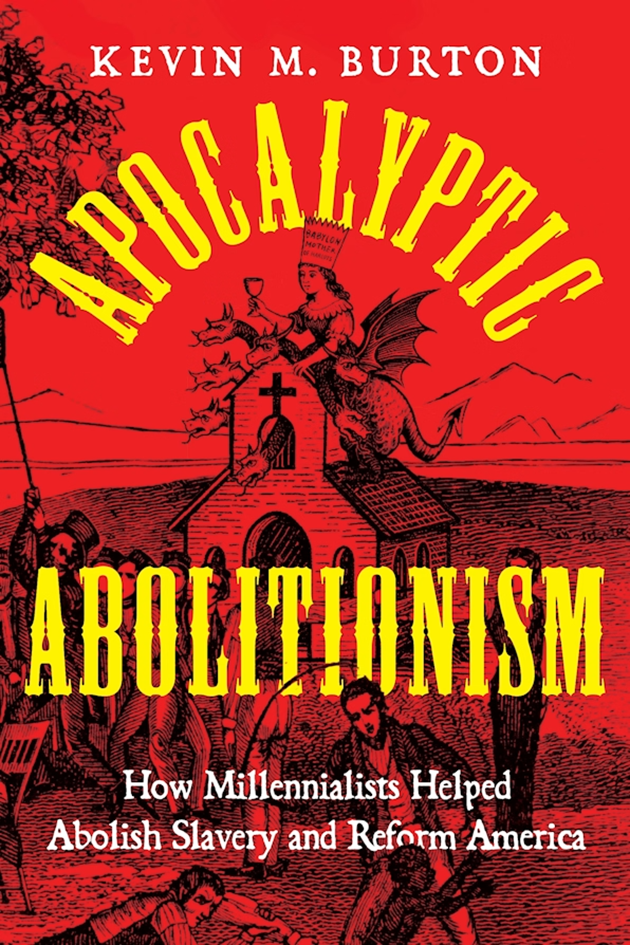
Kevin M. Burton, Apocalyptic Abolitionism: How Millennialists Helped Abolish Slavery and Reform America, NYU Press, 2026
In March 1844, Melissa Botsford of Meriden, Connecticut, defiantly left her local Methodist church because it supported slavery and other “sins” that permeated America. Botsford was among one hundred thousand other abolitionists who abandoned their evangelical churches throughout the decade. These protesters came out with a stern apocalyptic warning: God would soon judge America—and its churches—for the sins of slavery and race prejudice.
It has long been assumed that apocalypticism is antithetical to social reform. Yet in
Apocalyptic Abolitionism, Kevin M. Burton uncovers the untold story of how apocalypticism shaped the abolitionist cause and helped destroy slavery in the United States. Contrary to popular opinion, the revival fires of the Second Great Awakening did not drive most evangelicals to progressive social reforms like abolitionism. Neither were the denominational schisms during that period a fight between northern abolitionists and southern slaveholders. Rather, before the Methodist and Baptist denominations split along sectional lines, most abolitionists, particularly members of the Adventist movement, had already left their churches in what was likely the largest mass exodus from mainstream evangelicalism in American history, precisely because most evangelicals opposed radical social reform movements. This volume makes the case that evangelicals receive undeserved credit for antislavery, and that it was apocalyptic abolitionists who led the way.
Drawing from rare and overlooked sources to create a database of biographies of nearly 2000 people to track their religious affiliations and activism over time, Burton offers invaluable data to develop a robust framework for understanding apocalypticism, evangelicalism, and social reform politics of the nineteenth century.
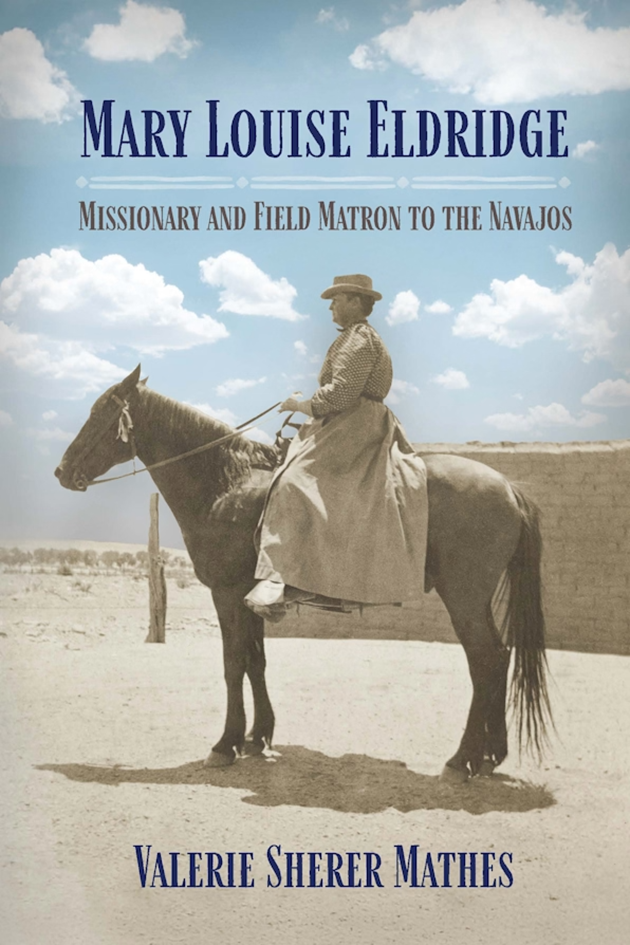
Valerie Sherer Mathes, Mary Louise Eldridge: Missionary and Field Matron to the Navajos, University of Nebraska Press, 2026
In the fall of 1891 Mary Louise Eldridge and Mary Raymond were sent by the Women’s Home Missionary Society of the Methodist Episcopal Church to work among the Navajos living along the San Juan River in northern New Mexico. There they founded the Navajo Methodist Mission, which later moved near Farmington. After Raymond’s unexpected death, Eldridge was appointed to replace her as a government field matron, and with the support of the Cambridge Indian Association, an auxiliary of the Women’s National Indian Association, Eldridge supervised Navajo men in digging the Cambridge Ditch and their wives in weaving blankets in industrial rooms supported by the WNIA’s Indian Industries League. Before Eldridge retired in 1915, she supervised the founding of six WNIA missionary stations on the reservation. One scholar described her as nurse, farmer, civil engineer for irrigation projects, trader, hospital administrator, fund raiser, policy advocate, cottage industry entrepreneur, and adoptive mother—duties far exceeding the government’s vision of a field matron.
This biography with selected letters is the first history of Eldridge’s WNIA-funded missionary work. It opens a critical window into social reform efforts among Native peoples in the American Southwest, the predicament of the Navajo Nation after their return from incarceration at Bosque Redondo, and the coercive assimilationist policies enacted against resistant Native peoples in the Dawes Act era.
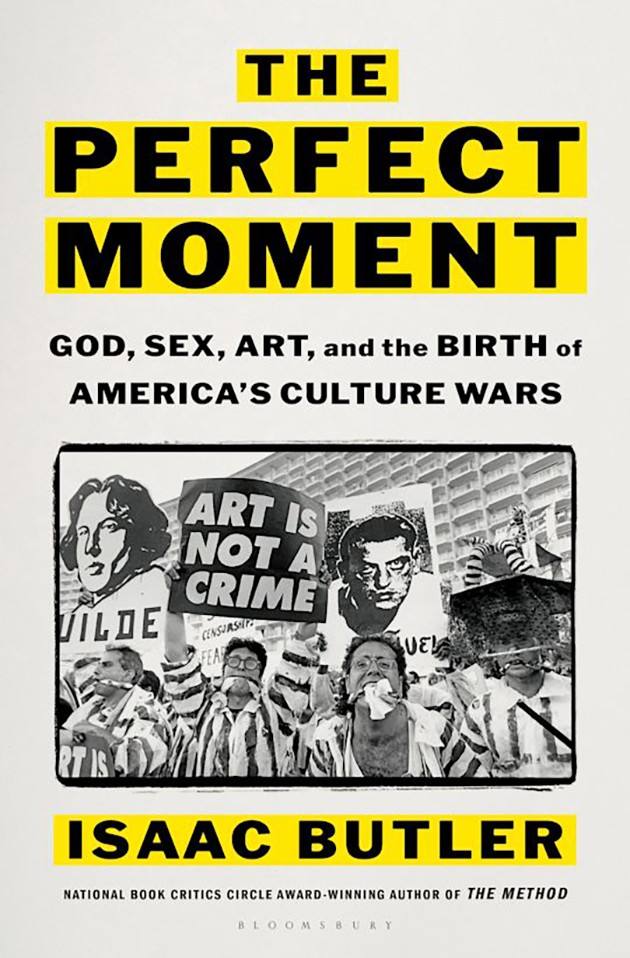
Isaac Butler, The Perfect Moment: God, Sex, Art, and the Birth of America's Culture Wars, Bloomsbury, 2026
It's 1988, the final year of the Reagan presidency, and the curtain is closing on the Cold War. In the absence of external adversaries, the American public is on the precipice of war with itself. The religious right, newly ascendant and emboldened, is determined to seize control of America's future. And the first battles will be fought over, of all things, contemporary art.
In
The Perfect Moment, cultural historian Isaac Butler reexamines this pivotal, misunderstood American era. Archconservatives like Jesse Helms, Pat Buchanan, and Pat Robertson fixed their sights on artists including Andres Serrano, Robert Mapplethorpe, David Wojnarowicz, and Karen Finley, capitalizing on the provocative politics of their work to stir a nascent evangelical coalition into moral panic. It was at this moment, Butler argues, that the far right perfected the tactics it still uses today to whip its base into frenzy-from banning books and sanitizing American history, to spreading medical misinformation. All too relevant today,
The Perfect Moment is an incisive and meticulously researched account of this crucial period and a stirring ode to the power of the creative spirit.
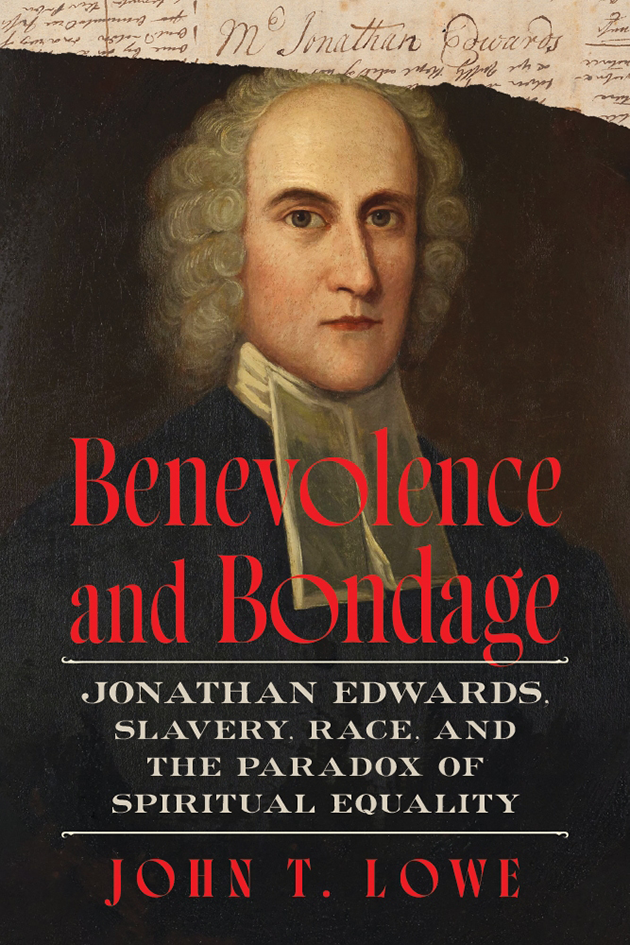
John T. Lowe, Benevolence and Bondage: Jonathan Edwards, Slavery, Race, and the Paradox of Spiritual Equality, University of South Carolina Press, 2026
In this groundbreaking book, John T. Lowe reexamines Jonathan Edwards's legacy by focusing on the intersections among slavery, race, and theology. Connecting seemingly disparate aspects of Edwards's life and thought, Lowe offers a powerful new interpretation of one of America's most influential theologians.
Although Edwards was an enslaver, his theological writings—especially his concept of "civil-spiritual dualism"—provided impetus for some of his followers to embrace abolitionism. Through close analysis of sermons, letters, and personal writings, Lowe reveals the tensions and transformations within Edwards's thought. The theological, social, and political implications of this revivalist preacher's ideas extended beyond New England and shaped debates across the early American republic.
Benevolence and Bondage challenges familiar narratives about Edwardsean thought and the theological roots of the antislavery movement. Bridging history and theology, Lowe contributes significantly to the Edwards renaissance and confronts uncomfortable truths at the heart of the American colonial project.
Erminia Ardissino, The Bible Interpreted by Women in Early Modern Italy: Promoting Dignity and Agency, Routledge, 2026
This volume studies initial attempts by Italian women of the early modern period to assert their dignity and gender equality through skillful interpretation of the Bible. It shows how the holy text represented a means to self-awareness and self-valorization, both through the role models of female figures in the New and Old Testaments, and because of the authoritativeness of the divine dictate that sanctioned equality of the genders.
Organized into three parts (the origins, biblical models, and the worth of women), this book is devoted to the reception, discussion, and use of biblical texts aimed at gender equality. It proves how these Italian women fought for their contested value through careful exegesis that revised readings by Patristic and Scholastic theologians to promote the dignity of their gender. There is an evident desire to communicate this new consciousness in order to encourage their female readers to exercise their right to equality and self-determination, allowing them to be agents in their own lives.
The Bible Interpreted by Women in Early Modern Italy speaks to a large potential readership: it is indispensable for scholars of early modern Europe, and more broadly for scholars and readers looking to better understand the evolution of women’s thinking on gender. It is meant to be accessible to non-specialists too – readers curious about the history of women, the Italian Renaissance, religious history, and biblical interpretation. The book offers a novel and much-needed fresh approach to women and gender studies in early modern Europe, focusing on the intersection of gender awareness with devotional and religious writing.
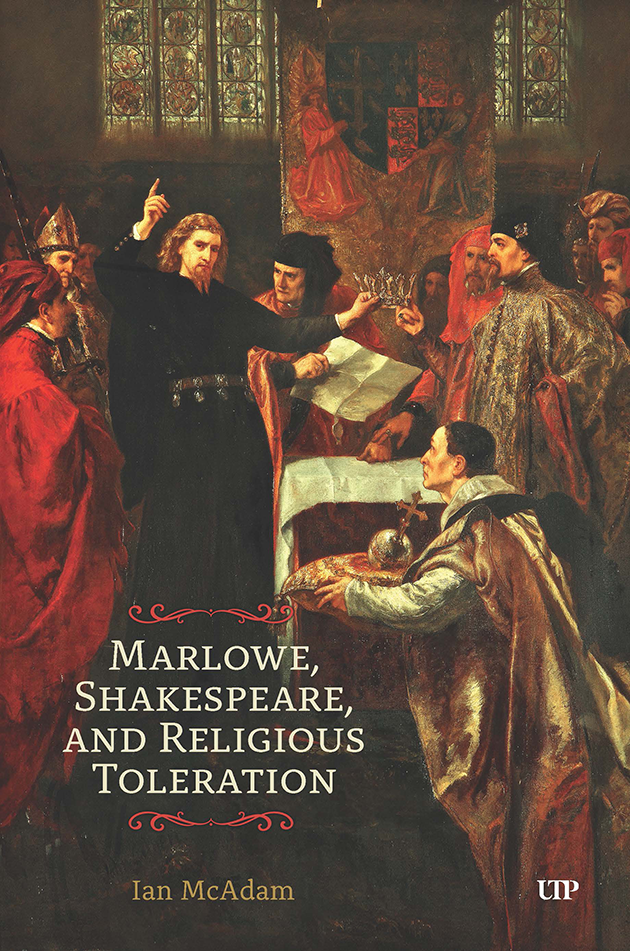
Ian McAdam, Marlowe, Shakespeare, and Religious Toleration, University of Toronto Press, 2025
Marlowe, Shakespeare, and Religious Toleration is a study of the influence of Christopher Marlowe on William Shakespeare and vice versa, with a focus on how their works interrogate Reformation theology and the construction of masculine identity.
Written by English scholar Ian McAdam, this book contests the idea that Shakespeare was only interested in Marlowe’s theatrical techniques rather than his intellectual reflections, and argues that Marlowe's commercial ambitions reflect deeper cultural and psychological aspects of early modern self-fashioning. McAdam contends the playwrights’ shared drive for social advancement and cohesive identity is explored through their engagement with the Protestant theology of grace, which both intensified and problematized individual agency during the Reformation era.
An insightful intervention for scholars of Shakespeare, Reformation studies, and early modern literature, Marlowe, Shakespeare, and Religious Toleration contextualizes Marlowe’s “blasphemies” as a nuanced religiosity that has been overlooked. The text’s central thesis is that Shakespeare then, in turn, develops a subtler approach to Marlowe’s religious radicalism, producing plays and poems more profoundly influenced by Marlowe’s theological dissent than previously acknowledged.
Marlowe, Shakespeare, and Religious Toleration challenges prevailing assumptions in the field, examining the trajectory and intersections of these two historic playwrights and offering a new perspective on their expressions of religious, gendered, and sexual subjectivity.