Church History: Books of the Month
July 2026
Monthly Updates on Recent Books in the History of Christianity
To raise awareness of recent books in the history of Christianity, the editorial staff of Church History: Studies in Christianity and Culture highlights each month a list of 10-15 books in diverse periods and geographical regions that we hope will be of interest to our members. We include here below the July 2026 monthly list, chosen by our staff, with excerpts from the publishers’ blurbs.
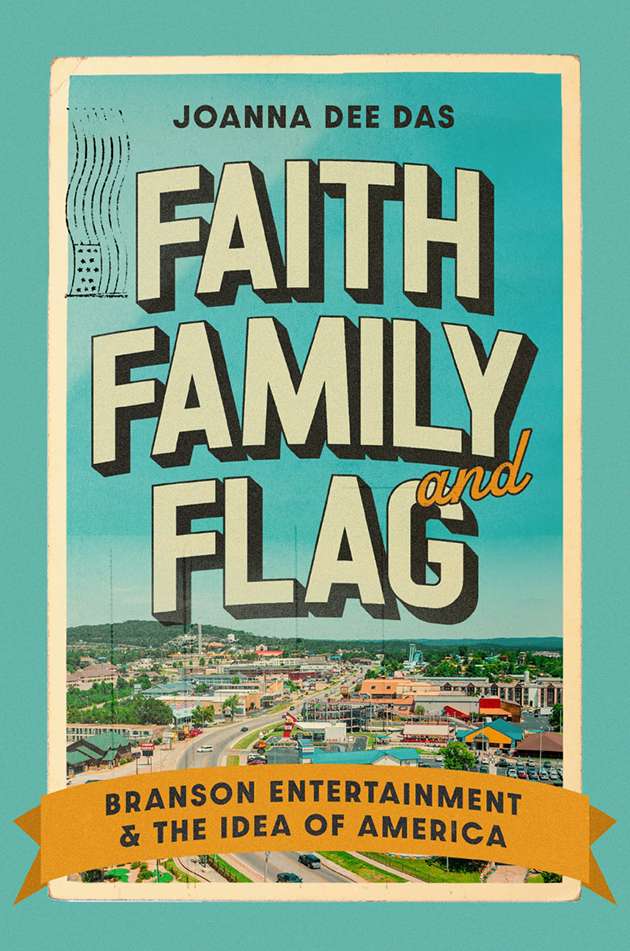
Joanna Dee Das, Faith, Family, and Flag: Branson Entertainment and the Idea of America, University of Chicago Press, 2025
Branson, Missouri, the Ozark Mountain mecca of wholesome entertainment, has been home to countless stage shows espousing patriotism and Christianity, welcoming over ten million visitors a year. Some consider it “God’s Country” and others “as close to Hell as anything on Earth.” For Joanna Dee Das, Branson is a political, religious, and cultural harbinger of a certain enduring dream of what America is. She takes Branson more seriously than the light-hearted fun it advertises—and maybe we should too.
For Das, Branson’s performers offer visions of the American Dream that embody a set of values known as the three Fs: faith, family, and flag. Branson boosters insist that these are universal values that welcome all people; the city aims to capture as many tourists as possible. But over the past several decades, faith, family, and flag have become markers of contemporary conservatism. The shows and culture of Branson, for all their fun and laughter, have been a galvanizing political force for white, working-and-middle class, Christian Americans. For social and economic conservatives alike, Branson is practically proof-of-concept for America as they want it to be.
Faith, Family, and Flag is a comprehensive history of the Branson entertainment industry, within the context of America’s long culture wars. Das reveals how and why a town known for popular entertainment, a domain associated most often with the political left (“Hollywood liberals”), came to be so important to the political right and its vision for America.
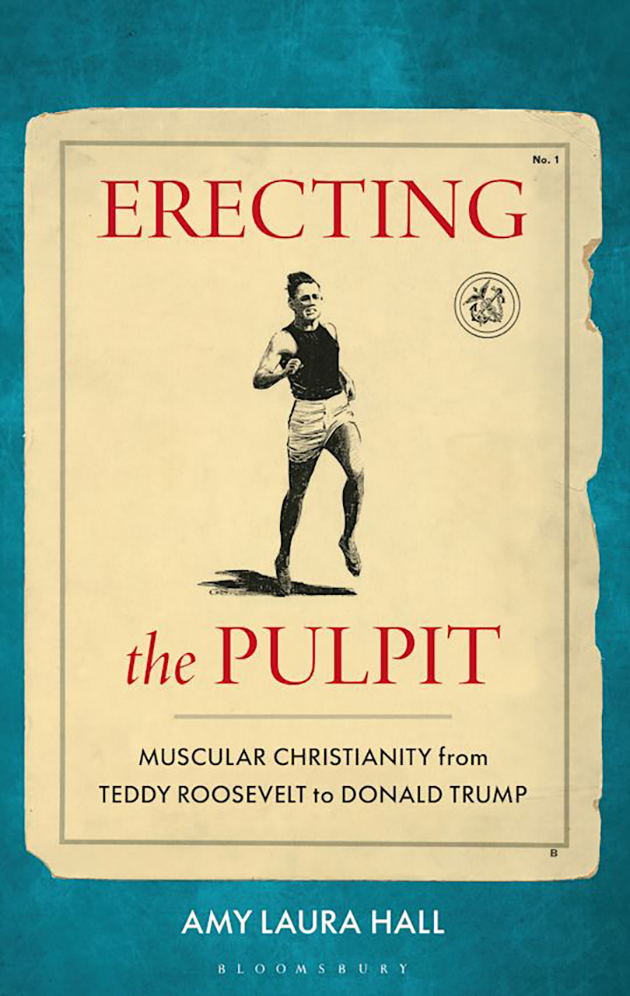
Amy Laura Hall, Erecting the Pulpit: Muscular Christianity from Teddy Roosevelt to Donald Trump, Bloomsbury, 2026
Beginning with Theodore Roosevelt's “Muscular Christianity” and tracing the conceit of faithful and fit male leadership through figures like Billy Graham and cultural institutions like National Prayer Breakfasts and modern mega-churches, and flourishing under the administration of Donald Trump, Erecting the Pulpit reveals how religious rhetoric has been wielded to sanctify power and divide communities.
Drawing on her firsthand experiences and years of conversations with participants-from Cowboy Churches to NASCAR chaplaincies and storefront churches with folding chairs to meetings with the parachurch group Young Life-theologian Amy Laura Hall examines the cultural and political forces that have made evangelicalism “ambient” while consolidating wealth and influence. At a time when politicians are expected to pray in public and religious themes shape public policy, Hall offers a vivid, incisive exploration of how religious expressions of faith in the United States have been strategically repackaged to sustain political and economic hierarchies and keep women subservient to men.
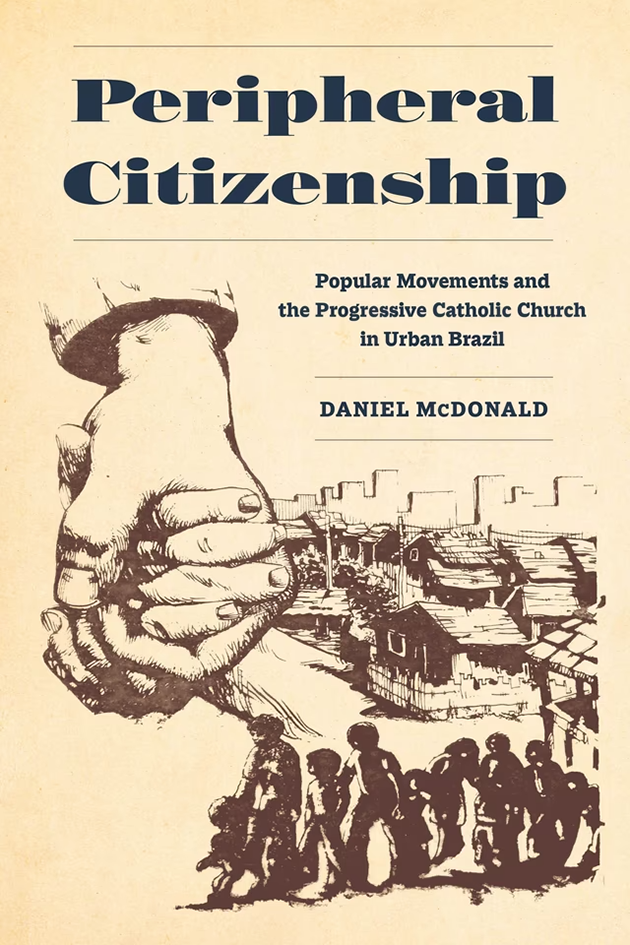
Daniel McDonald, Peripheral Citizenship: Popular Movements and the Progressive Catholic Church in Urban Brazil, University of California Press, 2026
How is citizenship constructed from the margins? Peripheral Citizenship examines this question by placing the urban outskirts of South America’s most populous city, São Paulo, amid processes that transformed twentieth-century Latin America: rural-urban migration and rapid urbanization, the advent of liberation theology, and the rise and fall of military dictatorships. Drawing on oral histories and grassroots archives, Daniel McDonald traces the emergence of a remarkable bottom-up rights campaign through the lives of rural migrants, progressive clergy, and allied activists in São Paulo during Brazil’s military dictatorship (1964–1985) and the subsequent democratic transition. He unveils how popular movements, aligned with the progressive Catholic Church and leftist political parties, forged a vision of citizenship that combined rights grounded in everyday life with innovative forms of participatory democracy. In the process, they reshaped the city, the Church, and the nation from the periphery.
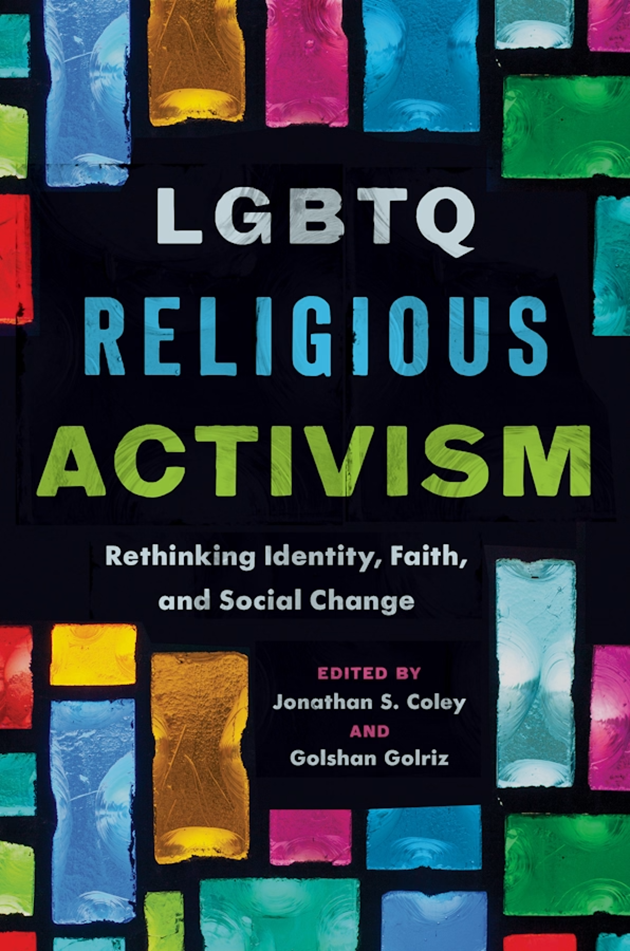
Jonathan S. Coley and Golshan Golriz, eds. LGBTQ Religious Activism: Rethinking Identity, Faith, and Social Change, University of North Carolina Press, 2026
Despite the LGBTQ movement’s rapid growth and significant policy successes over the past few decades, many mainstream religions continue to discriminate against queer people. In response, LGBTQ communities have mobilized across a wide range of religious traditions to advocate for church leaders to ordain LGBTQ clergy, accept LGBTQ people as members, officiate same-sex weddings, and affirm the dignity and worth of transgender and nonbinary people. Bringing together leading scholars of social movements, religion, and gender and sexuality in one volume, Jonathan S. Coley and Golshan Golriz have curated a comprehensive look at religiously affiliated social movements within many faiths, charting why and how LGBTQ people engage in activism and the outcomes of their efforts.
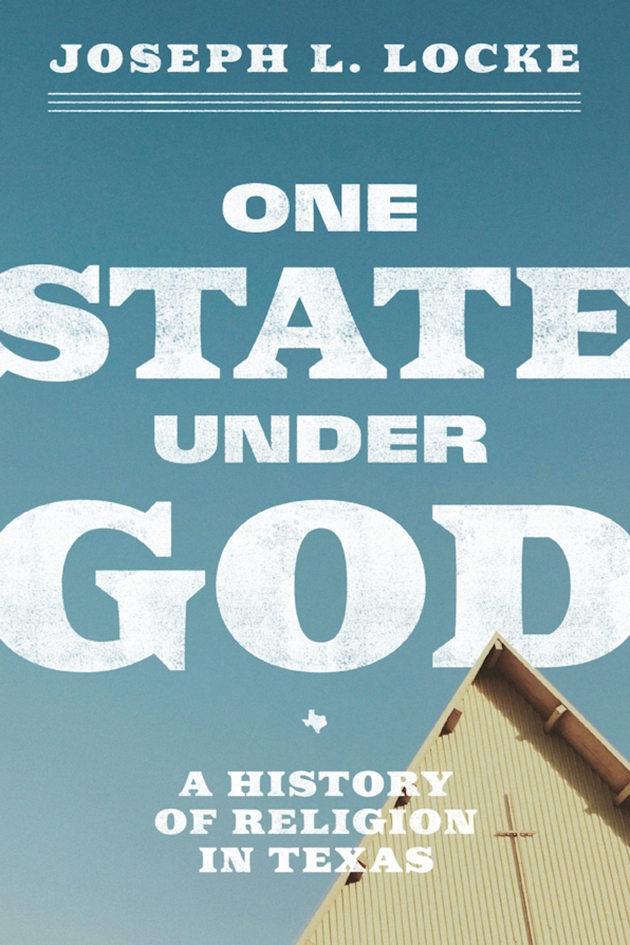
Joseph L. Locke, One State Under God: A History of Religion in Texas, University of Texas Press, 2026
From sprawling megachurches to religious billboards and towering steel crosses, religion quite literally looms over Texas. Christian nationalism determines the state’s politics and, every school day, more than five million Texas children pledge allegiance to “one state under God.” But it wasn’t always this way.
In this wide-ranging chronicle, Joseph Locke uncovers the breadth of Texas’s religious history, from Indigenous painters of cosmological cave art and Spanish invaders who constructed missions to irreligious Anglo colonists, freethinking frontiersmen, Tejano folk saints, evangelical culture warriors, and Muslim immigrants. Locke traces the state’s religious transformations across the centuries, bringing them to life through his depiction of compelling figures, like enslaved preacher Anderson Edwards, fighting fundamentalist J. Frank Norris, and celebrated humanitarian Sister Norma Pimentel, and gripping moments, such as the murder of atheist newspaperman William Cowper Brann and the siege of the Branch Davidian compound in Waco. Comprehensive, fast-paced, and highly readable, One State Under God reveals how the Lone Star State’s spiritual path was blazed.
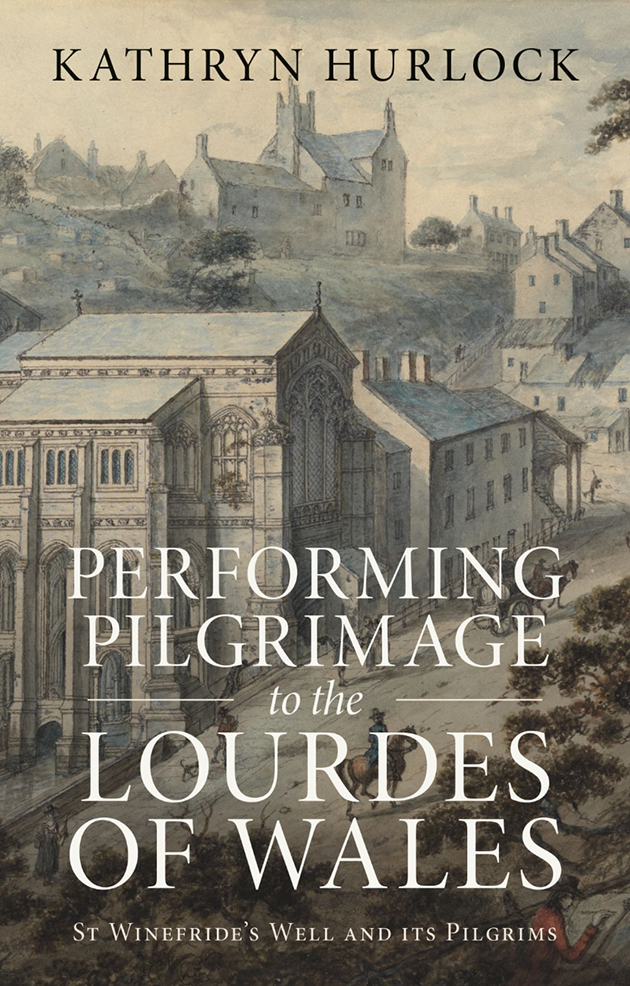
Kathryn Hurlock, Performing Pilgrimage to the Lourdes of Wales: St Winefride’s Well and Its Pilgrims, University of Wales Press, 2026
This is the first scholarly study of one of Britain’s oldest pilgrimage sites: St. Winefride’s Well. Since the martyrdom of its titular saint in the seventh century, pilgrims have flocked to the shrine in Holywell, North Wales in search of healing and help in its icy waters. The shrine survived the ravages of the Reformation and remained popular in an era when pilgrimage was suppressed and exploded in popularity in the second half of the nineteenth century, when stories of miraculous cures and mass pilgrimages filled the columns of national and international newspapers. By the 1890s, it was called the Lourdes of Wales. Performing Pilgrimage to the Lourdes of Wales charts centuries of changing pilgrimage practices to the well, from the journeys to reach it, to the actions of pilgrims in and around the water, and their post-pilgrimage lives, as well as how the shrine has been attacked, defended, restored, and promoted.
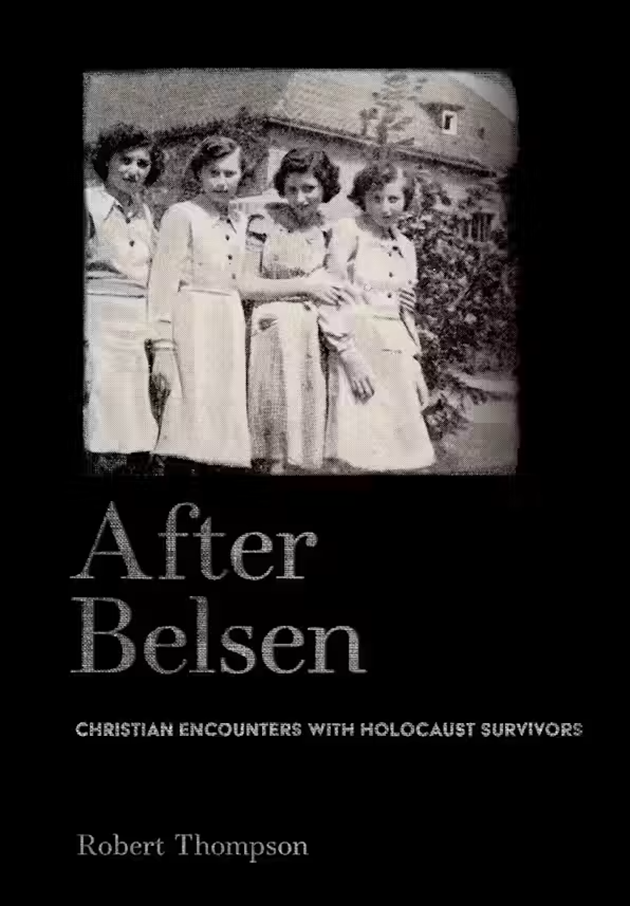
Robert Thompson, After Belsen: Christian Encounters with Holocaust Survivors, Cornell University Press, 2026
British and American Christians—men and women, army chaplains and relief workers, government officials and interfaith activists—listened to testimony, confronted postwar issues facing Jews, pioneered the fight against antisemitism, and reapproached their Christian faith as they encountered survivors. At camps like Bergen-Belsen, these encounters forced Christians to confront their long-held beliefs, their complicity, and the meaning of solidarity in the face of atrocity.
Using neglected archives, private correspondence of British and American Christians, and interviews with their families, Robert Thompson pieces together stories that complicate the idea of Christian silence. He highlights the emotional and theological impact of direct witness—moments when Christian and Jewish lives intersected amid the devastation. In doing so, he also reveals the previously unheard voices of women relief workers and chaplains who offered care, challenged antisemitism, and began to reformulate their beliefs from the ground up.
After Belsen is not only a moving contribution that unites Holocaust studies, religious history, and interfaith reflection but also a vital new perspective on how ordinary people responded to extraordinary horror and how their responses resonate today. Their previously untold human stories demonstrate how lived experience—not just institutional declaration—shaped postwar Christianity.
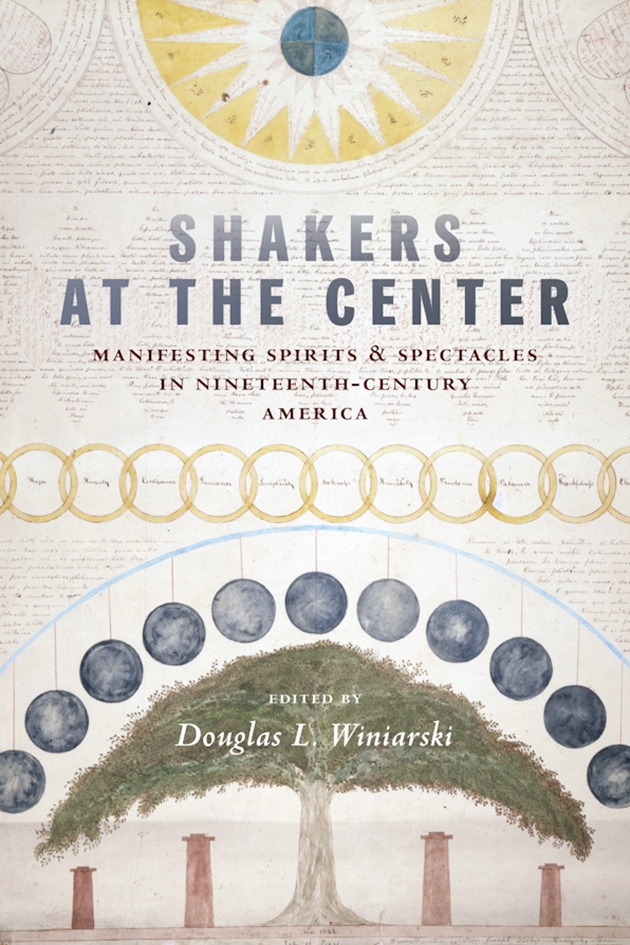
Douglas L. Winiarski, ed. Shakers at the Center: Manifesting Spirits & Spectacles in Nineteenth-Century America, University of Massachusetts Press, 2026
The Shakers’ Era of Manifestations ranks among the most astounding events in American religious history. During the 1840s, members of the United Society of Believers in Christ’s Second Appearing embarked on an audacious project of receiving visions, revelations, and other manifestations from the spirit world and convincing both themselves and the world’s people of their reality. Gifted Shakers known as “instruments” surrendered their bodies to possessing spirits and celestial beings who, in turn, provided the Believers with an unimaginable number of revelatory communications that collapsed time and space, rewrote the Bible, and vastly expanded traditional Protestant beliefs and practices. The fruits of Shaker spiritualism would gain a permanent place in America’s public consciousness.
Hundreds of volumes and thousands of pages of inspired writings, music, and art from the New Era or period of Mother's Work, as the Shakers called it, crowd the shelves of a half dozen major research libraries. The archive is so vast, so extraordinary, so seemingly bizarre that few scholars have dared tackle it in its totality. The authors of this volume, specialists in nineteenth-century American religious studies, have collaborated to produce an extensive analysis of Mother Ann’s Work. They examine a fascinating range of topics: speaking with the dead; the spectacle of Shaker rituals; race, gender, and family life; and the material culture of physical and spiritual things; as well as manuscripts, books, songs, objects, and art produced during the New Era.
Shakers at the Center brings the sprawling elements of the Era of Manifestations together in a single volume. Written for students, scholars, and general readers alike, it will stand for years as the definitive history of the Shakers’ most fascinating and vexing historical period.
Lucia Ceci, Catholics and Political Violence in the Twentieth Century: A Global History, Routledge, 2026
Catholics and Political Violence in the Twentieth Century presents a historical reconstruction of the ways in which Catholics have justified the recourse to political violence during the twentieth century, a period marked by major wars, nationalisms, decolonization, ideological clashes, and episodes of genocide. Legitimation processes are particularly complex when this violence is not endorsed by the state, and perhaps used against it. Depending on perspective, the protagonists of this radical form of collective action may be seen as ‘terrorists’ or ‘freedom fighters’.
Written by a leading historian of contemporary Catholicism, this book examines a series of case studies from different parts of the world, selected because of the central role played by the Catholic religion. They range from Northern Ireland to the Basque Country, from the Philippines to Colombia, and from Mexico to Rwanda. It highlights how theological sources, paradigms of martyrdom, and symbols of the Christian tradition have provided a catalogue of reasons to give moral value to violence and promote it in the name of God.
By looking at the history of Catholicism in global terms and adopting a transnational perspective, Catholics and Political Violence in the Twentieth Century sheds a critical light on the themes that are crucial to understanding the relationship between religion and violence. It will appeal to scholars and students working and studying in the fields of Modern and Contemporary History, Religious Studies, Terrorism Studies, Cultural and Global Studies, Intellectual History, and the History of Political Thought.
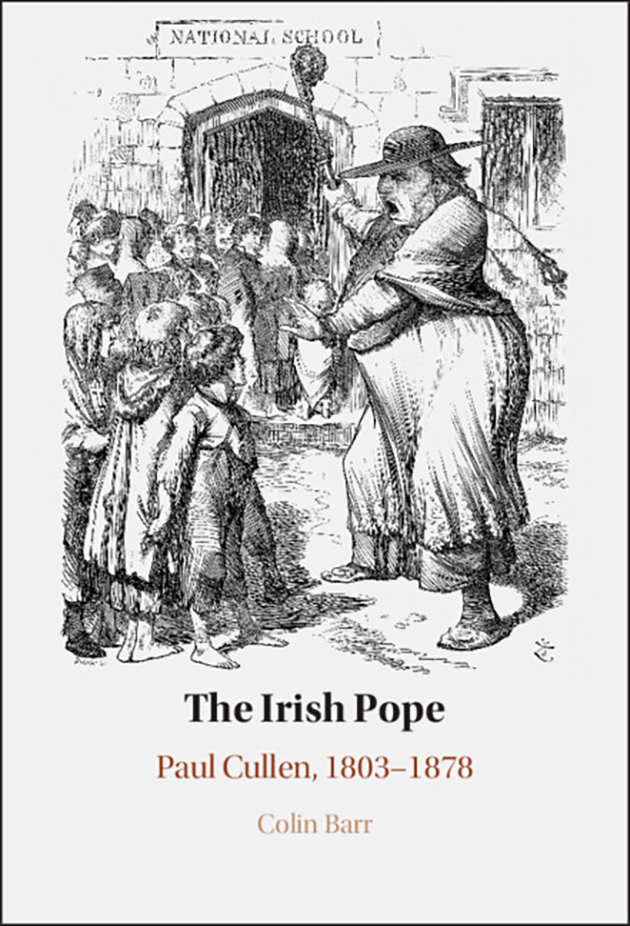
Colin Barr, The Irish Pope: Paul Cullen, 1803-1878, Cambridge University Press, 2026
Paul Cullen was without question the most important Irishman of his generation and a figure of global importance. He is also among the least understood. Examining every aspect of Cullen's life and career, Colin Barr explores how Cullen was characterised by his contemporaries as an 'Italian monk', 'the deadly foe of Irish liberty', 'an obscurantist run mad', or 'the most malignant enemy of the English & English Government in Ireland.' One frustrated contemporary called him 'the Pope of Ireland'. This study explores Cullen's early years and education in papal Rome, his career in the curia and then in Ireland, as Archbishop of Dublin, the first Irish cardinal, and author of the compromise text that defined the dogma of papal infallibility. Drawing on more than100 archives in ten countries, The Irish Pope examines Cullen's life and work at home and abroad, and through it the history of Ireland in the mid-Victorian era.