
Church History: Books of the Month
August 2026
Monthly Updates on Recent Books in the History of Christianity
To raise awareness of recent books in the history of Christianity, the editorial staff of Church History: Studies in Christianity and Culture highlights each month a list of 10-15 books in diverse periods and geographical regions that we hope will be of interest to our members. We include here below the August 2026 monthly list, chosen by our staff, with excerpts from the publishers’ blurbs.
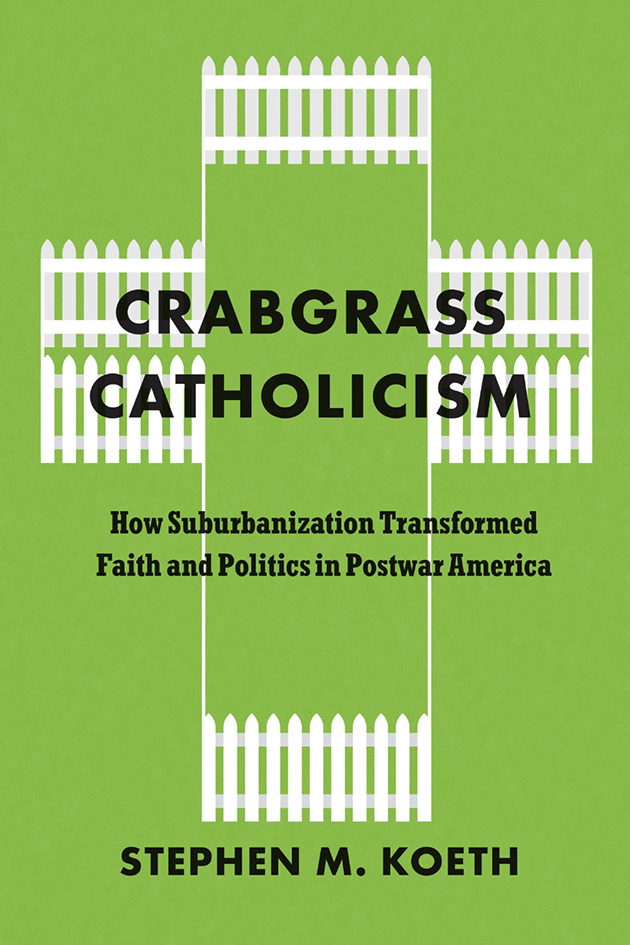
Stephen M. Koeth, Crabgrass Catholicism: How Suburbanization Transformed Faith and Politics in Postwar America, University of Chicago Press, 2025
The 1960s in America were a time of revolt against the stifling conformism embodied in the sprawling, uniform suburbs of the 1950s. Typically, the reforms of the Catholic Church’s Second Vatican Council, which aimed to make the Church more modern and accessible, are seen as one result of that broader cultural liberalization. Yet in
Crabgrass Catholicism, Stephen M. Koeth demonstrates that the liberalization of the Church was instead the product of the mass suburbanization that began some fifteen years earlier. Koeth argues that postwar suburbanization revolutionized the Catholic parish, the relationship between clergy and laity, conceptions of parochial education, and Catholic participation in US politics, and thereby was a significant factor in the religious disaffiliation that only accelerated in subsequent decades.
A novel exploration of the role of Catholics in postwar suburbanization,
Crabgrass Catholicism will be of particular interest to urban historians, scholars of American Catholicism and religious studies, and Catholic clergy and laity.
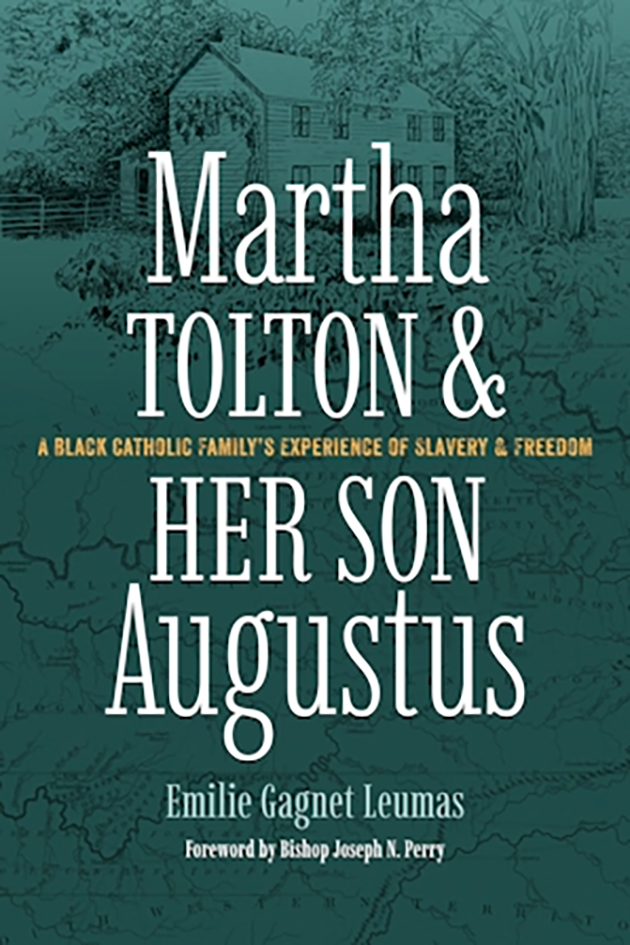
Emilie Gagnet Leumas, Martha Tolton and Her Son Augustus: A Black Catholic Family's Experience of Slavery and Freedom, The Catholic University of America Press, 2026
This groundbreaking work uncovers the extraordinary story of Martha Tolton, a woman whose courage and faith shaped the life of her son, Father Augustus Tolton—the first recognized Black Catholic priest in the United States. Through meticulous archival research, this book reconstructs the Tolton family’s journey from enslavement in Kentucky and Missouri to freedom in Illinois, offering a rare and deeply human perspective on the Catholic experience of slavery in America.
Drawing on sacramental records, civil documents, successions, and personal testimonies, the narrative illuminates the resilience of a mother who escaped bondage with her children and nurtured their faith against overwhelming odds. Martha’s life, often overshadowed by her son’s historic achievements, emerges here as a story of fortitude, sacrifice, and spiritual strength. More than a biography, this book is a foundational resource for scholars and readers interested in African American history, Catholic studies, and the lived experiences of enslaved families. It explores themes of faith, migration, family bonds, and the enduring quest for dignity and freedom.
Richly documented and profoundly moving,
Martha Tolton and Her Son Augustus invites readers to witness a legacy that transcends generations—a testament to hope and perseverance in the face of injustice.
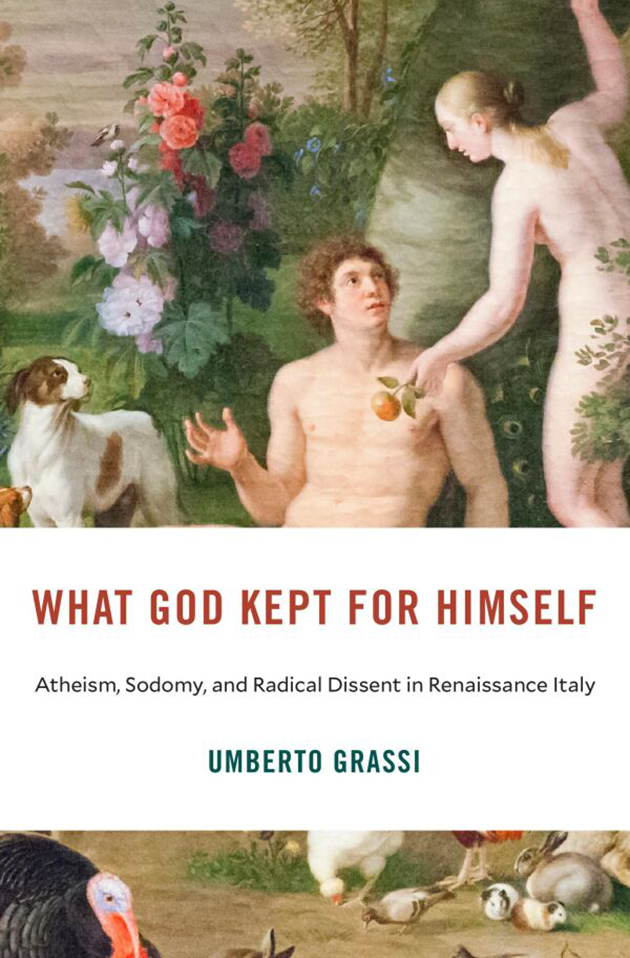
Umberto Grassi, What God Kept for Himself: Atheism, Sodomy, and Radical Dissent in Renaissance Italy, Harvard University Press, 2026
Between the sixteenth and eighteenth centuries, a series of highly controversial Inquisition trials took place throughout the Italian peninsula. The defendants were all accused of the same heresy: claiming that Adam and Eve’s original sin had been committing sodomy, a “celestial” pleasure reserved for God alone. Such claims were not merely subversive sexual innuendo. Rather, they were the most radical expressions of a much broader critique—one that not only targeted repressive sexual taboos but also denounced the corruption of the Church, questioned the authority of the pope, and suggested that organized religion itself was a hoax designed to maintain elite power.
As Umberto Grassi shows, these dissenters’ beliefs about sexual freedom came to play a crucial role in the development of skeptical and atheistic positions. Many of the accused argued that, by violating God’s exclusive right to engage in sodomy, Adam and Eve dared to make themselves like gods. This view, which led to charges of atheism, radicalized a more widely held belief that the ruling classes banned sodomy to prevent the masses from enjoying it. In turn, such heresies fueled indictments of Christian morality as an all-too-human invention, whose purpose was to reinforce a social order in which the ruling classes controlled both sexuality and religious truth.
Tracing a radical tradition of thought on trial, What God Kept for Himself establishes the firm relationship between sexual nonconformity and religious dissent in the early modern Mediterranean world.
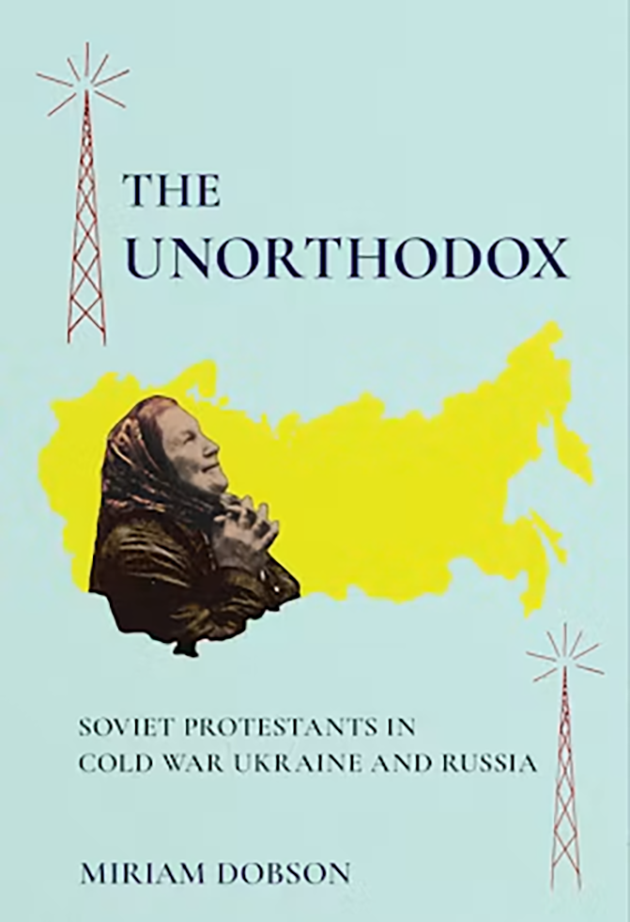
Miriam Dobson, The Unorthodox: Soviet Protestants in Cold War Ukraine and Russia, Cornell University Press, 2026
The Unorthodox offers a new history of Ukraine's and Russia's Protestant communities, from the religious resurgence of World War II through four decades of the Cold War. The subject of bureaucratic reports, sensationalist newspaper stories, and court transcripts, these communities generated disproportionate attention in the Soviet Union. Miriam Dobson examines why they provoked such interest for the communist regime and—challenging ideas about the communist state and its repression of religion—argues that the Soviet regime used religious traditions to claim its own modernity.
The Soviet preoccupation with the Protestant minority was later reproduced in the western media.
Subjected to scrutiny, those who belonged to Evangelical Christian-Baptist and Pentecostal congregations responded in varied ways. Some believed it possible to be both "Soviet and Protestant." Others concluded Christian life in the USSR was impossible. A minority developed alternative institutions, such as the all-female Council of Prisoners' Relatives, a highly effective producer and exporter of samizdat texts.
Using oral history interviews and unpublished letters,
The Unorthodox explores the sense of purpose and belonging that congregational life provided and also the possibilities for conflict and discord as members navigated what it meant to live in accordance with scripture in a modern, secular world. Dobson pays particular attention to gender dynamics within these predominantly female congregations.
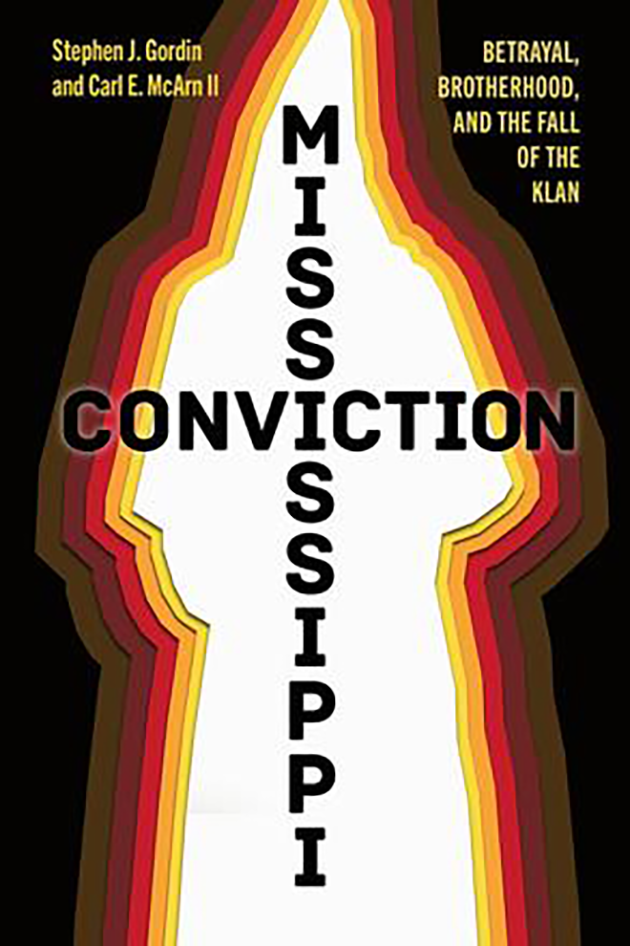
Stephen J. Gordin and Carl E. McArn II, Mississippi Conviction: Betrayal, Brotherhood, and the Fall of the Klan, University of Mississippi Press, 2026
Mississippi Conviction: Betrayal, Brotherhood, and the Fall of the Klan recounts a remarkable and underreported story of conscience, courage, and moral reckoning at the height of the civil rights era in Mississippi.
On Father’s Day, June 21, 1964, three civil rights workers were murdered by the White Knights of the Ku Klux Klan after visiting a burned church in Neshoba County. The brutal killings shocked the nation and launched a major FBI investigation into Mississippi’s “closed society.” Amid the search for justice, federal agents turned to an unlikely ally: Reverend Delmar Dennis, a Methodist minister and chaplain for the WKKKK.
Dennis’s decision to become an FBI informant came after a pivotal conversation with his friend and mentor, Reverend Carl McArn, a civil rights supporter and advocate for church integration. Their friendship—and the ideological divide it represented—mirrored the broader split within Mississippi’s white churches over race and justice.
Coauthored by novelist Stephen J. Gordin and Carl E. McArn II, son of Reverend McArn, this gripping narrative explores the power of moral influence and personal transformation. Drawing on extensive interviews and archival research, Mississippi Conviction reveals how one man’s betrayal of the Klan became a critical turning point in dismantling a violent domestic terrorist network—and how another’s quiet mentorship helped make that decision possible.
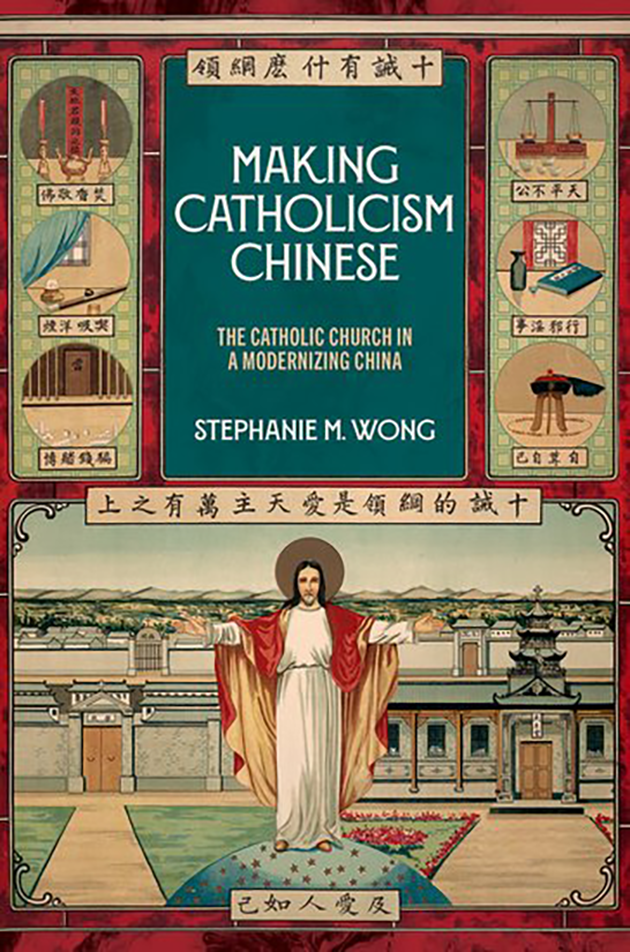
Stephanie M. Wong, Making Catholicism Chinese: The Catholic Church in a Modernizing China, Oxford University Press, 2026
Making Catholicism Chinese examines a little-known chapter of Catholic life in China, when a coalition of foreign-born and Chinese Catholics strove to make the Church indigenously "Chinese." This book demonstrates how the indigenization movement, begun as a bid to render Catholicism a Chinese religion, came to support Chinese state-building instead.
In the first half of the 20th century, China transformed from a faltering and semi-colonized empire to a tentatively pluralistic republic to an increasingly militarized one-party state. Religious communities were driven to "modernize" for the sake of the new nation. In the case of Catholicism, the Belgian-born Lazarist Vincent Lebbe most publicly advocated for a Chinese Church, though the wider movement was guided by an array of Chinese clergy, newspaper magnates, scholar-politicians, artists, and army medics and combatants striving in various ways to be both faithful Catholics and patriotic citizens. Their indigenization project coincided with a national embrace of modernity as an ideal, leading Catholics to take up a variety of causes: promoting Chinese clergy as bishops in opposition to French dominance in the missions, experimenting with new forms of education and mass media, and ultimately joining the right-leaning Nationalist regime's war effort against Japan. Stephanie Wong thoroughly documents this history and definitively shows that the movement failed to establish the local Church as a distinct Chinese religion.
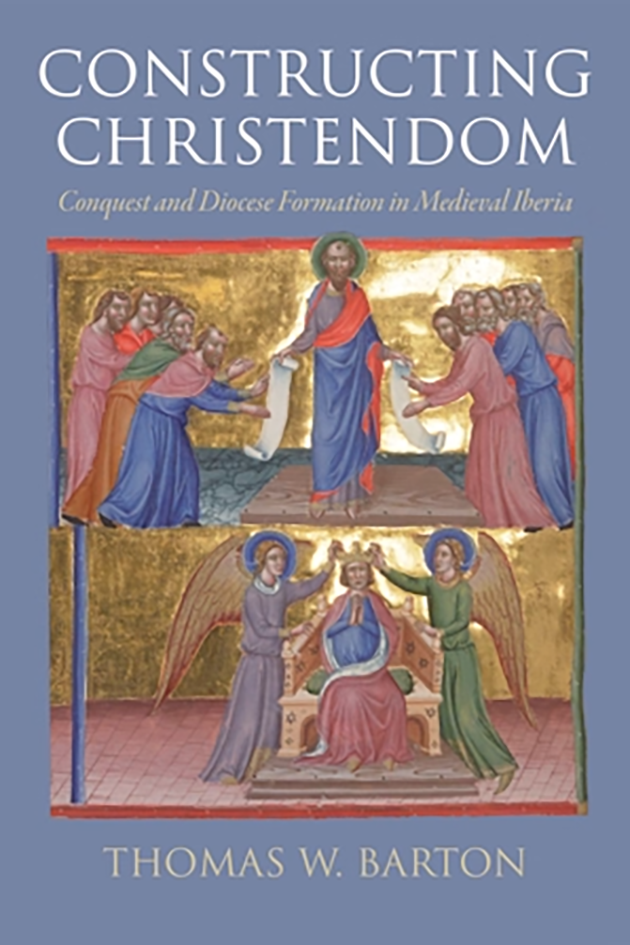
Thomas W. Barton, Constructing Christendom: Conquest and Diocese Formation in Medieval Iberia, University of Pennsylvania Press, 2026
In
Constructing Christendom, Thomas W. Barton examines how church leaders partnered with lay rulers to integrate lands conquered from the Muslims in the Iberian Peninsula from the ninth through the fourteenth centuries. In tracing the intricate developmental histories of a cluster of competitive neighboring bishoprics, Barton reveals how rival factions fought over new territory by asserting that it belonged to their foundations according to ancient precedent. Wielding self-interested, manipulated recollections of the organization of the Visigothic church that had predated the eighth-century Muslim conquest did more than further these local territorial battles; it helped promote a shared revisionist Christian historical vision that delegitimized non-Christian rule and emphasized the elemental, divinely ordained centrality of papal authority.
Based on over a decade of research and drawing on documentation from numerous underutilized local archives,
Constructing Christendom presents the unwritten histories of these foundations to demonstrate how such local efforts to expand Latin Christendom’s frontiers and establish or enlarge dioceses came to be associated with the reordering of the ecclesiastical hierarchy and the solidification of a cohesive European Christian identity. Despite the persistence of some unique features deriving from the formational histories of these frontier bishoprics, the overarching trend, Barton finds, was toward gradual homogenization, as dioceses on Christendom’s periphery and established ones situated closer to its core increasingly came to resemble one another in terms of their administrative and cultural attributes and relationships to papacy-centric governance.

Kira Ganga Kieffer, Unvaccinated Under God: Religion and Vaccine Hesitancy in Modern America, Princeton University Press, 2026
Vaccine hesitancy in America didn’t begin with the uproar over the mRNA vaccines for Covid-19. The late twentieth and early twenty-first centuries saw resistance to a wide variety of vaccines. In Unvaccinated Under God, Kira Ganga Kieffer shows that debates over vaccine safety and mandatory vaccination were about more than diseases or injections. They have been proxies for existential concerns about justice and morality. Kieffer argues that vaccine hesitancy in the U.S. should be understood as religious expression—not as the product of scientific misinformation.
Through a series of historical case studies, which range from the “mother warriors” who claimed a link between the MMR vaccine and autism during the 1990s to opposition to masking and vaccines during the Covid-19 pandemic, Kieffer frames vaccination controversies as contests over religious freedom and moral authority. These debates concerned bodily, spiritual, and sexual purity; the morality of state-mandated medical risk; the importance of children; and the authority of parents and doctors. Kieffer explains that diverse groups of Americans utilized religious ideals and practices to question or resist vaccination. With this new, illuminating perspective on vaccine hesitancy, Kieffer offers a novel and even-handed way to understand Americans’ changing and increasingly divided attitudes toward biomedical knowledge and technology. Her account offers readers an accessible set of tools for how to “think with religion” when it comes to contemporary contests over medical authority.
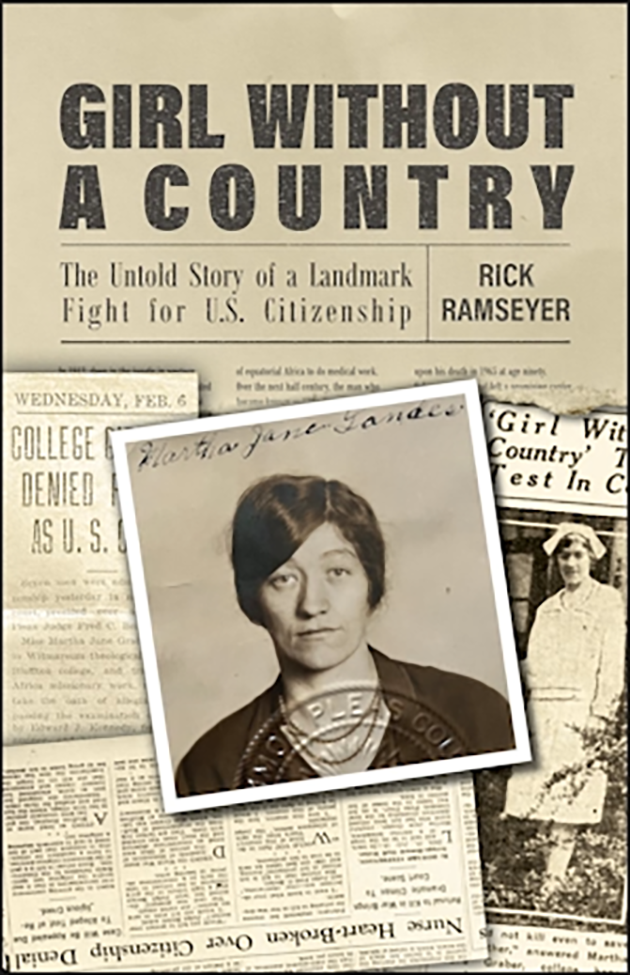
Rick Ramseyer, Girl Without a Country: The Untold Story of a Landmark Fight for U.S. Citizenship, Purdue University Press, 2026
Should willingness to kill be a requirement for U.S. citizenship? Girl Without a Country tells the compelling, confounding story of Martha Graber—a Mennonite, registered nurse, and conscientious objector who in 1929 was twice denied citizenship because she refused to say she would take up arms to defend the United States. The unexpected denials, which came despite Martha's pledge to give her life for her adopted country, caught the attention of a diverse group of peace advocates, religious leaders, lawyers, and politicians, setting up a climactic third court appearance.
Martha’s nineteen-month fight for citizenship made national news, featuring dramatic testimony, historical insights, and interesting backstories that stretched from Alsace-Lorraine in western Europe to America’s heartland. Elegantly written by Martha’s maternal grandson with never-before-published details and closely connected with a controversial Supreme Court decision, Girl Without a Country surfaces an array of topical issues, ranging from immigration and naturalization to conscientious objection and patriotism. Perhaps most importantly, Martha’s story considers what it truly means to be an American.
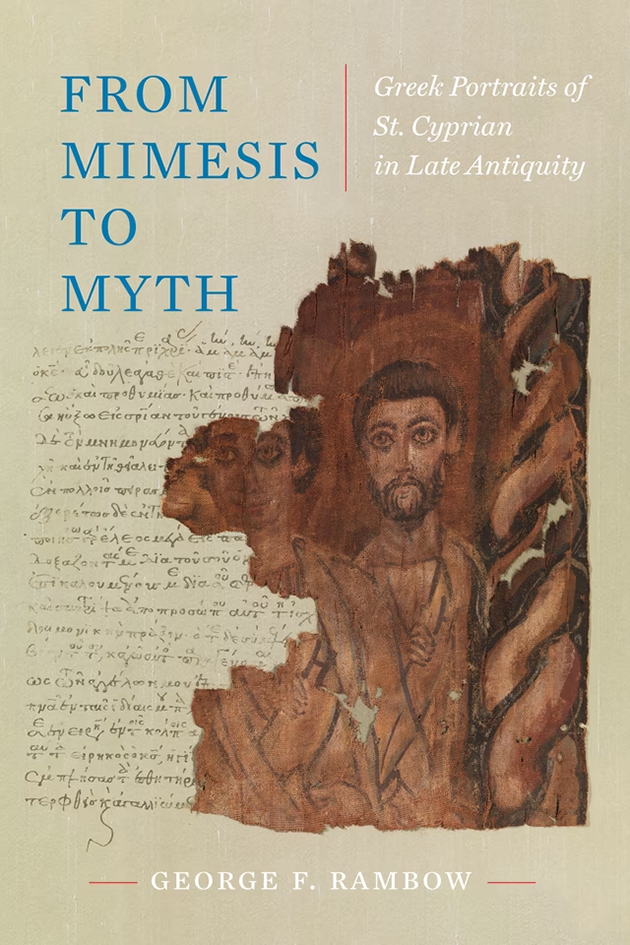
George Frederick Rambow, From Mimesis to Myth: Greek Portraits of St. Cyprian in Late Antiquity, University of California Press, 2026
From Mimesis to Myth traces the transformation of a Greek account of the life of Cyprian of Carthage into the legendary tale of Cyprian of Antioch as a means of exploring how late antique Christian authors and audiences interpreted the fictional qualities of hagiographic narratives. Through close readings of texts from the fourth and fifth centuries, including works by Gregory of Nazianzus and the Theodosian empress Aelia Eudocia, the book uncovers how Cyprian's legend evolved and how Christian authors embraced and transformed Greek literary traditions. George F. Rambow suggests that Christian writers consciously engaged in mythmaking and crafted a new heroic universe to rival the mythology of pagan antiquity. The book introduces the concept of "noncontractual, protreptic representation" to describe a uniquely Christian adaptation of Aristotelian mimesis, offering a new framework for interpreting fictional hagiographic narratives. Bridging history, religion, classics, and literary theory, Rambow fundamentally reassesses important assumptions in the ongoing debate on late antique narrative traditions.