
Church History: Books of the Month
September 2026
Monthly Updates on Recent Books in the History of Christianity
To highlight recent books in the history of Christianity, the editorial staff of Church History: Studies in Christianity and Culture highlights a list of 10-15 books each month that cover diverse periods and geographical regions. Below is the September 2026 monthly list, chosen by our staff, with excerpts from the publishers’ blurbs.

Paul C. Gutjahr, Faith in Space: American Religious Belief in Extraterrestrial Life, Princeton University Press, 2026
Over the past three centuries, belief in extraterrestrial life has had a profound influence on American religion. Faith in Space examines the key thinkers and religious leaders throughout American history who built faith communities around the notion that we are not alone in the universe, and that the path to spiritual truth leads heavenward to the stars.
Paul Gutjahr reveals the pivotal role Protestant Christianity played in the formation of extraterrestrial belief in many of these traditions, sharing new perspectives on prominent Americans such as Cotton Mather, Benjamin Franklin, John Adams, and Thomas Paine. He goes on to examine familiar religious movements such as Spiritualism, Mormonism, Seventh-day Adventism, Scientology, the Nation of Islam, and Heaven’s Gate as well as lesser-known belief systems such as Swedenborgianism, Theosophy, the Nuwaubian Nation of Moors, and Ashtar Command. Gutjahr shows how prophetic figures in these traditions created rich cosmological tapestries for their followers, bridging the terrestrial and the extraterrestrial with their spiritual insights.
A panoramic work of scholarship, Faith in Space traces how these traditions have offered generations of Americans cosmically oriented religious thinking through the belief in alien life, propounding a view that humanity’s salvation is inextricably tied to the actions and interventions of intelligent beings from other worlds.
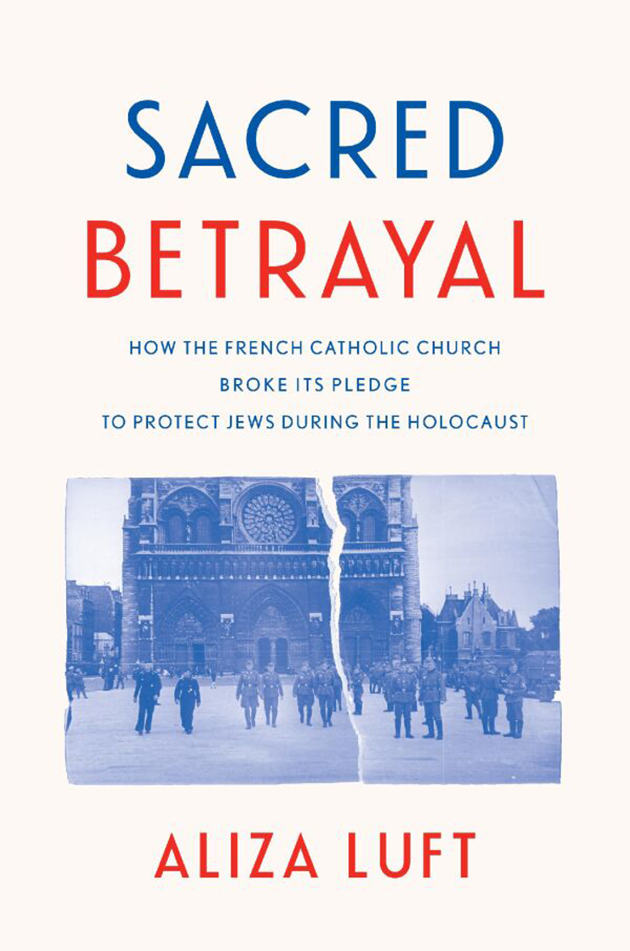
Aliza Luft, Sacred Betrayal: How the French Catholic Church Broke Its Pledge to Protect Jews During the Holocaust, Harvard University Press, 2026
When German occupiers rolled into Paris in June 1940, they arrived wary of the French Catholic Church. In a country where more than 80 percent of citizens were Catholic, bishops held enormous moral sway. During the 1930s, many used their positions to forcefully condemn the rise of Nazism. But as the persecution of Jews escalated during the Occupation, every bishop in France maintained a deafening silence. In fact, the Church stood publicly alongside Marshal Pétain’s collaborationist Vichy regime. Even when bishops famously broke silence to protest the deportation of Jews in 1942—a moment long remembered as one of moral awakening—they quickly retreated, discouraging further defiance.
The French Church’s public silence during the Holocaust is no secret. But as Aliza Luft shows, private interactions between bishops, French Jewish leaders, and Vichy officials were just as consequential. Turning to letters, diaries, and records of private conversations, Luft traces the moral dilemmas and calculated choices that shaped these hidden negotiations. As Jewish leaders turned to the Church for information and protection, bishops repeatedly assured them of the Church’s sympathy and support. These guarantees from the nation’s highest moral authorities, combined with the false promises of Vichy officials, encouraged French Jews to place their faith in relationships and republican ideals that proved tragically hollow.
Drawing on years of archival research,
Sacred Betrayal is a harrowing account of how genocide unfolds day by day—not only through spectacular violence, but also through misleading assurances, quiet capitulations, and broken promises.
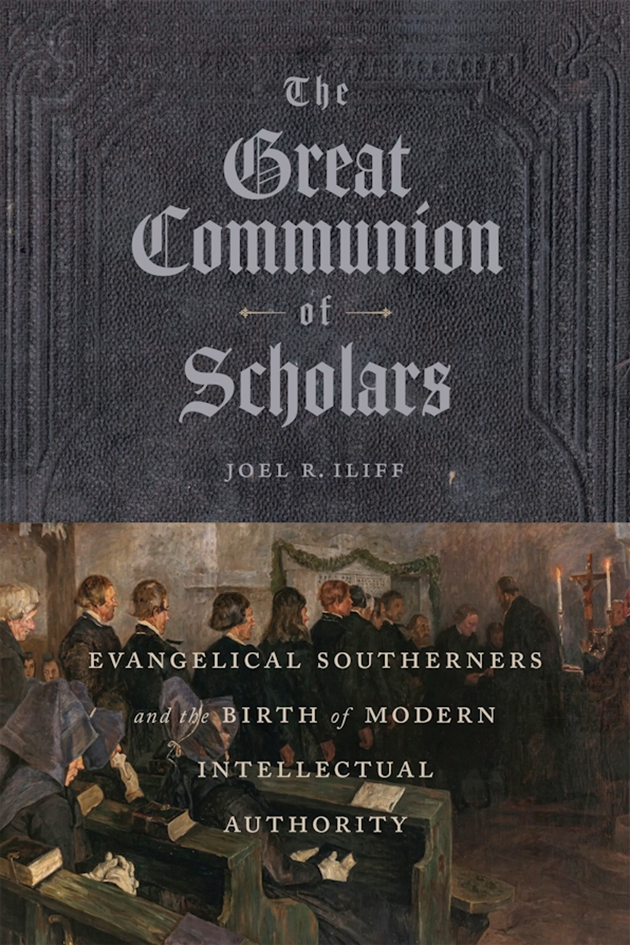
Joel R. Iliff, The Great Communion of Scholars: Evangelical Southerners and the Birth of Modern Intellectual Authority, Louisiana State University Press, 2026
While the modern university is typically viewed as secular, Joel R. Iliff argues in The Great Communion of Scholars that the Protestant architects of the modern university in both the U.S. South and Germany consciously patterned their creation on the Christian doctrine of the communion of saints. By attempting to counteract the perceived secularization of their societies, a network of Awakened Protestants on both sides of the Atlantic contributed to the development of modern institutions of higher education and attendant notions of intellectual and moral authority.
Beginning in the 1820s, white southern evangelicals looked abroad and found allies among contemporary religious Awakening movements in Germany. Evangelical southerners and Awakened Germans shared a desire to restore not only intellectual and spiritual order but also social and political order in the wake of the lingering upheavals wrought by the Enlightenment. Eventually, southerners drew analogies between their domestic opponents in the North and the opponents of the Awakened, thus creating the perception of a transatlantic battle between infidelity and orthodoxy, of which the American sectional conflict became one theater. This discourse culminated in the revolutions of 1848 and the American Civil War, which both evangelical southerners and Awakened Germans interpreted as religious struggles with global ramifications.
Ultimately, the transnational, ecumenical impulse that fueled the communion of scholars, which reached its zenith in the mid-nineteenth century, proved unstable. It fatefully collapsed over the issue of American slavery when Black evangelical abolitionists in the North waged a successful campaign to brand southern slaveholders, ironically enough, as analogous to the religious radicals and infidels that conservative Protestants on both sides of the Atlantic so feared. By exploring the role that antebellum evangelicalism played in the development of the modern university, Iliff not only dismantles much of what we think we know about the South, American religion, and the origins of the modern higher education but also recovers a lost period in Western intellectual history.
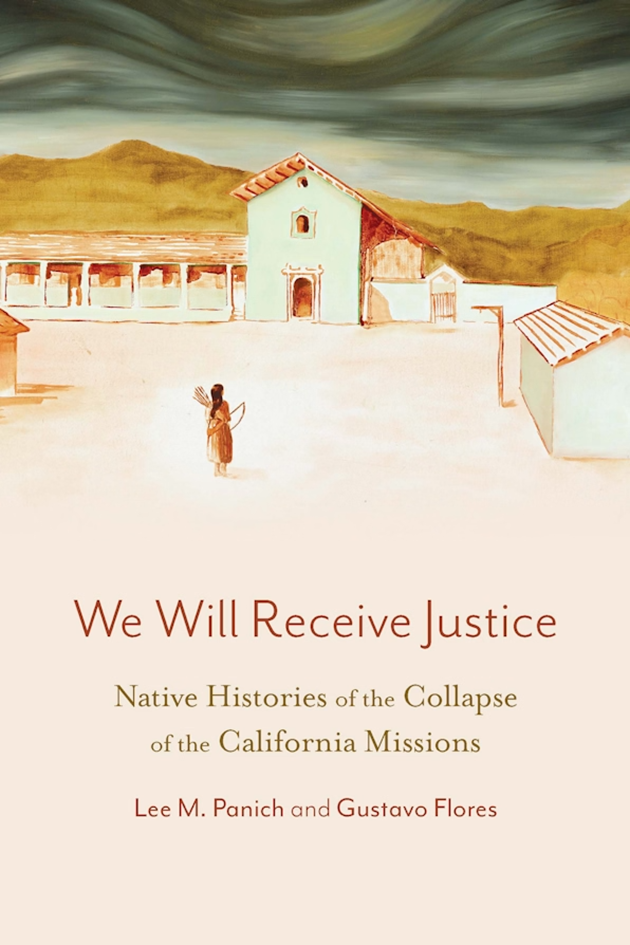
Lee M. Panich and Gustavo Flores, We Will Receive Justice: Native Histories of the Collapse of the California Missions, University of Nebraska Press, 2026
We Will Receive Justice explores how Native people in the southern San Francisco Bay Area—the ancestors of today’s Ohlone community—navigated the collapse of the California mission system. The volume spans from Mexican independence in 1821 through the region’s annexation by the United States in 1846, as Native people from Mission Santa Clara and Mission San José fought for emancipation and restitution amid rapidly changing colonial circumstances.
The narrative is driven by a reexamination of archives related to the Pueblo of San José, the territorial capital of Monterey, and early U.S. court cases regarding Mexican-era land grants, contextualized through an in-depth analysis of mission records that illuminate the complex social connections of Native individuals and families.
We Will Receive Justice offers an ethnohistorical lens for viewing the Indigenous history of Mexican California, examining not simply the history of colonization but how Native people drew on cultural traditions and social relationships to create new lives for themselves in the wake of the Franciscan mission system.
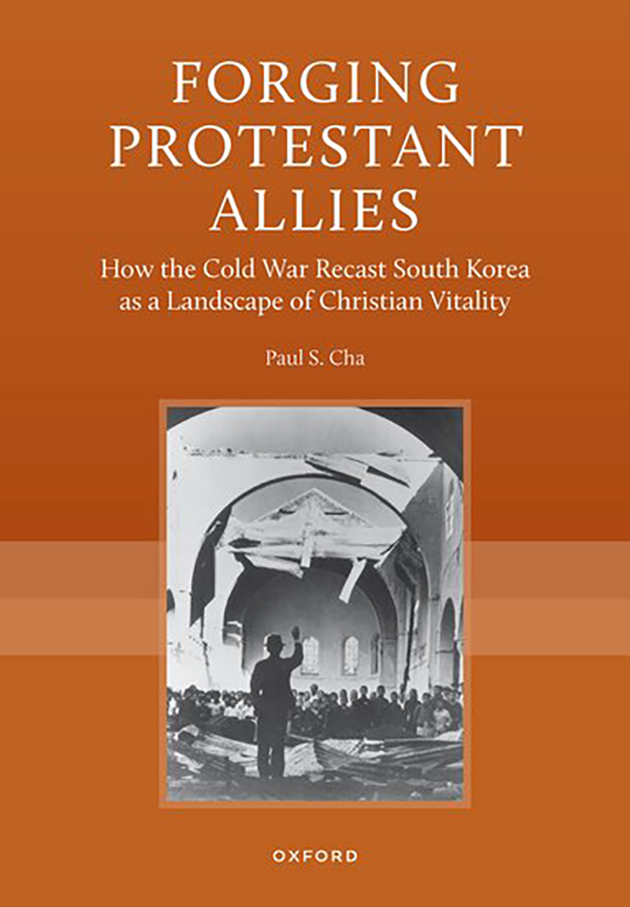
Paul S. Cha, Forging Protestant Allies: How the Cold War Recast South Korea as a Landscape of Christian Vitality, Oxford University Press, 2026
Why has South Korea long been heralded as a Christian "success story" when only about 30 percent of its population identifies as Christian?
Forging Protestant Allies shows that the popularization of South Korea's image as a Protestant stronghold took shape during the Korean War.
As the conflict unfolded, mission societies and faith-based aid agencies in the United States sought to overcome American indifference toward a distant and unfamiliar country. To mobilize sympathy and support, they reimagined South Korea as a Christian ally on the front lines of the global struggle against communism. In this context, "forging" operated in two distinct ways. First, the war fostered new partnerships: not only between Korean churches and Western Protestant organizations, but also among the many mission boards, denominational agencies, and ecumenical relief groups that converged on the peninsula. These collaborations were real and often consequential. But "forging" also captures a second process—crafting an appearance of unity that belied realities on the ground. Mission societies and aid agencies emphasized shared purpose while downplaying substantive theological disagreements, institutional rivalries, and persistent hierarchies of race, nation, and power. In this dual sense the book traces how the idea of a unified Protestant front in Korea was forged.
Drawing on extensive archival research conducted across four continents,
Forging Protestant Allies uncovers the tensions beneath proclamations of unity. It follows how mission societies negotiated jurisdictional boundaries, how mainline and evangelical agencies contested the purpose of aid, and—crucially—how Korean Christian leaders leveraged this Cold War attention to challenge missionary hierarchies, break old alliances, and forge new transnational partnerships on their own terms.
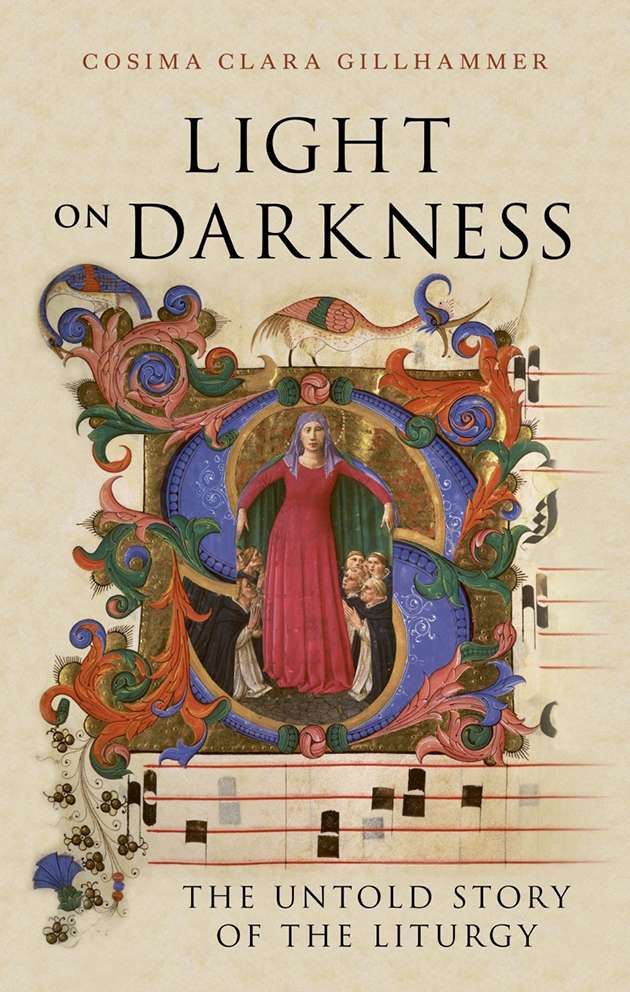
Cosima Clara Gillhammer, Light on Darkness: The Untold Story of the Liturgy, Reaktion Books, 2025
Light on Darkness: The Untold Story of the Liturgy offers a captivating journey through the history of religious rituals in Western Europe, showcasing the profound impact of Christian liturgy on art, literature, music, and architecture. Through ten evocative stories, it explores medieval rituals and their cultural influence up to the present day, providing fresh insights into the enduring legacy of the liturgy as an expression of human emotion and religious experience. Accessible to all, this guide provides translations and explanations to uncover the hidden treasures of ancient rites and their lasting significance, appealing to those seeking a deeper understanding of Western liturgical traditions.
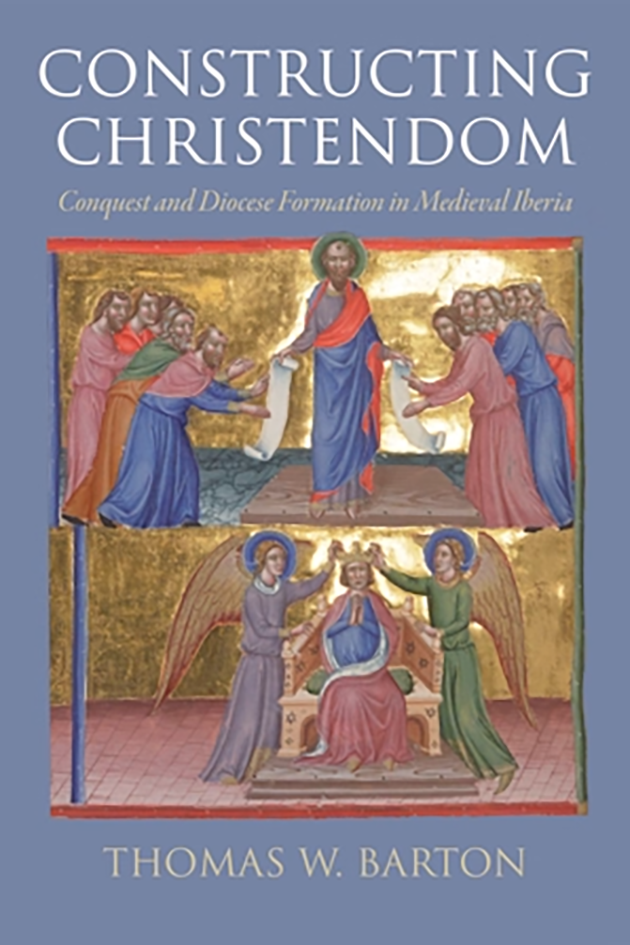
Thomas W. Barton, Constructing Christendom: Conquest and Diocese Formation in Medieval Iberia, University of Pennsylvania Press, 2026
In
Constructing Christendom, Thomas W. Barton examines how church leaders partnered with lay rulers to integrate lands conquered from the Muslims in the Iberian Peninsula from the ninth through the fourteenth centuries. In tracing the intricate developmental histories of a cluster of competitive neighboring bishoprics, Barton reveals how rival factions fought over new territory by asserting that it belonged to their foundations according to ancient precedent. Wielding self-interested, manipulated recollections of the organization of the Visigothic church that had predated the eighth-century Muslim conquest did more than further these local territorial battles; it helped promote a shared revisionist Christian historical vision that delegitimized non-Christian rule and emphasized the elemental, divinely ordained centrality of papal authority.
Based on over a decade of research and drawing on documentation from numerous underutilized local archives,
Constructing Christendom presents the unwritten histories of these foundations to demonstrate how such local efforts to expand Latin Christendom’s frontiers and establish or enlarge dioceses came to be associated with the reordering of the ecclesiastical hierarchy and the solidification of a cohesive European Christian identity. Despite the persistence of some unique features deriving from the formational histories of these frontier bishoprics, the overarching trend, Barton finds, was toward gradual homogenization, as dioceses on Christendom’s periphery and established ones situated closer to its core increasingly came to resemble one another in terms of their administrative and cultural attributes and relationships to papacy-centric governance.

Kira Ganga Kieffer, Unvaccinated Under God: Religion and Vaccine Hesitancy in Modern America, Princeton University Press, 2026
Vaccine hesitancy in America didn’t begin with the uproar over the mRNA vaccines for Covid-19. The late twentieth and early twenty-first centuries saw resistance to a wide variety of vaccines. In Unvaccinated Under God, Kira Ganga Kieffer shows that debates over vaccine safety and mandatory vaccination were about more than diseases or injections. They have been proxies for existential concerns about justice and morality. Kieffer argues that vaccine hesitancy in the U.S. should be understood as religious expression—not as the product of scientific misinformation.
Through a series of historical case studies, which range from the “mother warriors” who claimed a link between the MMR vaccine and autism during the 1990s to opposition to masking and vaccines during the Covid-19 pandemic, Kieffer frames vaccination controversies as contests over religious freedom and moral authority. These debates concerned bodily, spiritual, and sexual purity; the morality of state-mandated medical risk; the importance of children; and the authority of parents and doctors. Kieffer explains that diverse groups of Americans utilized religious ideals and practices to question or resist vaccination. With this new, illuminating perspective on vaccine hesitancy, Kieffer offers a novel and even-handed way to understand Americans’ changing and increasingly divided attitudes toward biomedical knowledge and technology. Her account offers readers an accessible set of tools for how to “think with religion” when it comes to contemporary contests over medical authority.
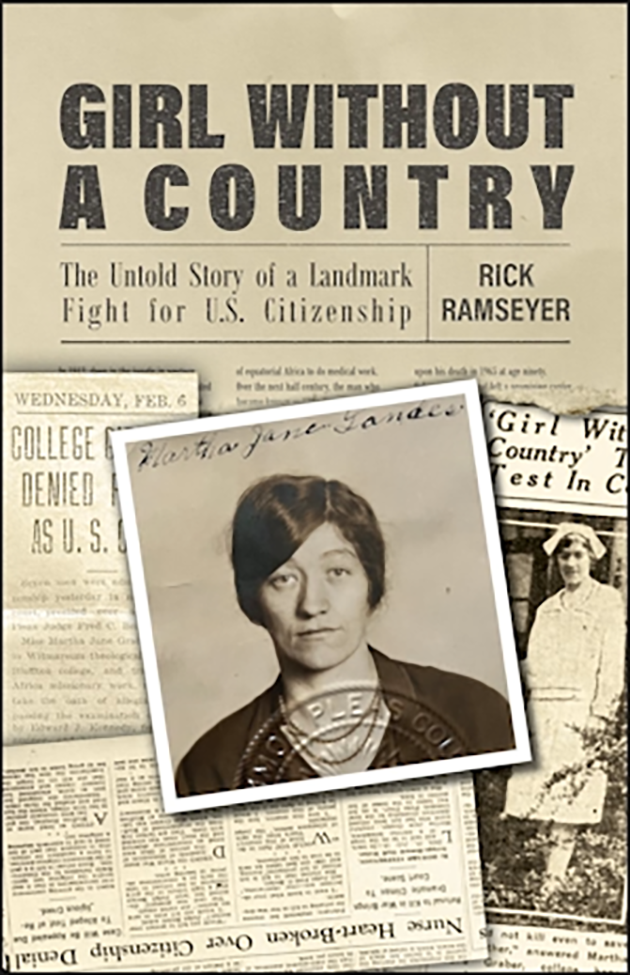
Rick Ramseyer, Girl Without a Country: The Untold Story of a Landmark Fight for U.S. Citizenship, Purdue University Press, 2026
Should willingness to kill be a requirement for U.S. citizenship? Girl Without a Country tells the compelling, confounding story of Martha Graber—a Mennonite, registered nurse, and conscientious objector who in 1929 was twice denied citizenship because she refused to say she would take up arms to defend the United States. The unexpected denials, which came despite Martha's pledge to give her life for her adopted country, caught the attention of a diverse group of peace advocates, religious leaders, lawyers, and politicians, setting up a climactic third court appearance.
Martha’s nineteen-month fight for citizenship made national news, featuring dramatic testimony, historical insights, and interesting backstories that stretched from Alsace-Lorraine in western Europe to America’s heartland. Elegantly written by Martha’s maternal grandson with never-before-published details and closely connected with a controversial Supreme Court decision, Girl Without a Country surfaces an array of topical issues, ranging from immigration and naturalization to conscientious objection and patriotism. Perhaps most importantly, Martha’s story considers what it truly means to be an American.
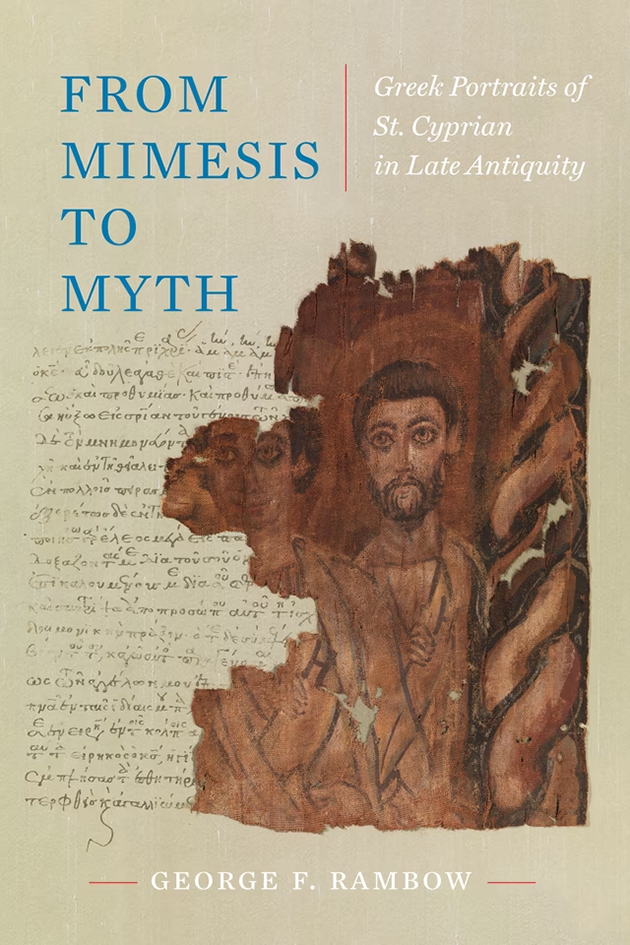
George Frederick Rambow, From Mimesis to Myth: Greek Portraits of St. Cyprian in Late Antiquity, University of California Press, 2026
From Mimesis to Myth traces the transformation of a Greek account of the life of Cyprian of Carthage into the legendary tale of Cyprian of Antioch as a means of exploring how late antique Christian authors and audiences interpreted the fictional qualities of hagiographic narratives. Through close readings of texts from the fourth and fifth centuries, including works by Gregory of Nazianzus and the Theodosian empress Aelia Eudocia, the book uncovers how Cyprian's legend evolved and how Christian authors embraced and transformed Greek literary traditions. George F. Rambow suggests that Christian writers consciously engaged in mythmaking and crafted a new heroic universe to rival the mythology of pagan antiquity. The book introduces the concept of "noncontractual, protreptic representation" to describe a uniquely Christian adaptation of Aristotelian mimesis, offering a new framework for interpreting fictional hagiographic narratives. Bridging history, religion, classics, and literary theory, Rambow fundamentally reassesses important assumptions in the ongoing debate on late antique narrative traditions.